• Blog
  • About
  • Contact
Francene--Blog. Year 2014

Can you believe 1/2 the animals have gone in 40 years?

9/30/2014

10 Comments

 
Picturewww.theguardian.com
Since 1970, uncontrollable human expansion has caused the loss of half of the animals in the world. A report by the World Wildlife Fund (WWF) has found that populations of mammals, birds, reptiles, amphibians and fish have declined on average by 52 per cent over the period of 40 years.

Freshwater creatures are worse off, with population collapse of more than 3/4 over the same period.

Most of the decline is down to human activity—habitat loss, deforestation, climate change, over-fishing and hunting.


Picturewww.telegraph.co.uk
The WWF said the report sounded a dire alert and urged people to cut down on consumption.

WWF Director of Science and Policy said, “But we are not despairing, because we are able to say why we are losing these animals; we are seeing a loss of their habitats. We know what the problem and we are perfectly capable of putting it right.

“We need political agreement so a global climate deal can be reached and policies which take account of natural capital. And we need to start thinking about our own consumption.”

The WWF’s Living Planet Report looked at 10,380 populations of 3,038 species across the globe. The situation is worst in low-income countries.


Picturewww.theguardian.com
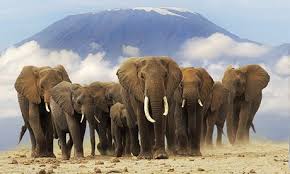
Examples of dwindling wildlife populations include forest elephants in Africa, which are facing habitat loss and poaching for ivory and could become extinct within our lifetime, and marine turtles with an 80 per cent drop in numbers.

The Living Planet Report also warned that human activity is outstripping the resources the Earth can provide.

The WWF offers some advice. Use public transport instead of your car, increase recycling and eat less meat and dairy products which will cut down on the amount of new land cleared for farming. Recycle, put pressure on political and industry leaders, support sustainable businesses and send children outside to reconnect with nature.


Picture
Anyone born in in 1970 or before would have lived in a world teeming with animals compared to life today. Not only that, but children were allowed to play outside.

Born in Australia in the early forties, I could have seen 1/3 more animals than I would today. Introduced predators such as cats and foxes are mainly to blame. Because of the country's water shortage, the population lives largely around the perimeter, leaving the desert center free.

Here in England, the red-necked phalarope is top of the endangered list, followed some we have grown to know like the cuckoo, the red squirrel, the turtle dove (symbol of loving), the brown hare and lastly the hedgehog.

What animal is disappearing near you?


10 Comments

Have there always been bad parents?

9/29/2014

5 Comments

 
Picturewww.huffingtonpost.com
In in Moorpark, southern California, on Friday, police stopped a vehicle and found a five-year-old US boy, sitting on the back seat with half a pound of cocaine. After his parents were arrested on a drug charge, he was tested positive for cocaine although he didn't need medical attention.

Authorities reported finding hundreds of prescription-drug pills, several pounds of marijuana and $75,000 in cash at the couple's home as well as ammunition and guns.

The parents are accused of conspiracy to sell cocaine, possession of cocaine for sale, and child endangerment.

I'd say the last offense is the worst. What were they thinking? They obviously didn't care about their child. They sound like irresponsible parents who put themselves first, risk their child's well-being and fail to set a proper example.

In another recent incident early on Sunday in Miami, Florida, five girls between 11 and 17 years are among more than a dozen people who suffered gunshot wounds in a US nightclub shooting.

What were these kids doing out at one o'clock in the morning in a club? How could responsible parents allow this behavior?

Picturewww.dailymail.co.uk
According to the U.S. National Library of Medicine, steering away from certain basic principles makes a bad parent. These guide-lines consist of keeping your child healthy, raising them with plenty of affection and consistency, supporting communication, setting reasonable limits and leading by example.

A leading clinical and developmental psychologist has separated parenting styles into categories.


Authoritarian parents are the controlling, overly strict and unresponsive parents,

The permissive parents allow their child to do as they please, demanding little.

Authoritative parents are those who are firm, but at the same time warm. They tend to provide their children with options and opportunities, and give them the warmth and emotional stability they need, but they also set clear limits and teach them how to obey rules.

Last, uninvolved parents are the irresponsible and neglectful, who demand nothing because they don't care about their children.

I'm wondering if there have always been bad parents or if our modern indulgences in present-day society have brought out the worst in people.


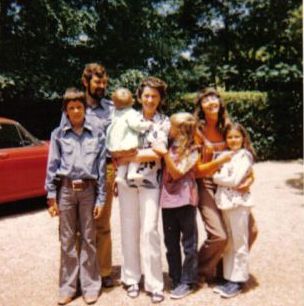
PictureI'm the one on the right with my knees bent.
I come under the authoritative parent heading. My children were my first priority and I devoted my time and attention to raising them to achieve their highest potential whilst showing them bad behavior wasn't accepted. I took them on excursions, led them in exercises, accompanied them to swimming lessons on the beach, taught them to respect others and care for the environment, nurtured their creative abilities.

Sigh! All to no avail. My son could have come under the category of uninvolved before he died. One of my daughters deliberately rebelled against my style of parenting by raising her daughter in a permissive way. Despite that, my granddaughter is a good, responsible person, thank the Lord.

At least I know I did my best.

How about you? Which category do you fall under?


5 Comments

The abundance of nature and its uses by man.

9/28/2014

11 Comments

 
Picture
Picture
Picture
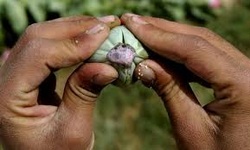
There are many drugs found in nature: magic mushrooms give hallucinations as do marijuana leaves, bark from the willow tree makes aspirin, and of course opium poppies produce the milky substance that, when squeezed and dried, becomes raw opium.

A news story from Metro presents a case of a restaurant owner trying to increase business. Bear in mind that China has a history of adding poppy powder to dishes, although it has been banned for some time.

The owner of a noodle restaurant in the Shaanxi province of China has confessed to lacing his trademark dish with opium, hoping his customers would keep coming back for more. However, one of his regular customers tested positive for opium during a routine traffic stop earlier this month.

The customer couldn't understand the result. After careful thought, he convinced family members to eat at the restaurant and then have themselves tested, thereby proving his innocence.

The restaurant owner consequently admitted to police that he had been grinding poppy buds into the food. In August, he had purchased 4.4lbs of poppy buds for $100 (£61) to crush over noodles to give them added flavor, thereby improving his business.

Luckily for the customers, the quantity in the noodles was not enough to be habit-forming.

Picture
I take an afternoon walk up the hill in my small village north of London. My pace using a rollator is leisurely (slow), giving me a chance to observe every detail around me. Several of the strip of cottages along the roadside are vacant for long stretches of time. One in particular grows all sorts of interesting weeds, which incidentally produce wonderful flowers, beneath straggly rose bushes and shrubs. Right at the front, poppy buds have been ripening—exactly like the opium leaves and buds pictured.

They are just plants, with every right to occupy spare ground. However, I don't think I'll stop and harvest them to add to my noodles.

Have you seen any interesting plants on your travels?


11 Comments

More Roman coins found by UK amateur.

9/27/2014

8 Comments

 
Picturewww.theguardian.com
A treasure hunter has uncovered the biggest hoard of 4th century Roman coins recorded in Britain. Read the full Telegraph news item. 

The 51 year-old builder took up metal detecting seven years ago. When he searched a field close to the previously excavated site of a Roman villa, he expected to find the usual disappointing haul of old ring pulls and shotgun cartridges. He spotted two small coins the size of a thumbnail sitting on top of the ground. Although his metal detector indicated there was only iron in the ground, he followed his hunch and dug. The next shovel was full of coins.

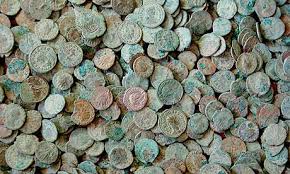
Scanning an area of ground in Seaton, East Devon, he uncovered 22,000 Roman coins dating from AD260 to AD348.

As a responsible member of the East Devon Metal Detector Club, contacted the authorities to report his find. He also called his wife, who arrived to film the moment.

Once the archaeologists arrived, he slept in his car, wrapped up against the cold, alongside the treasure for three nights, guarding the site.

Picturewww.telegraph.co.uk
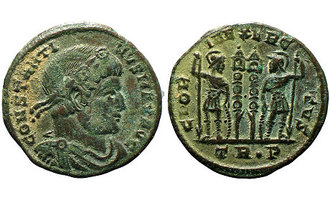
Now fully recovered, the hoard went on temporary display yesterday at the British Museum. Experts hailed it as an extraordinary find. A number of the coins were struck to mark the foundation of Constantinople in AD332 and bear the image of Emperor Constantine the Great.

The coins, now known as the Seaton Down Hoard, have been officially declared as treasure and are eligible for acquisition by a museum. The finder held a license to operate on the land, and will split the proceeds of a potential sale to the local museum 50/50 with the landowner.

Here's the good bit: Although they would have only represented a few months’ wages for a Roman soldier back then, they will now be worth tens of thousands of pounds.

Pictureen.wikipedia.org
It is believed the coins were originally buried for safekeeping. After all, people couldn't use banks back then. Even nowadays, banks can go bust. What is safer than storing your valuables below ground?

Oh. I just answered my question. A flood could sweep them away. A crack could open up and the earth could swallow them. Well, maybe nothing is really safe—even a safe. Thieves can still crack your code. Anyway, leaving that pessimistic thought aside, let's think of the positive.

I buried a heap of copper pennies about ten years ago under my hydrangea to provide the blue flowers with nourishment. The pennies were no longer of any value when the currency changed. Maybe they'll be worth a fortune one day.

Here's where you tell me about what you found while walking along one day.


8 Comments

Why are we fighting?

9/26/2014

9 Comments

 
News reports beam unrest from all over the world into our lives. In the UK, MPs are about to vote on whether the UK should join air strikes in Iraq. I don't want violence to escalate, no matter what the cause. Rather than sort out a bad problem, war ends up costing many more lives, and the problems remain internal no matter what help is offered.

Picturedailystorm.it
Today, there is more news about a region west of China. Violence has been escalating in Xinjiang in recent months between Uighurs, ethnically Turkic Muslims who make up about 45% of the region's population, and the 40% Han Chinese.

Chinese state media reported fifty people in Xinjiang, China died in violence on Sunday, not the previously reported two. 40 rioters, six civilians and four police officers were killed. No reason was given for the delay in reporting.


Picturewww.bbc.com

An earlier attack on 22 May in an open-air market in Urumqi's predominantly Han-populated Shayibake district, left 31 people dead and 94 injured. Before that, came the March 1st mass knife attack at Kunming train station, and the 30 April knife and bomb attack at Urumqi's central train station.


Picturewww.telegraph.co.uk
Since 1949 when China took over, there has been large-scale immigration of Han Chinese. The Uighurs say they fear their traditional culture is being eroded. Add to that, one of the most influential peacemakers in the area has just been jailed.

While I hate the thought of one group of people being victimized by another, I don't think we should settle any dispute with mass combat.

I have no advice about how to settle every world conflict. I would rather diplomats sort it out with their communication skills. After all, that's what they are paid for.

If there is a dispute in my family, I sit everyone involved around a table and try to get them to discuss what is upsetting them. Once resentment eases away, they can usually sort things out, even if only to call a truce. 

Can you offer a solution to world problems that would take the place of fighting?


9 Comments

Multitasking with devices is damaging our brains.

9/25/2014

11 Comments

 
Picturewww.telegraph.co.uk
According to a study published in the journal PLOS One, watching television while surfing the internet and checking social media on smart phones may alter and harm the brain.

Divided attention between mobile phones, laptops, TV, and tablets, a phenomenon known as second screening, may cause brain damage and trigger depression and emotional problems, scientists believe.

This behavior is happening right now in our future generation. Nearly two thirds of teenagers in Britain use a second screen while watching TV.

Researchers at the University of Sussex scanned the brains of 75 volunteers and questioned them about their use of mobile phones, computers as well as television and print media.

People who used a higher number of media devices had smaller grey matter density in the anterior cingulate cortex (ACC). That area of the brain was smaller in people who used the most electronic devices simultaneously. It's the area which regulates emotions and is involved in decision making, reasoning, impulse control and empathy.

Pictureadvanced.television.com
The researchers admit that people with smaller ACCs may be predisposed to use more media devices. However, they claim it is equally plausible that too much technology is directly damaging the brain.

Scientists have previously demonstrated that prolonged exposure to new environments and experiences can alter the brain.

In one instance, London taxi drivers who have learned every route in the complicated city are known to have an enlarged hippocampus in the brain, associated with navigation in birds and animals.

Also, jugglers increase the white matter in their brains through practice, which speeds up movement and reaction time.

In the latest research, the team at the University of Sussex's Sackler Centre for Consciousness supports earlier studies showing connections between high media-multitasking activity and poor attention in the face of distractions, along with emotional problems such as depression and anxiety. Has society gone mad?

Picturewww.wikipedia.org
I'd say it's time to call a halt to this decline in teen's attention before it's too late. However, I have no advice about how to achieve that. Peer group pressure will win out every time against adult's sense.


Futuristic novel plots, like I Robot, highlight the drawbacks. Perhaps the swift march of technical progress will really lead to mankind's downfall, after which we allow robots to take over.


Leaving fiction aside, the damage caused by media-multitasking is worrying, isn't it?


11 Comments

Are UFO sightings the real thing?

9/24/2014

9 Comments

 
In these times, it's hard enough for some people to comprehend time zones between countries. A recent episode has left me frustrated about twitter retweets. Surely someone living in America can understand that a person in England doesn't retweet while they are asleep.

However, laying that aside, along with all the other problems that are hard to fathom like quantum mechanics (there could be multi universes existing at the same time according the great physicist Brian Cox), a recent UFO sighting in England has raised the old debate again as to their reality.

Picture
www.mirror.co.uk
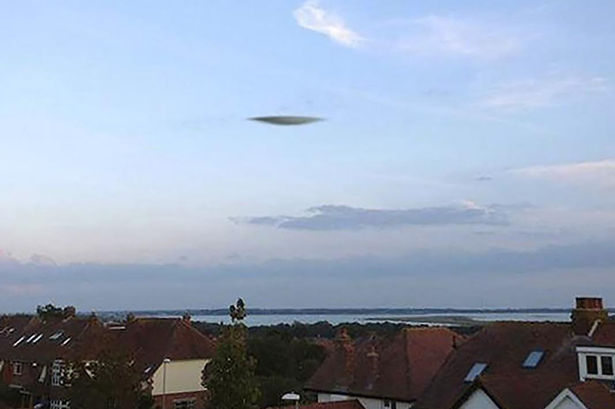
The pictured UFO was spotted flying over the south coast of England yesterday. Several people saw the fast-moving disc-shaped object speeding through the skies near Portsmouth. The picture has led to speculation on Twitter. However, a Met Office expert has ruled out suggestions that it could have been a cloud.

A Met Office representative said: "After looking at the images, I can say the object is nothing to do with the weather. It is not meteorological and is not a cloud."

A senior lecturer in the institute of cosmology and gravitation at The University of Portsmouth, added: 'Given the pictures show a dark object against a daytime sky, it's clearly not an astronomical object. Many UFO sightings are the planet Venus, but this one can't be that. The distances in space are so vast that it's just not possible for aliens to be visiting Earth, so any interpretation suggesting this is an alien spacecraft is clearly wrong."

Well, that gives us the experts' opinion. What do you think about the possibility of UFO's?

9 Comments

Lider technology finds extensive lost city.

9/23/2014

6 Comments

 
You might wonder what Lidar is. According to today's BBC article, it's a sophisticated remote sensing technology that's used for probing tropical areas where jungle rapidly covers ancient buildings.

Picture
www.angkortourguides.com
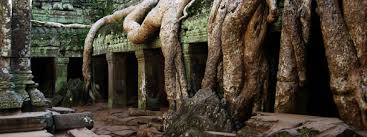
In particular, Angkor Wat(meaning temple) in Cambodia, the largest monument of the Angkor group and the best preserved. The architectural masterpiece's perfection in composition, balance, proportions, relief's and sculpture make it one of the finest monuments in the world.

Angkor Wat represents a miniature replica of the universe in stone. The central tower symbolizes the mythical mountain, Meru, situated at the center of the universe. Its five towers correspond to the peaks of Meru. The outer wall corresponds to the mountains at the edge of the world, and the surrounding moat the oceans beyond.

But new archaeological techniques are now revealing more of its secrets, including an elaborate network of temples and boulevards, and sophisticated engineering.

Pictureen.wikipedia.org
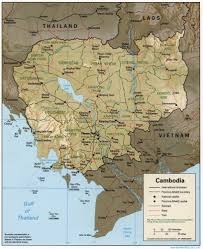
Back in April 1858 a young French explorer, Henri Mouhot, sailed from London to south-east Asia. For the next three years he traveled widely, discovering exotic jungle insects that still bear his name. During his exploration in the country between Thailand and Vietnam, he wrote a journal published in 1863, two years after he died of fever in Laos, aged just 35.


Mouhot's vivid descriptions of the lost medieval city of Angkor, and it's vast temples consumed by the jungle, captured the public imagination which led to tales of swashbuckling explorers finding forgotten temples.


Today Cambodia is famous for these buildings. The largest, Angkor Wat, constructed around 1150, remains the biggest religious complex on Earth, covering an area four times larger than Vatican City. It attracts two million tourists a year and takes pride of place on Cambodia's flag.


Picture
Then, last year, archaeologists announced a series of new discoveries about Angkor, and an even older city hidden deep in the jungle beyond.


An international team had mapped 370 sq km around Angkor in unprecedented detail despite the dense jungle and the prevalence of landmines from Cambodia's civil war. Yet the entire survey took less than two weeks using Lidar. Mounted on a helicopter, the team's lidar device fired a million laser beams every four seconds through the jungle canopy in a grid pattern of passes, recording minute variations in ground surface topography.

The findings were staggering.

Beneath the jungle, the archaeologists found undocumented cityscapes, with temples and utterly unexpected grids of ceremonial boulevards, dykes and man-made ponds spreading across the landscape. A lost city, found.


Picture
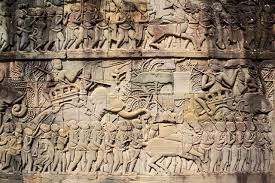
The large-scale hydraulic engineering, the defining signature of the wealthy Khmer empire, channeled precious seasonal monsoon water using a complex network of huge canals and reservoirs. However, it fell into disrepair. At the end of the medieval period, the dramatic shifts in climate across south-east Asia led to Angkor's collapse from which it never recovered.


The lidar map reveals catastrophic flood damage to the city's vital water network. Tree ring samples record sudden fluctuations between extreme dry and wet conditions at that time.

In the 15th Century, the Khmer kings abandoned their city and moved to the coast. They built a new city, Phnom Penh, the present-day capital of Cambodia.

I love learning about the history of mankind. And now, the wonder of technology pin-points the need to maintain any civilization's basic structure.

I suggest you attend to your own roots before you go off searching for gold in the hidden city.


6 Comments

Let's inspire with games about real life.

9/22/2014

9 Comments

 
Picturewww.game.co.uk
The younger generation use the internet in constructive ways, far exceeding anything I could do.

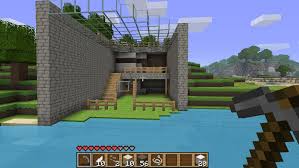
An indie video game called Minecraft has been around for a few years and has many enthusiastic supporters. Players build constructions out of textured cubes in a 3D procedurally generated world. Other activities in the game include exploration, gathering resources, crafting, and combat. Multiple gameplay modes are available, including survival modes, a creative mode with unlimited resources, and an adventure mode.

A recent request by the British Museum in London has gone out to players. They want assistance to recreate the building and all the exhibits in the video game Minecraft. Part of the Museum of the Future scheme, the project aims to expand the institution's appeal.


Picturewww.bbc.co.uk
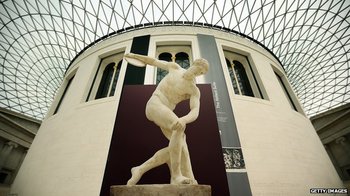
The British Museum was the first national public museum in the world, founded in 1753. As UK's most popular visitor attraction, almost six million visitors a year visit. The building holds eight million objects after the Natural History collection was moved. The Great Court is the largest covered public space in Europe.

Many real-life administrative structures have been recreated in the Minecraft universe, including Ordnance Survey and the Danish government, who aim to make young people more aware of their work.

What a great idea. While they are building, the players are learning what lies beneath the surface.

The organizers are hoping the collaboration will spread amongst young players who will help to construct the building brick by brick. Next comes figuring how to recreate something like the Elgin Marbles in Minecraft.

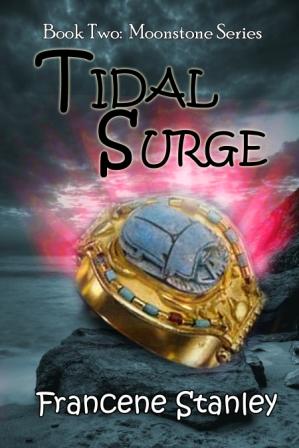
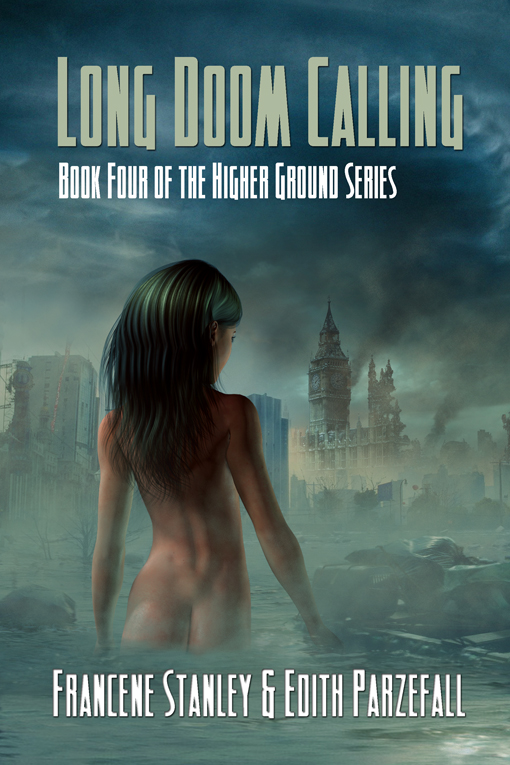
The British Museum features in my first two books of the Moonstone series, so the subject is dear to my heart. Also, the British Museum is part of the plot in the co-written futuristic Higher Ground Series, when the group of teens reach London to dive under the flooded area to find the ring under the Museum's great dome.

Here's an excerpt from my novel, Tidal Surge. You'll see the cover one the sidebar, one click away from an Amazon near you.


In the city proper, Oliver shut his window to block out the honking horns and hooting of impatient drivers while Eddie and Kaelyn kept up a running commentary about what they observed.

Liliha flopped against the backrest. Her daughter seemed to have simmered down.

"Let's have a ride on the wheel to look at the view," Eddie said.

"We'll see," Oliver said, "if we have time for a trip on The London Eye, after everything else. The queue is always pretty long." He drove past Trafalgar Square to the Kensington Palace gates, where the Queens' Guards stood with their red jackets and tall bear-skin hats. Further on beside cruise boats on the Thames River, they passed the obelisk of Cleopatra's Needle and drove to the Tower.

"I can't believe how ancient some of the buildings are," Eddie called from behind. "All that history. There's nothing like this in Australia."

They left the parked car and strode along beside busy pedestrians to the British Museum.

Inside the solid walls, Liliha brushed aside the stirring memory of her thwarted plan to gift the bracelet. She didn't suggest they visit the Egyptian section. She'd seen enough of the dark side of sacred jewelry for the moment.

Strolling amongst other sightseers into a section on ancient Greece, Liliha bent to examine a picture of two men fighting. Set against a gold background, their dark brown silhouette forms showed a realistic struggle.

Oliver faced a white stone statue of a man bending forward with his arm stretched behind, ready to throw a discus. He glanced across at her. "Wonderful. Look at the muscle formation."

Inside another glass case, Kaelyn and Eddie were bent over pictures of men lifting pointed weights with a handle in the middle. Kaelyn giggled. "They're going to do the ironing."

Liliha smiled. After all her tormented visions, everything felt so normal.

Once they'd observed every display in two large rooms, Oliver looked at his watch. "Come on, gang. We'd better make a move."

"Madame Tussauds?" Kaelyn asked.

Eddie nudged her. "The London Eye." He grinned.

Kaelyn shrugged. "I guess there's no time."

Oliver led the way to the entrance.

"Sorry, Mum," Kaelyn murmured. "I didn't mean to be awkward."

Liliha nodded an acceptance. On a normal family outing, amongst so many others doing the same thing, she emerged onto the streets of London. Honking horns sent an alert. The overcast sky renewed a feeling of oppression. Screeching brakes from a passing bus rekindled the memory of Oliver's painting of death.

Buy Tidal Surge
I write about the museum and teens build structures on the screen.

As for the proposed Minecraft venture, I can't think of a better way to bring public buildings to life ...  than the call to arms for young players.

9 Comments

What makes a beautiful woman famous?

9/21/2014

12 Comments

 
Picturewww.polyvore.com
In her short life, photographers flocked to capture Marilyn Monroe's essence. She had an intrigue and beauty that still beguiles people more than 50 years after the legendary star's death. Hundreds of rare photographs remain, scattered around private collections.

A rare negative, taken during her first professional photo shoot when she was 20 years old, has been sold at auction in England. Not this shot, taken during her heyday, but the portrait below.

The unknown Norma Jeane Baker, newly married and working in a factory in 1946, was spotted by a passing military government photographer, who told her she could be a model.

Picture
I guess the attention went to her head and she couldn't wait to leave the dull routine at the factory to find a glamorous job. She must have been so excited when she approached the Hollywood modeling agency, Blue Book. 

An aspiring photographer Joseph Jasgur was assigned to put her first portfolio together. He took her to Zuma beach in Malibu for a few pictures, which were later presented to Ben Lyon, casting director at 20th Century Fox. The pictures established his career and helped create the star who would go on to become the legend Marilyn Monroe.


Picturewww.bbc.co.uk
The picture, along with the negative and copyright, was sold for £4,250 at Henry Aldridge and Sons in Devizes, Wiltshire. It had been expected to fetch between £5,000 and £8,000.

The English auction house, which has a reputation for selling anything connected to the doomed Titanic liner, is now branching out into celebrity memorabilia. And the owner of the photograph, an American, passed up the opportunity to sell it in the US, preferring Devizes.

So luck played a part in the star's success. Anyone telling you stardom is achieved by hard work and dedication is avoiding the truth. Many stars use whatever means necessary in clawing their way up to an important person.

When you read of the star's unhappy moments and pitiful life, you would be forgiven for thinking the road she took is not worth the success she achieved.

Just as there are many forms of beauty, there are many beautiful women in the world and of course they are not all renown. My own mother looked so similar to the young woman in this picture. I prefer to remember the slowly fading beauty of my mother's face, her gentle understanding, her unquenchable belief in her children.

What do you think makes a beautiful woman?


12 Comments
<<Previous

    Francene Stanley:
    Author
    I use news items in my fantasy novels.

    Born in Australia, I moved to Britain half way through my long life. If you like my writing, why not consider purchasing one of my books on the sidebar below?
    I blogged 260 days last year. Link.

    Picture
    Picture
    Picture
    Picture
    Picture
    Picture
    Picture

    Archives

    January 2015
    December 2014
    November 2014
    October 2014
    September 2014
    August 2014
    July 2014
    June 2014
    May 2014
    April 2014
    March 2014
    February 2014
    January 2014
    December 2013

    Categories

    All
    Animals
    Birds
    Earth
    Environment
    Experience
    News
    Novel
    People
    Society
    Writing

    RSS Feed

    RSS Feed

Powered by Create your own unique website with customizable templates.