• Blog
  • About
  • Contact
Francene--Blog. Year 2014

Bangor burglar returns the booty.

12/22/2014

6 Comments

 
Picturecommons.wikipedia.org
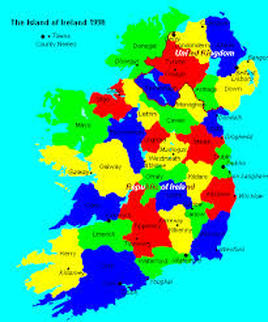
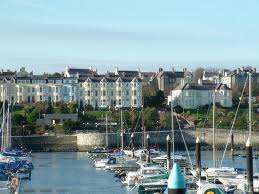
Ulster Television viewers voted for Bangor, a large town in County Down, as their most desirable place to live in Northern Ireland. The beautiful seaside resort on the southern side of Belfast Lough is part of Down, the closest county to the English coast. (yellow)

But this haven of natural charm, harbors bad as well as good people. Two days ago, burglars broke into a grieving couple's home and stole Christmas presents, bags and a laptop. This is bad by anyone's judgment, but the shocking fact is that their eight-year-old daughter had died just eleven days before from a rare degenerative illness called Batten's Disease. The child's room was ransacked, and, worst of all, the laptop contained the last photographs of their ailing child before she died.

Picturecommons.wikipedia.org
The Irish mother appealed for public help on social networks.

Surprise, Surprise. She got the laptop back. She did not go into details of how the laptop came to be returned and thanked all the people who offered help.

I can only assume the burglar's conscience spoke. This is the type of story I like to use for one of the visions in the Moonstone series. A little voice whispers inside someone and tells them to change their way of thinking.

Take a look at the very first vision in the novel Still Rock Water on my website. 
http://francene--wordstitcher.weebly.com

Most people can be redeemed. I love a story with a happy ending.


6 Comments

Well-being depends on your surroundings.

12/9/2014

8 Comments

 
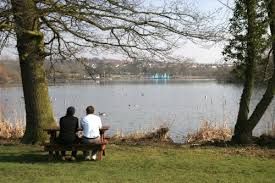
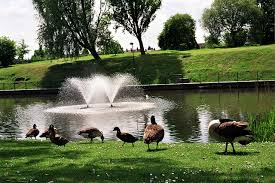
PictureAbberford Park - Borehamwood, UK
China has launched a global scientific research program to examine the unintended consequences of urban policies on human health and wellbeing.

The majority of people now live in towns and cities and the global urban population is growing by an estimated one million people each week. The total could exceed six billion people by the end of the century. However, to do so, they face a number of health risks, such as air pollution. This environment separates them from rural areas and any contact with animals, birds and the trees which purify the air.


A spokesman told BBC News: "When we take an overview, urban areas are very important determinates of health.

"The way we live on a day-to-day basis in cities affects our health in so many ways, whether it is the air that we breath, or the fact that many people in cities around the world are very sedentary (sitting at a desk in an office or sitting in a car to get to and from work) - and many people are also eating very unhealthy foods.

"We are facing global epidemics of non-communicable diseases - heart disease, diabetes and so on - and mental health problems. We are also seeing the health impact of climate change, such as heat-stress in cities and changes in the distribution of infectious vector-borne diseases."

Picture
Cities are really about people not education or employment. The people who are attracted to live in urban areas should have plenty of open spaces where they can walk and relax. Just looking at different flowers can sooth the mind.

How many health risks are people willing to take for the benefits that come with urban lives?

pic: The world’s largest eco-city rising from wastelands in China. http://www.bbc.com/future/story/20120503-sustainable-cities-on-the-rise


PictureAldenham Reservoir, Elstree, Hertfordshire UK
I'm lucky to live in Elstree, Hertfordshire. I'm surrounded by fields and trees with not another building in sight. Horses graze on the land beyond a tall stand of trees at the front. Over the hill, lies Aldenham Reservoir. At the back, frost covers horse paddocks leading to stands of trees on the horizon. The only thing I could wish for is a view of water. But heck, a stream of vehicles pass by my front door. Depending on how blocked my ears are, the motors leave a pleasant swish not unlike waves breaking on the shore. (Yeah, in my dreams.) There are plenty of parks close by and several stands of water.

But not everyone lives amongst nature. They might live in a tower block with no parks in sight. Or perhaps they're surrounded by slums. An occasional weed poking from between the hard-packed ground could be their only reminder of a natural life.

Are your surroundings pleasant?


8 Comments

Do we really know what life is about?

11/27/2014

5 Comments

 
Picture
The news today says research has shown DNA can survive re-entry into the atmosphere, which came as a total surprise to scientists. This raises the possibility of extraterrestrial life molecules arriving on Earth from space.

Scientists attached small double strands of DNA to the outer casing of a rocket. Temperatures soared to more than 1,000 degrees Celsius during the short flight to sub-orbital space and back, but much of the DNA emerged intact. Over half was recovered from the grooves in screw heads and more than a third remained fully functional.

Many scientists believe comets may have brought amino acids and other organic building blocks of life to the Earth early in its history. Some even suggest that DNA, the essential molecule of life itself, could reach the Earth in meteoric dust, 100 tons of which hit the planet each day. See full Telegraph story. 

So, is it any more astounding that each one of us could have lived before?

Picture
Having read stories about children who remember details of houses in other countries where they once lived, and considering deja vu as well as child prodigies & idiot savants, I consider past lives a distinct possibility. Who really knows? We can only theorize. Read about more instances that seem to point to past lives.


In the 70s when my children were young teens, I studied a book on palmistry. Okay, many people may not believe that lines on the inner hand have any meaning. However, I drew some amazing conclusions. Firstly, I'm an old soul judging by the myriad of lines on my palm. (I guess that's why I'm wise.)

But the astounding part came when I read my son's lines. At the age of 18, Kym's palm revealed nothing but a life-line, which cut off half way to the base where it should descend. (In ten years he would be dead.) The only explanation I could give for the lack of lines crisscrossing his palm was that he was a new soul. Is this possible? Makes you think, doesn't it?


5 Comments

Once again, business vies with conservation.

10/25/2014

8 Comments

 
Plans to quarry an area of ancient woodland in England mentioned in the Domesday Book have angered conservationists in Staffordshire, UK.

The Domesday Book, the oldest public surviving record, is a manuscript record of the "Great Survey" of much of England and parts of Wales completed in 1086 by order of King William the Conqueror. During that year, people from every part of the country had to line up and give a statement about their family and possessions.

However, the company in question, Lafarge Tarmac, said the quarry would cover only a fifth of the wood.

That's like a child nicking a large piece of birthday cake and whining that they didn't eat it all.

Picture
commons.wklipedia.org
Lafarge Tarmac also claims much of the area where it proposes to extract sand and gravel for the construction industry was damaged by fire in the 1970s and can no longer be considered ancient woodland. This disregards the natural occurrence of fire and the consequent regeneration.

A spokesman for the Trust's director of conservation, said it regarded the plans as the "largest threat to a single ancient woodland site in England that the charity has seen in its 42-year history". Historical woodland covered only 2% of Britain and often contained rare and threatened species.

So once again greed rises like an angry snake. People are putting profits before the long term importance of the environment for society.

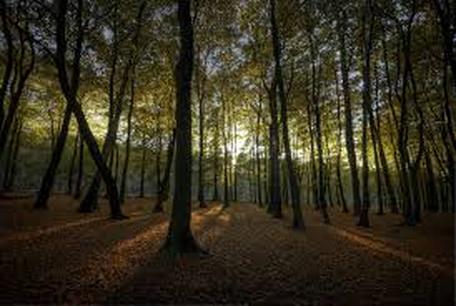
We live close to many woods, although I don't know how old they are. Amongst the trees, no traffic sound intrudes. Birdcall and the occasional glimpse of a squirrel or rabbit delights the senses. I'd hate to see every part of the natural land cleared. How about you?

8 Comments

If vampires are real, what about angels?

10/18/2014

7 Comments

 
Okay. Don't get annoyed at me—it's a facetious topic. I posed the question the other day about the validity of certain myths and whether they're based on fact. Click here if you missed the very popular blog about vampires.

 I know angels are sacred and nothing to be laughed at. However, much as we would like to see a heavenly being, we are unable to capture their image.

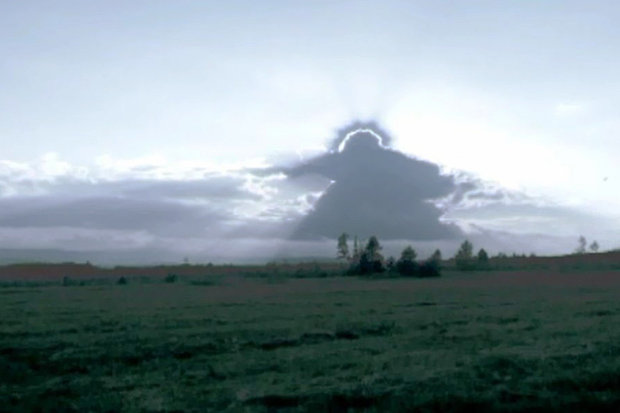
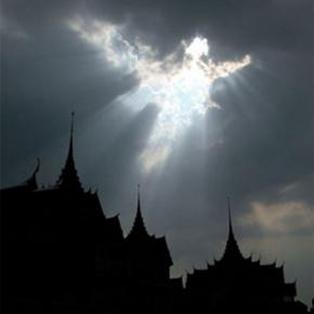
But take a look at this recent photo.

Picture
www.dailystar.co.uk
A nurse and her children spotted the angel near their home and she quickly took the snap so she could share the vision with other people. She was outside in the village of Gerlachov in Slovakia's northeastern region of Tatry.

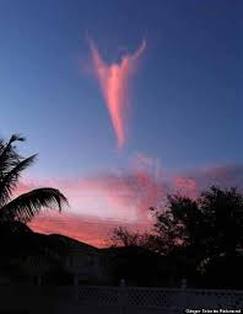
A Slovak astronomer explained that the cumulous clouds are characteristic for warm days. The sun behind the clouds made the picture look special. Here are a couple more I found in Google images.

Picture
www.crystalinks.com
Picture
pixdaus.com
I wonder if anyone has snapped a cloud formation that looks like a vampire. I guess any sensible person would run for their lives rather than stop to capture the image.

Lighthearted stories and pictures lift our thoughts from very depressing news. Take the images away in your mind's eye as you go about your day to refer to whenever a problem looms up to overwhelm you.


7 Comments

Humans impose rules on delinquent animals.

10/12/2014

8 Comments

 
Picturewww.telegraph.co.uk
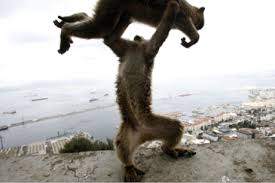
In the first large-scale export of the monkeys from Gibraltar since the 1990s, thirty offending monkeys will be deported to Scotland after continually causing trouble.

You might wonder why the UK is involved in the behavior of animals on the eastern tip of Spain. According to folklore, The Rock would cease to be British if the primates leave.

During World War II, the population dwindled to just seven monkeys. Sir Winston Churchill ordered that their numbers be replenished immediately from both Morocco and Algeria due to this traditional belief.

Another popular story tells of a link from Gibraltar to Africa by a subterranean passage over 15 miles (24 km). Legend has it that the Barbary Macaques entered The Rock from Morocco this way.

Picturewww.telegraph.co.uk
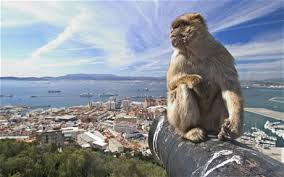
The Barbary Apes of Gibraltar, Macaca Sylvanus, are actually tail-less monkeys. No one is really sure how the only wild apes in Europe arrived in Gibraltar. Whatever the explanation they readily adapted to their new habitat and have lived, bred and been an integral part of Gibraltar for centuries.

The Gibraltar monkey population, initially a single troop, was under the care of the British Army and later the Gibraltar Regiment from 1915 to 1991. An officer was appointed to supervise their welfare, and a food allowance of fruit, vegetables and nuts was included in the budget. In true military fashion soldiers gazetted births, and named each new arrival. Following the withdrawal of the British garrison, the Government of Gibraltar took over responsibility for the monkeys.

Picturewww.dailymail,co.uk
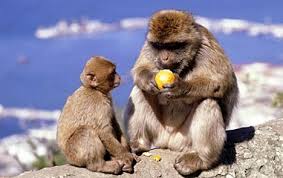
Now, Barbary macaques roam in the British overseas territory, harassing locals and rummaging through bins. Many tourists can't resist illegally feeding the wild animals and numbers have soared to about 200, most of whom have no fear of humans.

Unfortunately, animals take no notice of warnings so officials tagged the worst offenders with GPS collars. After observing the apes activity, officials caught the marauders to quarantine them in Gibraltar’s nature reserve. The 30 apes, 11 males and 19 females, along with two handlers will fly by chartered cargo plane from the Mediterranean outpost to the UK on Tuesday.

At their new home, a large enclosure including trees and a large rocky mound for climbing has been prepared for them. Imagine their shock at being confined after roaming as they please.

I guess, after being encouraged to expand their numbers on foreign soil, the macaques took advantage of every situation. Now, the nation who made this possible must control their wayward dependents.

Are there any imported animals causing trouble near you? 


8 Comments

Can you believe 1/2 the animals have gone in 40 years?

9/30/2014

10 Comments

 
Picturewww.theguardian.com
Since 1970, uncontrollable human expansion has caused the loss of half of the animals in the world. A report by the World Wildlife Fund (WWF) has found that populations of mammals, birds, reptiles, amphibians and fish have declined on average by 52 per cent over the period of 40 years.

Freshwater creatures are worse off, with population collapse of more than 3/4 over the same period.

Most of the decline is down to human activity—habitat loss, deforestation, climate change, over-fishing and hunting.


Picturewww.telegraph.co.uk
The WWF said the report sounded a dire alert and urged people to cut down on consumption.

WWF Director of Science and Policy said, “But we are not despairing, because we are able to say why we are losing these animals; we are seeing a loss of their habitats. We know what the problem and we are perfectly capable of putting it right.

“We need political agreement so a global climate deal can be reached and policies which take account of natural capital. And we need to start thinking about our own consumption.”

The WWF’s Living Planet Report looked at 10,380 populations of 3,038 species across the globe. The situation is worst in low-income countries.


Picturewww.theguardian.com
Examples of dwindling wildlife populations include forest elephants in Africa, which are facing habitat loss and poaching for ivory and could become extinct within our lifetime, and marine turtles with an 80 per cent drop in numbers.

The Living Planet Report also warned that human activity is outstripping the resources the Earth can provide.

The WWF offers some advice. Use public transport instead of your car, increase recycling and eat less meat and dairy products which will cut down on the amount of new land cleared for farming. Recycle, put pressure on political and industry leaders, support sustainable businesses and send children outside to reconnect with nature.


Picture
Anyone born in in 1970 or before would have lived in a world teeming with animals compared to life today. Not only that, but children were allowed to play outside.

Born in Australia in the early forties, I could have seen 1/3 more animals than I would today. Introduced predators such as cats and foxes are mainly to blame. Because of the country's water shortage, the population lives largely around the perimeter, leaving the desert center free.

Here in England, the red-necked phalarope is top of the endangered list, followed some we have grown to know like the cuckoo, the red squirrel, the turtle dove (symbol of loving), the brown hare and lastly the hedgehog.

What animal is disappearing near you?


10 Comments

The abundance of nature and its uses by man.

9/28/2014

11 Comments

 
Picture
Picture
Picture
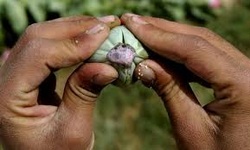
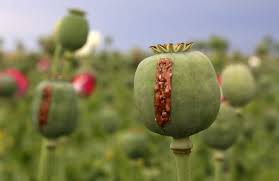
There are many drugs found in nature: magic mushrooms give hallucinations as do marijuana leaves, bark from the willow tree makes aspirin, and of course opium poppies produce the milky substance that, when squeezed and dried, becomes raw opium.

A news story from Metro presents a case of a restaurant owner trying to increase business. Bear in mind that China has a history of adding poppy powder to dishes, although it has been banned for some time.

The owner of a noodle restaurant in the Shaanxi province of China has confessed to lacing his trademark dish with opium, hoping his customers would keep coming back for more. However, one of his regular customers tested positive for opium during a routine traffic stop earlier this month.

The customer couldn't understand the result. After careful thought, he convinced family members to eat at the restaurant and then have themselves tested, thereby proving his innocence.

The restaurant owner consequently admitted to police that he had been grinding poppy buds into the food. In August, he had purchased 4.4lbs of poppy buds for $100 (£61) to crush over noodles to give them added flavor, thereby improving his business.

Luckily for the customers, the quantity in the noodles was not enough to be habit-forming.

Picture
I take an afternoon walk up the hill in my small village north of London. My pace using a rollator is leisurely (slow), giving me a chance to observe every detail around me. Several of the strip of cottages along the roadside are vacant for long stretches of time. One in particular grows all sorts of interesting weeds, which incidentally produce wonderful flowers, beneath straggly rose bushes and shrubs. Right at the front, poppy buds have been ripening—exactly like the opium leaves and buds pictured.

They are just plants, with every right to occupy spare ground. However, I don't think I'll stop and harvest them to add to my noodles.

Have you seen any interesting plants on your travels?


11 Comments

What makes dystopian novels so compelling?

9/17/2014

9 Comments

 
Picturethatwasnothingthebook.com
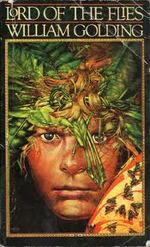
The theme of William Golding's novel Lord of the Flies holds true 60 years on. Although the plot involves English boys marooned on a tropical island, the same thing would happen to any group today. Over mankind's history, the struggle for survival is foremost in our make-up.

To mark the 60th anniversary of his written work, Nobel Prize-winning English author William Golding's family are giving his literary archive on loan to the University of Exeter. This includes the very different original version of his famous tale of boys fending for themselves on an uninhabited island. The 1954 dystopian novel features a group of British boys who try to govern themselves with disastrous results.


Picturelordoftheflies.org
Popular around the world as a school text, millions of copies have been sold. There are some 30 translations into other languages and there have been two film adaptations, in 1963 and 1990.

Click here for the BBC's wonderful article on his daughter's thoughts about his writing. 

Born on the north Cornish coast in 1911, Golding loved the sea until his death in 1993. However, in the story there is no clear explanation of why the schoolboys are where they are apart from hints that war, possibly nuclear war, has preceded the action.

His daughter believes the book has remained in demand for six decades for two main reasons. The writing compels the reader and the underlying moral questions of survival are still relevant today.

My published co-written novels in the Higher Ground dystopian series are based on a similar premise. Set in Cornwall, UK, a teenage girl sets off to find a ring her mother saw in a dream before she died. Something has happened in the past to remove all technology. The surviving generations are strong and live amongst the trees covering the land. Small groups of society live in different areas, all with rules and customs of their own. We hint at the catastrophe with a 1927 diary excerpt at the beginning of each book, which draws the reader into the adventure of the wonderful characters who band together on the way to the desolate city of Long Doom.


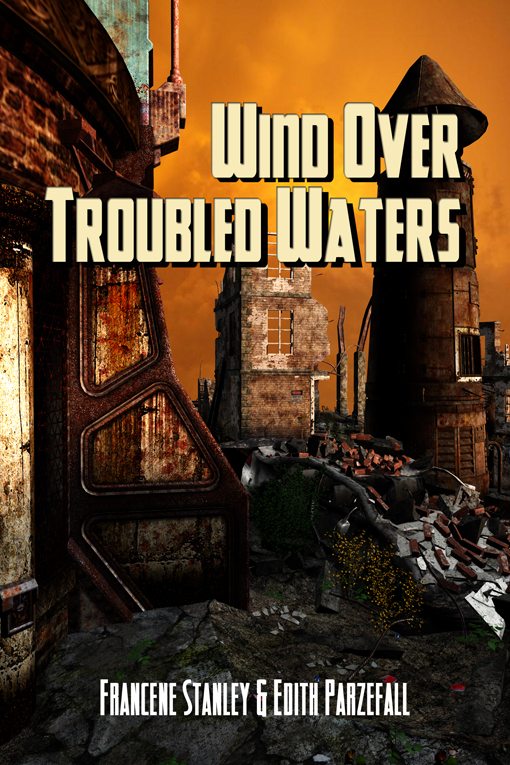
Wind Over Troubled Waters - Book one. BUY NOW

Knights in Dark Leather - Book two. BUY NOW 

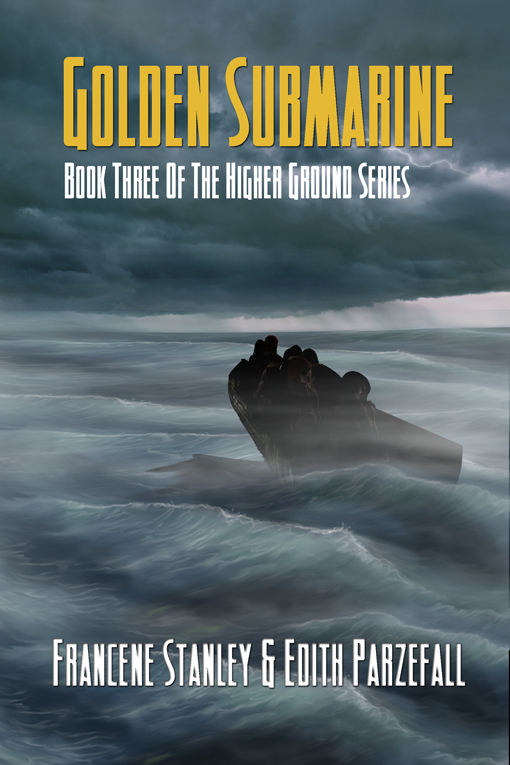
Golden Submarine - Book three.  BUY NOW 

Long Doom Calling - Book four. BUY NOW 
SEE ALL MY BOOKS
9 Comments

A disaster-plot in the making.

9/15/2014

8 Comments

 
Pictureecowatch.com
I've co-written four novels about what happens to a group of people after the Great Flood. That occurs in England.

But what about America? What if a great drought enveloped western USA?

It's happening right now. Gone are the days when Californians could throw water around. I remember visiting my son-in-laws several times in the 90s and sprinklers would spurt water at night all over public areas and median strips between traffic planted with tall palm trees. The abundance of water in the desert amazed me. One Los Angeles resident confidently told me the water comes from the great Colorado River, which would never run dry.

Close by, nestled under the Santa Ynez mountains and cooled by the Pacific Ocean breeze, the billionaires' bolt hole of Montecito, California, seems at first glance like a palm tree-strewn idyll.

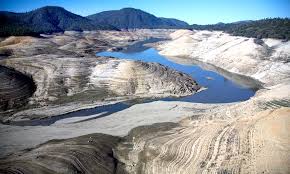
About 80 per cent of Montecito's water currently comes from Lake Cachuma, a once mighty reservoir 30 minutes drive away. Like many California reservoirs, it is surrounded by a giant white bath tub ring, revealing it to be more than two thirds empty.


Picturewww.huffingtonpost.com
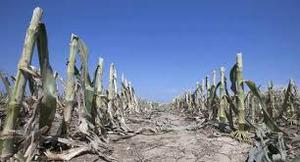
California is in the third year of one of the state's worst droughts in the past century, one that's led to fierce wildfires, water shortages and restrictions, and potentially staggering agricultural losses.

Water restrictions have cut use by 90% and expensive lawns are scorched and gone to seed. After trucking in water for months, dozens of wealthy Montecito residents have applied to drill wells at enormous cost. There are concerns that the subterranean aquifers beneath their feet could run dry.

Some people send laundry out of town to avoid water fines, some eat off paper plates, and others have painted their lawns green, resulting in one resident's poodle turning green after rolling in the paint.


Picturewww.huffingtonpost.com
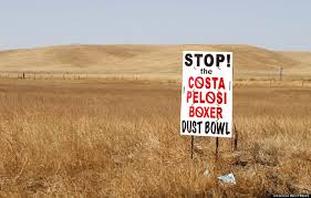
A megadrought, an extreme dry spell lasting for a decade or longer, is in everyone's mind. The epoch could threaten civilization.

Long before Europeans settled the region in the 1800s, megadroughts have parched the West, including present-day California.

The dryness in California is only part of a longer-term, 15-year drought across most of the Western USA. Persistent drought has threatened over the past 15 years, more than in any other 15-year period since the 1150s and 1160s (850 years ago).

Defined more by their duration than their severity, megadroughts can last for a decade or longer, according to a research meteorologist of the National Oceanic and Atmospheric Administration. He said the megadrought could be even worse than anything experienced by any humans who have lived in that part of the world for the last few thousand years.

If the desert runs out of water, it will return to its original form.

I'm sad for the residents, who risk losing their homes and way of life on a prayer for rain.

At the same time, I can't help mulling over a new plot for another dystopian novel. Maybe a Californian group could get together and invade England where water is in plenteous supply in the future. By the way, my novels focus on humanity surviving the best they know how without technology. You'll grow to love the wonderful characters in the first adventure story, Wind Over Troubled Waters. The novels are on the sidebar, one click away from an Amazon near you where you can read the first chapter to see if you like my style.

In the meantime, we should always remember what a tenuous grip we hold over our surroundings. Any number of catastrophes could wipe them away in a flash. Appreciate every day as it unfolds.

Live every day as if it were your last, because one of these days, it will be.


8 Comments
<<Previous

    Francene Stanley:
    Author
    I use news items in my fantasy novels.

    Born in Australia, I moved to Britain half way through my long life. If you like my writing, why not consider purchasing one of my books on the sidebar below?
    I blogged 260 days last year. Link.

    Picture
    Picture
    Picture
    Picture
    Picture
    Picture
    Picture

    Archives

    January 2015
    December 2014
    November 2014
    October 2014
    September 2014
    August 2014
    July 2014
    June 2014
    May 2014
    April 2014
    March 2014
    February 2014
    January 2014
    December 2013

    Categories

    All
    Animals
    Birds
    Earth
    Environment
    Experience
    News
    Novel
    People
    Society
    Writing

    RSS Feed

    RSS Feed

Powered by Create your own unique website with customizable templates.