• Blog
  • About
  • Contact
Francene--Blog. Year 2014

Modern fascination with ancient grains.

12/16/2014

9 Comments

 
Picturesimple.wikipedia.org
I must admit to being drawn to stories of ancient Egypt. Hence, references to that time in my novels. I'd love to taste the health-giving grain found in the tomb of King Tutankhamun. Were the people healthier back then? I think not. Skeletons have revealed the same illnesses we suffer from nowadays. However, ancient grains must have sustained the population in far gone days.

I wouldn't mind trying some of the unprocessed kernels said to have been stored in Noah's ark either. Perhaps you'd like to try a vodka made from traditionally farmed Bolivian quinoa.

In the past five years, the popularity of so-called ancient grains has increased in the American food market. One food company is including some in a breakfast cereal. Read more at BBC. 
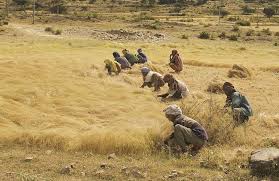

PictureTeff harvest - commons.wikipedia.org
The long-used grain category is generally agreed to include amaranth, barley, bulgur, buckwheat, kamut, millet, spelt, teff and quinoa.

Many of these grains, Bolivian quinoa and Ethiopian teff, for example, have been grown for food for thousands of years.

Ancient grains are perceived as the opposite of modern wheat, which is the descendant of three ancient strains of wheat (spelt, einkorn and emmer), and often heavily refined.

The old unprocessed grains listed below are seen as more healthy, providing more vitamins, minerals, fiber and protein than modern wheat.


• Amaranth - a South American grain which is both gluten and wheat-free and is a source of vitamin C

• Barley - an excellent source of fibre, manganese, selenium, and thiamine

• Bulgur - a quick-cooking form of whole wheat which is high in manganese

• Kamut - has a nutty flavor and is high in fiber, protein and several minerals, including selenium and manganese.

• Millet - a small, whole grain is a staple in many Asian and African countries but thought of mostly as bird food in the United States

• Spelt - commonly eaten in medieval times, spelt is part of the wheat family and is high in protein and fibre

• Teff - common in Ethiopia, this grain has the highest calcium content

• Quinoa - perhaps the best known ancient grain, quinoa is a complete protein since it has all nine essential amino acids

Source: Today's Dietitian
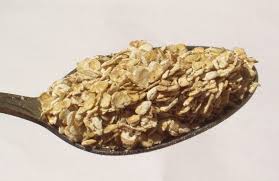
Picturerolled oats - en.wikipedia.org
One of the first references to ancient grains as a health food was in an article in the New York Daily News in 1996. Since then they have seen a steady surge in popularity.

Here in the UK, I eat porridge for breakfast (made from rolled oats), drizzled with a little honey. Since late medieval times, oats have grown in Scotland as the staple diet of crofters simply because, unlike wheat and maize, they will grow in the damp, sun-deprived climate. Back in those days, a thick paste was made, then cooled and stored in a wooden porridge drawer, from where it was eaten over several days. When cold the mixture became thick and solid, they ate thick slices for lunch or fried it for breakfast. Mmmm. Interesting. I might try frying a thicker mixture. But then, I'm not a poor crofter with no other food option.

The only grain listed above I've eaten is barley, which is good for thickening and enriching a stew.

Have you tried any ancient grains?


9 Comments

Well-being depends on your surroundings.

12/9/2014

8 Comments

 
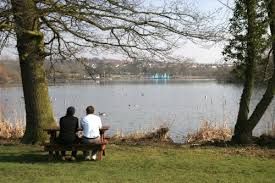
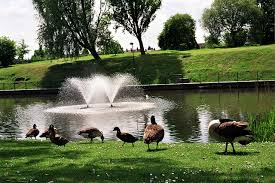
PictureAbberford Park - Borehamwood, UK
China has launched a global scientific research program to examine the unintended consequences of urban policies on human health and wellbeing.

The majority of people now live in towns and cities and the global urban population is growing by an estimated one million people each week. The total could exceed six billion people by the end of the century. However, to do so, they face a number of health risks, such as air pollution. This environment separates them from rural areas and any contact with animals, birds and the trees which purify the air.


A spokesman told BBC News: "When we take an overview, urban areas are very important determinates of health.

"The way we live on a day-to-day basis in cities affects our health in so many ways, whether it is the air that we breath, or the fact that many people in cities around the world are very sedentary (sitting at a desk in an office or sitting in a car to get to and from work) - and many people are also eating very unhealthy foods.

"We are facing global epidemics of non-communicable diseases - heart disease, diabetes and so on - and mental health problems. We are also seeing the health impact of climate change, such as heat-stress in cities and changes in the distribution of infectious vector-borne diseases."

Picture
Cities are really about people not education or employment. The people who are attracted to live in urban areas should have plenty of open spaces where they can walk and relax. Just looking at different flowers can sooth the mind.

How many health risks are people willing to take for the benefits that come with urban lives?

pic: The world’s largest eco-city rising from wastelands in China. http://www.bbc.com/future/story/20120503-sustainable-cities-on-the-rise


PictureAldenham Reservoir, Elstree, Hertfordshire UK
I'm lucky to live in Elstree, Hertfordshire. I'm surrounded by fields and trees with not another building in sight. Horses graze on the land beyond a tall stand of trees at the front. Over the hill, lies Aldenham Reservoir. At the back, frost covers horse paddocks leading to stands of trees on the horizon. The only thing I could wish for is a view of water. But heck, a stream of vehicles pass by my front door. Depending on how blocked my ears are, the motors leave a pleasant swish not unlike waves breaking on the shore. (Yeah, in my dreams.) There are plenty of parks close by and several stands of water.

But not everyone lives amongst nature. They might live in a tower block with no parks in sight. Or perhaps they're surrounded by slums. An occasional weed poking from between the hard-packed ground could be their only reminder of a natural life.

Are your surroundings pleasant?


8 Comments

Should we call a halt to progress?

12/4/2014

4 Comments

 
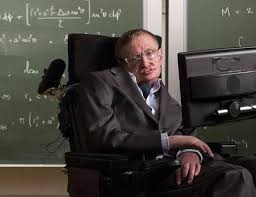
Professor Stephen Hawking announced in his bionic voice that artificial intelligence could herald the end of the human race.

At a UK press conference, he spoke after demonstrating a new communications system developed by Intel that will enable the famous scientist and author to converse, and therefore work, better than ever.
#Stephen William Hawking CH CBE FRS FRSA is an English theoretical physicist, cosmologist, author and Director of Research at the Centre for Theoretical Cosmology within the University of Cambridge. Wikipedia#

Picture
Prof Hawking started off as a normal boy, but while at University the symptoms that would cripple his body developed—motor neuron disease related to amyotrophic lateral sclerosis (ALS), or Lou Gehrig's Disease. His condition has progressed over the years. Most patients with ALS are diagnosed after the age of 50 and die within five years of their diagnosis. However, Stephen refuses to be limited by his illness.

Stephen and I were born on the same day—January 8th 1942. From the stars above the Earth, he chose England, while I waited a further turn and landed in Australia. I feel a special link to him although my mind travels along other paths. He doesn't give up on his dream of research so neither should I toss aside the way I work on my blog. (hehe)

When asked about a revamp of the technology he uses to communicate, which involves a basic form of AI, he told the BBC: "The primitive forms of artificial intelligence we already have have proved very useful. But I think the development of full artificial intelligence could spell the end of the human race."

When technology eventually became self-aware, he thinks it will supersede humanity by developing faster than biological evolution.

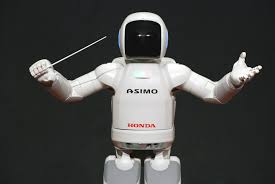
Honda has already developed a robot, called ASIMO, which helps the less-able with tasks around the home. Also, Google is experimenting with robotics.


Picture
http://world.honda.com/ASIMO/history/
Prof Hawking says the existing primitive forms of artificial intelligence have proved very useful, but he fears the consequences of creating something that can match or surpass humans. Read more at the BBC News. 

Many science fiction plots are centered around that very subject, and these theories dreamed up in a writer's mind often come to pass, although so far, no triffids have invaded Earth.

But—is there any way to stop progress?

4 Comments

Do we really know what life is about?

11/27/2014

5 Comments

 
Picture
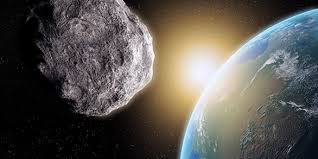
The news today says research has shown DNA can survive re-entry into the atmosphere, which came as a total surprise to scientists. This raises the possibility of extraterrestrial life molecules arriving on Earth from space.

Scientists attached small double strands of DNA to the outer casing of a rocket. Temperatures soared to more than 1,000 degrees Celsius during the short flight to sub-orbital space and back, but much of the DNA emerged intact. Over half was recovered from the grooves in screw heads and more than a third remained fully functional.

Many scientists believe comets may have brought amino acids and other organic building blocks of life to the Earth early in its history. Some even suggest that DNA, the essential molecule of life itself, could reach the Earth in meteoric dust, 100 tons of which hit the planet each day. See full Telegraph story. 

So, is it any more astounding that each one of us could have lived before?

Picture
Having read stories about children who remember details of houses in other countries where they once lived, and considering deja vu as well as child prodigies & idiot savants, I consider past lives a distinct possibility. Who really knows? We can only theorize. Read about more instances that seem to point to past lives.


In the 70s when my children were young teens, I studied a book on palmistry. Okay, many people may not believe that lines on the inner hand have any meaning. However, I drew some amazing conclusions. Firstly, I'm an old soul judging by the myriad of lines on my palm. (I guess that's why I'm wise.)

But the astounding part came when I read my son's lines. At the age of 18, Kym's palm revealed nothing but a life-line, which cut off half way to the base where it should descend. (In ten years he would be dead.) The only explanation I could give for the lack of lines crisscrossing his palm was that he was a new soul. Is this possible? Makes you think, doesn't it?


5 Comments

Obesity is draining the World's resources.

11/20/2014

7 Comments

 
Pictureobesityinamerica.org
Whatever we do in any part of the planet, there is a cost involved unless we use only what we need and recycle our cast-offs. The best example of this is to live the way early man did, hunting and gathering. But too many people occupy the Earth now to revert to a simple way of life.

Civilization has evolved to accommodate citizens in urban areas. Some people are doing so well in this system that they are eating more than is good for them—just because they can. I'm not talking about those who are ill and unable to control their weight, but people who live in built-up areas of population.

The fast food industry thrives on such people—too busy doing other things, to cook their own food.

The news today is shocking.

Research has suggested the worldwide cost of obesity equals that of smoking or armed conflict and is greater than both alcoholism and climate change.

The McKinsey Global Institute said it cost £1.3tn, or 2.8% of annual economic activity. Some about 30% of the world's population (2.1bn people) were overweight or obese, and the proportion could rise to almost half of the world's population by 2030.

They said measures that relied less on individual responsibility should be used to tackle the problem.

The steep economic toll of obesity is growing for health care and more widely in the economy. The rising prevalence of obesity is driving the increase in heart and lung disease, diabetes and lifestyle-related cancers. Illness causes a rising economic toll because of lost working days and labor output.

Okay, we don't want, or need, to go back to the hunter-gatherer days. But I can't see any way out of this rise in obesity. Even though they want to, people can't lose weight once they put it on. The yo-yo effect of health diets followed by binges does no good at all. Perhaps it would help if we only ate food that is as natural as possible.


7 Comments

Once again, business vies with conservation.

10/25/2014

8 Comments

 
Plans to quarry an area of ancient woodland in England mentioned in the Domesday Book have angered conservationists in Staffordshire, UK.

The Domesday Book, the oldest public surviving record, is a manuscript record of the "Great Survey" of much of England and parts of Wales completed in 1086 by order of King William the Conqueror. During that year, people from every part of the country had to line up and give a statement about their family and possessions.

However, the company in question, Lafarge Tarmac, said the quarry would cover only a fifth of the wood.

That's like a child nicking a large piece of birthday cake and whining that they didn't eat it all.

Picture
commons.wklipedia.org
Lafarge Tarmac also claims much of the area where it proposes to extract sand and gravel for the construction industry was damaged by fire in the 1970s and can no longer be considered ancient woodland. This disregards the natural occurrence of fire and the consequent regeneration.

A spokesman for the Trust's director of conservation, said it regarded the plans as the "largest threat to a single ancient woodland site in England that the charity has seen in its 42-year history". Historical woodland covered only 2% of Britain and often contained rare and threatened species.

So once again greed rises like an angry snake. People are putting profits before the long term importance of the environment for society.

We live close to many woods, although I don't know how old they are. Amongst the trees, no traffic sound intrudes. Birdcall and the occasional glimpse of a squirrel or rabbit delights the senses. I'd hate to see every part of the natural land cleared. How about you?

8 Comments

I've been everywhere, man—well not quite.

10/21/2014

10 Comments

 
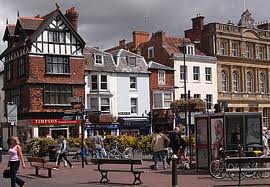
PictureSalisbury town - www.urban75.org
The travel guide Lonely Planet 'Best in 2015' names Salisbury, UK, as one of the top cities in the world to visit.

It says: ‘2015 is set to be the year visitors linger in this quintessentially English city as Salisbury uncorks the champagne for the 800th anniversary of its greatest treasure, Magna Carta. The lightning rod for the celebrations will be Salisbury Cathedral, the medieval masterpiece whose Chapter House holds Magna Carta.'

'The cathedral itself boasts a clutch of superlatives, with the tallest spire in Britain, the world's oldest working clock and Britain's largest cloister.'

I've been there. My husband and I gaped in wonder at the cathedral, and roamed the picturesque town, which is well set out with information readily available at the central tourist center.

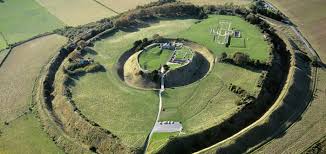
Next, we drove on to view the ancient Stonehenge, and then continued on to the Old Sarum, which is an ancient hilltop area two miles from the city center of Salisbury. For more than 4,000 years it served as a fortress and religious site, from a Neolithic henge and fort to a Norman castle and cathedral. The place was abandoned in 1219 when the bishops moved to "New Sarum," or Salisbury.

Here's their list of TOP TEN CITIES TO VISIT:

1. Washington DC

2. El Chalten, Argentina

3. Milan, Italy

4. Zermatt, Switzerland

5. Valletta, Malta

6. Plovdiv, Bulgaria

7. Salisbury, Wiltshire

8. Vienna, Austria

9. Chennai, India

10.Toronto, Canada

And the TOP TEN COUNTRIES TO VISIT are:

1. Singapore

2. Namibia

3. Lithuania

4. Nicaragua

5. Ireland

6. Republic of Congo

7. Serbia

8. The Philippines

9. St Lucia

10.Morocco


I stayed in Singapore for one month in the early eighties when I traveled as a nanny. I've also seen St. Lucia, one of the most beautiful places on Earth, in 2002 when my husband and I cruised around the Caribbean. He recovered from an operation yesterday. Before he left, he told me a nurse advised him to think of somewhere he loved before he went to sleep. When I asked him about his choice, he named the bay in St. Lucia.

How many of the named places have you seen?

10 Comments

Is the world speeding toward the end?

10/10/2014

8 Comments

 
Picturesoshable.com
Right now, two separate problems are pointing to predictions of the apocalypse. I don't know about you, but this worries me. Not that I could do anything about either situation.

Firstly, the Ebola contagion is rapidly spreading over the world with accounts of 3,800 deaths so far. According to newspapers reports, the disease is entrenched in West Africa and might spread in the air we breathe.

The other worry is the ISIS threat. Rumors have spread that ISIS is making decisions in Syria based on the ancient Islamic prophecy of the end of time. Apparently, recruits feel they are taking part in destiny and flock to the hotspot from all around the globe.

Pictureceasefiremagazine.co.uk
When both of these subjects approach at the same time, it makes me wonder if such a thing could really occur. There have been many predictions about the end of the world, the most recent being 2012 from Nostradamus. None of them—of course—have happened.

You and I can do nothing about either of them.

So, what's life all about? Should live as best we can despite what's happening in the rest of the world?

Life isn't fair. Some of us are lucky enough to be born in a free country where society looks after our welfare. I wouldn't be here now without hospital treatment, and chances are, you wouldn't either. And yet, in countries around the globe, people are caught up in war or pestilence and die by their thousands.

All I can do is pray for them, ask the Creator of us all to grant them some comfort when their loved-ones are snatched away. Underneath, we are all people, living according to concepts we believe to be right or just.

What do you think? Is the end of the world nigh?


8 Comments

Can you believe 1/2 the animals have gone in 40 years?

9/30/2014

10 Comments

 
Picturewww.theguardian.com
Since 1970, uncontrollable human expansion has caused the loss of half of the animals in the world. A report by the World Wildlife Fund (WWF) has found that populations of mammals, birds, reptiles, amphibians and fish have declined on average by 52 per cent over the period of 40 years.

Freshwater creatures are worse off, with population collapse of more than 3/4 over the same period.

Most of the decline is down to human activity—habitat loss, deforestation, climate change, over-fishing and hunting.


Picturewww.telegraph.co.uk
The WWF said the report sounded a dire alert and urged people to cut down on consumption.

WWF Director of Science and Policy said, “But we are not despairing, because we are able to say why we are losing these animals; we are seeing a loss of their habitats. We know what the problem and we are perfectly capable of putting it right.

“We need political agreement so a global climate deal can be reached and policies which take account of natural capital. And we need to start thinking about our own consumption.”

The WWF’s Living Planet Report looked at 10,380 populations of 3,038 species across the globe. The situation is worst in low-income countries.


Picturewww.theguardian.com
Examples of dwindling wildlife populations include forest elephants in Africa, which are facing habitat loss and poaching for ivory and could become extinct within our lifetime, and marine turtles with an 80 per cent drop in numbers.

The Living Planet Report also warned that human activity is outstripping the resources the Earth can provide.

The WWF offers some advice. Use public transport instead of your car, increase recycling and eat less meat and dairy products which will cut down on the amount of new land cleared for farming. Recycle, put pressure on political and industry leaders, support sustainable businesses and send children outside to reconnect with nature.


Picture
Anyone born in in 1970 or before would have lived in a world teeming with animals compared to life today. Not only that, but children were allowed to play outside.

Born in Australia in the early forties, I could have seen 1/3 more animals than I would today. Introduced predators such as cats and foxes are mainly to blame. Because of the country's water shortage, the population lives largely around the perimeter, leaving the desert center free.

Here in England, the red-necked phalarope is top of the endangered list, followed some we have grown to know like the cuckoo, the red squirrel, the turtle dove (symbol of loving), the brown hare and lastly the hedgehog.

What animal is disappearing near you?


10 Comments

Are UFO sightings the real thing?

9/24/2014

9 Comments

 
In these times, it's hard enough for some people to comprehend time zones between countries. A recent episode has left me frustrated about twitter retweets. Surely someone living in America can understand that a person in England doesn't retweet while they are asleep.

However, laying that aside, along with all the other problems that are hard to fathom like quantum mechanics (there could be multi universes existing at the same time according the great physicist Brian Cox), a recent UFO sighting in England has raised the old debate again as to their reality.

Picture
www.mirror.co.uk
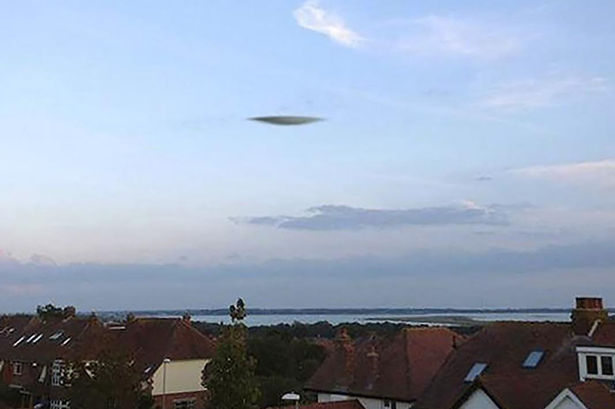
The pictured UFO was spotted flying over the south coast of England yesterday. Several people saw the fast-moving disc-shaped object speeding through the skies near Portsmouth. The picture has led to speculation on Twitter. However, a Met Office expert has ruled out suggestions that it could have been a cloud.

A Met Office representative said: "After looking at the images, I can say the object is nothing to do with the weather. It is not meteorological and is not a cloud."

A senior lecturer in the institute of cosmology and gravitation at The University of Portsmouth, added: 'Given the pictures show a dark object against a daytime sky, it's clearly not an astronomical object. Many UFO sightings are the planet Venus, but this one can't be that. The distances in space are so vast that it's just not possible for aliens to be visiting Earth, so any interpretation suggesting this is an alien spacecraft is clearly wrong."

Well, that gives us the experts' opinion. What do you think about the possibility of UFO's?

9 Comments
<<Previous

    Francene Stanley:
    Author
    I use news items in my fantasy novels.

    Born in Australia, I moved to Britain half way through my long life. If you like my writing, why not consider purchasing one of my books on the sidebar below?
    I blogged 260 days last year. Link.

    Picture
    Picture
    Picture
    Picture
    Picture
    Picture
    Picture

    Archives

    January 2015
    December 2014
    November 2014
    October 2014
    September 2014
    August 2014
    July 2014
    June 2014
    May 2014
    April 2014
    March 2014
    February 2014
    January 2014
    December 2013

    Categories

    All
    Animals
    Birds
    Earth
    Environment
    Experience
    News
    Novel
    People
    Society
    Writing

    RSS Feed

    RSS Feed

Powered by Create your own unique website with customizable templates.