• Blog
  • About
  • Contact
Francene--Blog. Year 2014

England's ancient Halloween rituals.

10/31/2014

7 Comments

 
PictureLeeds - www.mirror.co.uk
Many celebrations we see around the world today have developed from earlier English, Welsh, Irish and Scottish practices. Halloween started from a pagan Celtic festival related to the Irish and Scottish festival of Samhain and the Christian festival of All Saints' Day, All Hallows, when people offered prayers for the souls of the dead.

During Samhain, supernatural forces were thought to be stronger than normal. Many cultures honor their ancestors and welcome spirits at this time in autumn before the approach of winter.

Souling, for example, is a centuries-old tradition in Cheshire where actors known as mummers perform a play for All Souls Eve on 1 November. The tradition was intended to protect communities against outsiders and dark spirits.

In the east of Kent, a similar ritual known as hoodening takes place each year in villages such as Sarre and St Nicholas-at-Wade about four days before Christmas. A troupe of costumed villagers carry a wooden horse to local pubs and perform a play which has death and resurrection as the theme. Some believe it came from an Anglo-Saxon custom.

The following month in the orchards of southern England, Apple wassails, or Apple Howling ceremonies, are common. Sometimes, cider is poured on to apple tree roots to encourage good spirits to produce a bountiful apple crop the following year, and then shots are fired through the branches to ward off evil spirits.

There are also traditions which mark the rebirth of a new year.
Picturewww.bbc.co.uk
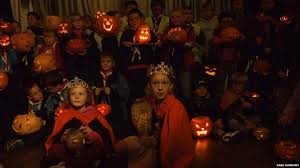
A village in Somerset called Hinton St George has a tradition of pumpkin carving and night-time walks that sounds remarkably similar to our Halloween rituals.

Far from courting the dead like Halloween, the tradition allegedly stemmed from a bunch of inebriated villagers. 

Men folk went to a nearby village and drank too much. Intent on bring them home in the dark, their wives carved mangels and put a candle inside it to stop the wind extinguishing the flame.

Indeed, the origins of Halloween can be traced back 2,000 years to when the Celts lived across the lands we now know as Britain, Ireland and northern France. The farming and agricultural people determined the Pre-Christian Celtic year by the growing seasons and Samhain marked the end of summer and the harvest and the beginning of the dark cold winter. The festival symbolized the boundary between the world of the living and the world of the dead. Large bonfires were lit in each village in order to ward off any evil spirits. Celtic priests, known as Druids, would have led the Samhain celebrations. Afterward, the Druids would ensure the hearth fire of each house was re-lit from the glowing embers of the sacred bonfire, to protect the people and keep them warm through the forthcoming long, dark winter months.

I love hearing about how traditions started, but I don't follow Halloween and never have. At my age, the whole rigmarole seems silly, almost childish, not to mention a huge waste of money. Carving a pumpkin is creative, and the innards can be eaten, but the assortment of goodies displayed in shops doesn't appeal to me. Perhaps I'm too practical and lacking in the fun impulse.

Why do you celebrate Halloween?
7 Comments

Did your parents teach you well?

10/30/2014

10 Comments

 
Picturewww.theguardian.com
I don't want to concentrate on a depressing subject, but terrible things are happening in society, right here in the UK. One of them is child abduction. More than 3,000 children under the age of 18 have been reported missing in Greater Manchester this year.

Sexual exploitation of children is a normal occurrence on some streets and estates in that city. Children are often snatched while making their way home after school.

The alarming new report, released by the Home Secretary, suggests child sex abuse may have been fuelled by the youngster's increased exposure to explicit music videos and so-called "sexting", selfies and Instagram.

How could a sane so-called society allow such things to happen? I could cry for all the children who will never live a life we call normal.

One of my own adult daughters died nine years ago after treatment for leukaemia and consequent liver damage. With any death of a child, the parent is left with lingering guilt. Did they do enough? Did they raise their child with the skills to survive in the world? Here's a poem I wrote after receiving her last letter.


SHE WROTE TO ME


You taught me well, (she wrote to me)

Showed me how to be free

Could not have hoped for any more

Brought teaching to the fore.


You are my amazing mother

Not like any other

And although my path is troubled

I must walk on, hobbled.


Never forget it's my own path

Now I've strayed from the hearth

And I must tramp along the way

Although I'd love to stay.


Back then you showed me how to live -

A good life and to give

Even though you're treated badly

Not to give in, sadly.


And how to be an example

Your lead was so ample

Showing others how to hold tight

Though they would rather fight.


(And when I read her letter

Appeased and felt better

To know that I'd done a good job

Whilst trying not to sob.)

There must be many people who haven't been raised well, but have been strong enough or lucky enough to become a strong adult.

What has your child/parent experience been?

10 Comments

Do you laugh enough?

10/29/2014

8 Comments

 
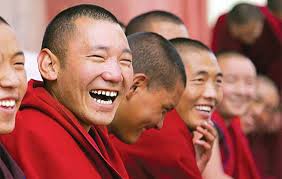
Picturesingularcity.com
I don't know about you, but I don't laugh as much as I did when I was younger. Maybe I'm taking life too seriously—not finding the humour in all the difficulties that I need to pass by.

Most people will tell you jokes and humour make them laugh. But according to experts, they are wrong.

A psychologist from the University of Maryland found that we actually laugh more when we are talking to our friends. When we are with others, we're 30 times more likely to laugh at something.

Rather than joking, we laugh at statements and comments that could in no way be considered funny.

Laughter is a form of communication, not a reaction—a social behaviour which we use to show people that we like and understand them.

About two years ago, I used to take a morning walk with a neighbour up the steep hill. We'd purchase our husband's newspaper and then stroll downhill—talking all the time. It's not that we had a lot in common other than both being married women of about the same age, but rather a social outing, a sharing of trials and tribulations. Yet, we laughed all the time. The hilarity took away the sting of ageing and the problems that might otherwise weigh us down.

Our routine ended with my neighbour's husband's death. She never accompanied me again. I took to walking alone, breathing the air, feeling the wind on my skin. But I missed the laughter—the sense of belonging, of companionship.

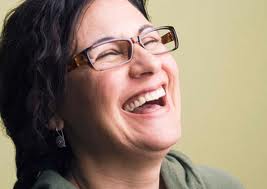
Some researchers think laughter might be the best medicine, helping you feel to better and putting that spring back in your step.


Picturewww.quickhealth.net
Yet researchers aren't sure if it's actually the act of laughing that makes people feel good. A good sense of humour, a positive attitude, and the support of friends and family play a role, too.

We change physiologically when we laugh. We stretch muscles throughout our face and body, our pulse and blood pressure go up, and we breathe faster, sending more oxygen to our tissues.

'Laughter is the sun that drives winter from the face.' Victor Hugo.

I must tell you, dear reader, that growing old alone isn't a belly laugh. My family live in Australia, far away from me in England. Sometimes, I laugh with my husband about trifling issues, or things that go wrong. He's not one to join me although he might crack a smile. Mostly, I chuckle to myself when I make a mistake. Even that tiny show of humour makes me feel better.

What about you? Do you laugh enough?


8 Comments

Are elderly people a drain on resources?

10/28/2014

10 Comments

 
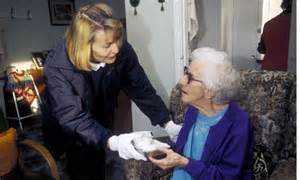
Picturewww.theguardian.com
As progress is made in maintaining health, people are living longer. Now, the aging population in England requires more support and councils need to find the money to cover the cost of care.

Some people need extra care or support, practical or emotional, to lead an active life and do the everyday things that many of us take for granted. Social care services look after the health and welfare of people from all walks of life.

Town hall chiefs have given fair warning. Thousands of libraries, parks and leisure centers could come under threat because councils are forced to work out what services to cut if they want to prevent the elderly care system collapsing.

Councils are legally required to provide social care and other essential services such as rubbish collection and are banned from running up a deficit. They are being forced to divert cash from so-called discretionary services such as maintaining parks and running leisure centers to maintain these essential services.

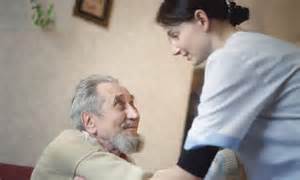
Picturewww.theguardian.com
Firstly, the aging population payed into National Health Service when it first began and can expect to be cared for at the end of their working life. So many foreigners have arrived in England and now take advantage of the social system. 
Everyone receives free health care—myself included. I arrived in the UK from Australia in 1997 and have lived here with my English husband ever since. I wasn't among the people who set up the marvelous health benefits residents rely on today.

A reciprocal arrangement works between Australia and England because the normal pension is covered between countries. Australia subsidizes my English pension, but health costs are not part of the exchange. Other countries many not do the same, so asylum seekers and immigrants rely solely on the UK for support.

Somehow, the care support network has been passed onto local councils, who supply nurses and support workers to people living independently, and finally homes for elderly residents.

It's all so complicated and I'm glad I don't have to work out the budget.

My husband, who has never had a sick day in all his 76 years, is now ailing. He's a proud man, and the visiting nurses are wonderful in allowing him to maintain his dignity.

This aging health care problem will only escalate in the future due to advances in medical techniques. We should have seen it coming and prepared for future expenses instead of siphoning money off for other projects.

It's a touchy subject, but everyone will grow old eventually.

Are you happy with the way elderly people are cared for near you?


10 Comments

Is foreign war ever justified?

10/27/2014

7 Comments

 
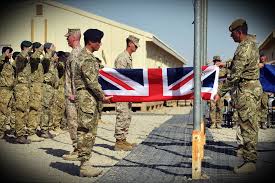
Picturewww.mirror.co.uk
Britain's War in Afghanistan is over, but were the soldiers' sacrifice worth the effort?

After the longest conflict in modern times, the lowering of the Union Flag in Camp Bastion marks the end of Britain's 13-year campaign. The symbolic ceremony represented the formal handover of power to Afghan Forces.

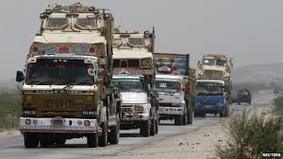
During Operation Herrick, 9,500 British military personnel were based in Afghanistan.

In total, 453 British lives were lost fighting the Taliban. Thousands more were injured, many permanently. The brave front conceals deep wounds.

Picturewww.bbc.co.uk
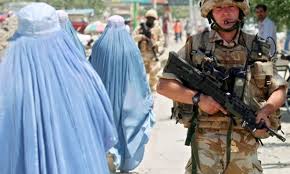
Many people didn't agree with Britain joining America to send our young men to fight in a foreign country, myself among them. Every time I think of the injured or dead, a lump comes to my throat. But then, I don't like any part of war. I know, you'll say we have to defend ourselves and the rights of others. Be that as it may, what did British involvement achieve?

The Defence Secretary said, "Afghanistan is now a safer, most prosperous and democratic place than when we started.

Picturewww.theguardian.com
"We've not eliminated the insurgency but what we have done, through the British troops' sacrifice, is given Afghanistan the best possible chance of a safer future by training a 300,000-strong Afghan army and security force."

However, what do the families of the dead or wounded soldiers think? Is this any reason for the terrible sacrifice made?


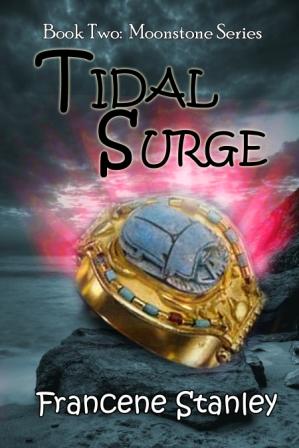
As you know, I use news stories as a basis for the visions in my Moonstone series of novels. 

Picture
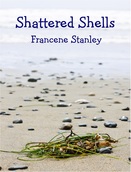
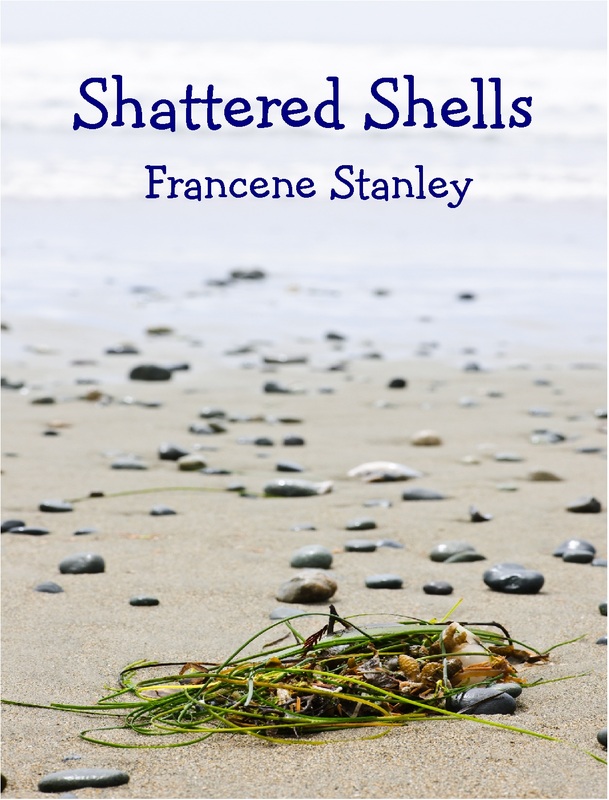
My new novel Shattered Shells will be released on Amazon on 31st of the month. The pre-order link is live now. 

In each novel, the main character is swept away to random places, where she acts as a little inner voice of reason to help in the situation she finds herself in. Here's an excerpt about a new bride and her soldier husband from Ever Changing Sea, the final unpublished novel in the series.


Black dots appeared before her eyes. In the next breath, she inhaled the sweet perfume of lilies. A whirling tunnel spun her away. Flashes of color revolved in a blur of motion. Patterns shaped and reshaped in twists and swirls. A deep boom and roar resembling the hum of an industrial air conditioner rang in her ears. Spinning faster and faster, she tumbled inside the churning passageway toward another place.

* * *

I'm flying again. My breath catches, although such a thing can't happen when my body's not here. Penetrating the blur, I scan a strange room. I can't make out the details, but after a few seconds, the veil lifts. My view of the scene reminds me of peering into a telescope. Details come into focus at the center of my gaze, but the edges are blurred. Although the experience is not new, I take a moment to adjust. Taking care to maintain balance despite the familiar vertigo, I swing my gaze from one fuzzy image to another in the room and concentrate until objects solidify.

Small windows cast light on twin beds covered with aqua quilts matching a deeper shade of carpet on the smooth wooden floor.

At a jingle, a woman discards her paper and reaches for her mobile phone.

With instant speed, I meld with her, not understanding how, just aware of the result.

Instead of mine, her head turns. We hold the phone to our ear and gaze at the gray sky outside.

"Anne." Her husband's voice quivers with urgency. "My unit is leaving tomorrow."

We glance at a newspaper with today's date. The news article about the UK government's renewed action in sending British troops away remains fresh in her mind. With rising anger she blurts, "Is this why you joined the army? To fight someone else's war? Are you ready to sacrifice your life for that, and ruin mine?"

His voice snaps. "It's not for me to question orders. This is what I joined up for. There's a job to do, a country to defend. You knew I was a soldier when I met you. Why are you bringing this up now? Right when I'm about to leave?"

Our hand fiddles with the bed-covers. A gold wedding band catches the light.

They're about to argue, and I'm eavesdropping without intent. But I'm here to do a job: help her make a correct decision or avert harm. What would I do in her circumstances? I know the answer to that. I'd do anything to keep my love alive.

"This war is wrong," we say. "Did they ask you if you want to join this fight? No, they didn't. It's not as if you're defending our shores. Oh, you never take any notice of me. Do what you want." We toss the phone onto the bed, while she wishes she'd never spoken that way.

I yell at her, 'Call him back, you fool.'

Anne hesitates, pride and stubbornness balling up inside her. Let him call her if their relationship matters that much. What does he care about what she wants? He just does what he pleases and takes no notice. Playing men's war games.

'He cares. Of course he cares.' I whisper. 'Don't waste your precious love. Just ring him and apologize.' My advice acts like the inner voice we all hear, warning of danger, advising in times of stress.

We slump forward. Anne condemns herself. She must have been mad to let her fear spill out like that—sick with apprehension about so many coffins returning from overseas and knowing he could be in one of them. She's wrecked their love and trust with her harsh words. She might never see him again. Why argue right now?

'Ring ... him ... back.' I ache for her, but force my opinion onto her mind. 'Don't think. Do.'

Spirit sagging, we reach for the phone, press the re-dial button and wait. We dab our eyes with the other hand and swallow tears. The phone rings on.

At last, he answers with a curt, 'Yes.' He's puffing.

Our heart leaps, skips a beat, and then races. "It's me. I just want to tell you I love you."

"Thank God you rang. I felt so ... never mind. We spoke in haste. Worrying times. I love you too."

With relief, we draw a breath. "I—."

He cuts in, "I've got to go now, but I'll carry you inside my heart. Remember our love. That's the most important thing." The line goes dead.

Euphoria battles with anxiety. We raise our gaze and say, "Keep him safe, Lord. I love him so much." Happiness removes the sour end of the earlier conversation.

On the power of her exhilaration, I rise. Anne and her surroundings fade while I spin inside the tunnel of dreams.

* * *


Each of us has a different opinion about sending troops to a foreign country to fight. What is yours?

7 Comments

Can you remain calm during a crisis?

10/26/2014

8 Comments

 
Picture
Yesterday, I had a drama of my own to contend with. Yet, despite my best intentions and years of training, I couldn't remain calm.


Thinking of the first lines of the famous poem did no good.

desiderata - by max ehrmann.   'Go placidly amid the noise and haste, and remember what peace there may be in silence.'


My husband arrived home from hospital after an operation at 7pm and immediately began pacing and unpacking equipment he'd been given for his catheter (a bag to drain fluid from the body). He took no notice of my advice to sit and rest, that he could sort the packets out later, that he needed to be calm. Instead he pulled everything out, examined it, even slit one packet open to measure the link against another and kept up a running commentary about how he didn't know the way everything connected when the bag he was wearing was full. Also, he couldn't undo any connections to drain the bag despite tugging carefully.

Meanwhile, his bag was half full. I tried to find instructions on various parts of his booty—to no avail. After two hours, he repeated over and over, “What am I going to do?” His emotional state was nearing the dangerous. He's the panicky one and I'm the calm one in our partnership.

Despite my wish to help, I can't get around well, or bend, or walk without pain. I tried to look at the outlet beneath the bag, but couldn't get close enough to examine it properly. I re-fixed the bag to his leg as best I could. Each time I did something for him, my leg hurt more, however, my pain should not be mentioned in a stressful situation.

When the bag was ¾ full, I pressed my care button and spoke to the operator, who advised me to ring the doctor's out of hours emergency number, which I did. After questions about irrelevant matters like: if he was suicidal, had been in contact with Ebola, had taken drugs, excess bleeding or chest pain in the last hour, took about 15 mins. Then she set up a return call from a doctor.

The doctor rang back ½ hour later and arranged a visit from after-hour nurses. Meanwhile the bag was almost full. My husband had been pacing for four hours, increased his frenzied walking between one side of the room to the window to check for the nurses. By now, the bag was bulging.

After another call to the emergency number, and then to the nurses station, my husband was informed they'd be with us in half an hour. He said, “I don't think I can wait that long.”

Five hours. He pulled some pliers out of the cupboard and some strong masking tape and cut several strips, ready to seal the bag when he slit it. Then he went to the bathroom. Came back with a smile. He'd discovered by accident how to release the plug hole on the bottom of the bag.

The nurses arrived shortly after and what a relief. Those wonderful women explained patiently how to do everything he needed, fitted another strap high up on his leg and left with our wholehearted gratitude.

What did I do during the ordeal? Did I sit patiently? I sat all right, but with mounting tension, heart racing, breathing difficult, uncomfortable because I couldn't get ready for bed, cold, in pain and upset. I don't think anyone would 'go placidly amidst' the turmoil. Not if they are the person responsible for another's well-being.

So he, the strong one physically but weakened by illness, and I, the strong one emotionally and sucked into a spinning vortex of helplessness, both lost our power.

Have you ever remained calm in an emergency?

8 Comments

Once again, business vies with conservation.

10/25/2014

8 Comments

 
Plans to quarry an area of ancient woodland in England mentioned in the Domesday Book have angered conservationists in Staffordshire, UK.

The Domesday Book, the oldest public surviving record, is a manuscript record of the "Great Survey" of much of England and parts of Wales completed in 1086 by order of King William the Conqueror. During that year, people from every part of the country had to line up and give a statement about their family and possessions.

However, the company in question, Lafarge Tarmac, said the quarry would cover only a fifth of the wood.

That's like a child nicking a large piece of birthday cake and whining that they didn't eat it all.

Picture
commons.wklipedia.org
Lafarge Tarmac also claims much of the area where it proposes to extract sand and gravel for the construction industry was damaged by fire in the 1970s and can no longer be considered ancient woodland. This disregards the natural occurrence of fire and the consequent regeneration.

A spokesman for the Trust's director of conservation, said it regarded the plans as the "largest threat to a single ancient woodland site in England that the charity has seen in its 42-year history". Historical woodland covered only 2% of Britain and often contained rare and threatened species.

So once again greed rises like an angry snake. People are putting profits before the long term importance of the environment for society.

We live close to many woods, although I don't know how old they are. Amongst the trees, no traffic sound intrudes. Birdcall and the occasional glimpse of a squirrel or rabbit delights the senses. I'd hate to see every part of the natural land cleared. How about you?

8 Comments

How modern man's teeth compare to their ancestors.

10/24/2014

10 Comments

 
Picturewww.romansrevealed.com
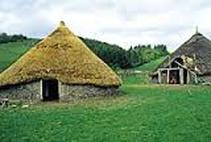
Nearly 2000 years ago, the Romans invaded Britain and changed the country's customs, food and way of life forever. Even today, the evidence of the Romans remain in the ruins of Roman buildings, forts, roads, and baths, which can be found all over Britain.

Their influence surrounds me. I live on an old Roman road, Watling Street, that stretches between London and St. Albans.

The diet during that time, rich in coarse grains and cereals, meant the population suffered from extensive tooth wear from a young age.

But, according to research into skeletons from that era, people living in Roman Britain had healthier gums than their modern-day descendants. A team at King's College London and the Natural History Museum found only 5% of adults had gum disease in the Roman era compared to 33% today.

Picturewww.canterburytrust.co.uk
Gum disease starts with inflammation and a bit of bleeding. But it can become more severe and damage the bone and supporting tissue deep inside the gum. A trace of severe gum disease is left in the skeletal teeth and jaws, long after the fleshy gums have rotted away.

However, ancient Britain was certainly not a golden age of bright white teeth. Our ancestor's smiles were littered with infections, abscesses and tooth decay.

The research group analyzed over 300 skulls from a burial ground in Poundbury, in Dorset. The skeletons, mostly of people who died in their 40s, dated from between 200 and 400 AD.


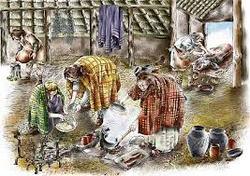
PictureInside the hut. www.worchestergov.uk
Half of the Roman skulls had some tooth decay or showed signs of infections and abscesses. The findings, published in the British Dental Journal, showed evidence that gum disease was about far more than just brushing twice a day.

It is estimated that one in three adults in England today have tooth decay. Modern day smoking and type 2 diabetes are blamed for a figure of nearly one in three today.

What can we learn from this? Don't smoke or get diabetes. And most importantly, make sure you eat a balanced diet without chewing on hard grains, although crunchy food like apples and celery are good for gums. I am inclined to support what my father said: “Everything in moderation.”

Is your diet healthy enough to keep your teeth and gums intact?


10 Comments

Don't worry about break-away teens.

10/23/2014

8 Comments

 
Picturewww.huffingtonpost.com
A University of Virginia study found that pampering teenagers can have a damaging impact on their relationships in adolescence and early adulthood.

If parents keep a tight control over their offspring, the teens might struggle to form relationships and are more likely to bow to peer pressure.

Published in the journal Child Development, research followed nearly 200 youngsters aged 13 to 21.

The 13-year-olds whose parents utilized emotional tactics like guilt to control them were less capable of maintaining balanced relationships in early adulthood.

The greater the psychological control exerted by their parents, the more difficult it was for teens to establish independence or closeness in their relationships.

Picturewww.secureteen.com
Success of their future relationships like closeness with romantic partners while maintaining their own confidence depended on the level of control exerted by parents.

A lead researcher said parents who used guilt, withdrawing love or emotional manipulation to control their teenage children were more likely to pressure them to make decisions in line with the parents’ wishes rather than their own.

So, take heart. Those break-away spurts of independence have a purpose. Adolescents actually need opportunities to practice decision making before they leave the nest.

On thinking back, maybe I was too controlling with my teens. Just working it out—that would be almost forty years ago. Time passes in a flash after your children leave home. My teenagers decided to move away from home and establish their own life and rules. Back in the 70s, it was easier for teens to find employment and set up a home with friends.

I guess you'll have a story to tell about your own relationship with your parents or your teens.


8 Comments

How could you pretend to be in a coma for 2 years?

10/22/2014

9 Comments

 
Picture
A UK man, who claimed to be a quadriplegic so ill he would frequently slip into a coma, has been caught out.

During his trial, a judge watched video pictures of him shopping in Tesco and driving across the Severn Bridge In a Swansea Crown Court yesterday, he was unmasked as a callous fraudster.

Knight stole £41,000 from an elderly neighbor then spent two years pretending to be too sick to stand trial.

During the trial, the 47-year-old appeared in a wheelchair and neck brace. He admitted 19 separate counts of forgery, fraud and theft.

The video footage showed Knight pushing a trolley around various Tesco stores and it was confirmed he was there because his store card had been used.

I'd like to know how the fraudster could put up such a pretense for such an extended period of time. Surely nurses would have visited to check on his condition from time to time.

So, all you potential crooks, maybe you could try to act the part of a quadriplegic, but if you venture from home, you'll be caught.

This brings to mind a hero of mine. Let's end on a happy note. See the inspiring song I wrote about Christopher Reeve, which is featured in the first novel in the Moonstone series. 

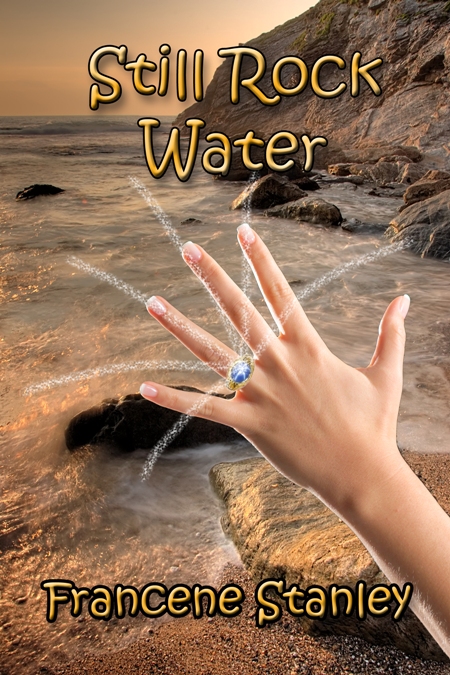
Still Rock Water Book Trailer: Trapped by marriage until an Egyptian ring shows her a way out http://youtu.be/VM9nzvHci9A


9 Comments
<<Previous

    Francene Stanley:
    Author
    I use news items in my fantasy novels.

    Born in Australia, I moved to Britain half way through my long life. If you like my writing, why not consider purchasing one of my books on the sidebar below?
    I blogged 260 days last year. Link.

    Picture
    Picture
    Picture
    Picture
    Picture
    Picture
    Picture

    Archives

    January 2015
    December 2014
    November 2014
    October 2014
    September 2014
    August 2014
    July 2014
    June 2014
    May 2014
    April 2014
    March 2014
    February 2014
    January 2014
    December 2013

    Categories

    All
    Animals
    Birds
    Earth
    Environment
    Experience
    News
    Novel
    People
    Society
    Writing

    RSS Feed

    RSS Feed

Powered by Create your own unique website with customizable templates.