• Blog
  • About
  • Contact
Francene--Blog. Year 2014

Shop staff could spot early dementia. 

2/28/2014

6 Comments

 
Picturefreeimages.co.uk
Nearly 200,000 high street workers in the UK are about to be trained to spot the signs of dementia under a push of new measures to help people with the condition. Workers at major stores will be on the lookout for tell-tale signs to provide better support for sufferers.

It would have to be early signs, because most people with the debilitating condition wouldn't be out shopping. Perhaps the staff will target people who are wandering about with no family to support them.

In the UK, an estimated 800,000 people have already been diagnosed with dementia, but experts expect this figure to soar to 1.7 million by 2051.

According to the Alzheimer's Society, one in three people aged over 65 will develop the condition, and two-thirds of sufferers are women. It's worrying that one third of the world population will decline.

The word dementia describes a set of symptoms that may include memory loss and difficulties with thinking, problem-solving or language. The condition is caused after brain damage from diseases, such as Alzheimer's disease or a series of strokes.

Picturefreeimages.co.uk
However, dementia is not merely a problem of memory. It reduces the ability to learn new facts, adapt to new situations, reason, retain, or recall past experience and there is also loss of patterns of thoughts, feelings and activities.

You might wonder about yourself or someone close to you. But don't worry about forgetting small details.

My husband (75 yrs) and I (72 yrs) do that at least once a day. We see a face on television and can't recall their name. Then, each races the other to see who can come up with the name first. I must admit, we're inclined to mentally go through the alphabet and wait for a name to pop up.

However, declining memory, especially short-term memory, is the most common early symptom of dementia. People with ordinary forgetfulness can still remember other facts associated with the thing they have forgotten. For example, during conversation they may forget their next-door neighbor's name but they still know the person. A dementia sufferer will not only forget their neighbor's name but also their past association.

I'll keep a careful watch on my husband and he'll do the same for me. But for all those people without a close family tie, it's good to know about support staff in major stores who are on the lookout in a caring society.
6 Comments

An insight into what affects climate.

2/27/2014

8 Comments

 
Picturewww.theguardian.com
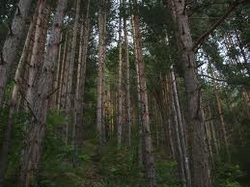
If you wander into a pine forest and inhale the resinous smell, you could be experiencing the very thing that limits problematic levels of increased temperatures in the world. New research suggests a strong link between the powerful smell of pine trees and climate change. The research, published in the journal Nature, fills in a major gap in scientific understanding.

Researchers say they've found a mechanism by which these scented vapors turn into aerosols above boreal forests. One of the most significant but least understood sources of aerosols is the sweet-smelling haze found in pine forests in North America, northern Europe and Russia. These particles promote cooling by reflecting sunlight back into space and helping clouds to form.

Clouds can develop in a number of other ways, including volcanic activity, gasses from animals, cattle in particular, and by humans through the burning of coal and oil.


Picturecommons.wikimedia.org
Now an international team of researchers say they have solved the chemical mystery by which the rich odors become reflective, cooling particles. The authors believe that the particle mist is playing a significant role in reducing the impact of rising temperatures on Earth.

The scientists stress that the new understanding is not a panacea for climate change as forests will stop emitting vapors if they become too stressed from heat or lack of water.

Meanwhile, controversy rages over whether a change is occurring at all, or, if it is, whether humans are the cause.

Last year, scientists working on the most authoritative study on climate change were urged to cover up the fact that the world’s temperature hasn’t risen for the last 15 years.

In the recent United Nations report compiled by hundreds of scientists, politicians in Belgium, Germany, Hungary and the United States raised concerns. 1998 was the hottest year on record and world temperatures have not yet exceeded it, which scientists have so far struggled to explain.

I'm no scientist, but I can see a remarkable change in weather patterns lately. This might be due to fluctuating cycles over the centuries as some have suggested. But, a major factor could be cutting down the world's wonderful forests.


8 Comments

Saving seeds for a potential apocalypse.

2/26/2014

3 Comments

 
Picturewww.virginmedia.com
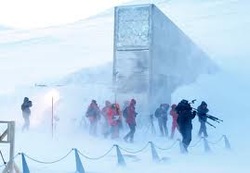
More than 20,000 produce from over 100 nations have arrived at a "Doomsday vault" in the Arctic Circle.

On the sixth anniversary of the frozen depository, which now houses more than 800,000 samples, the latest delivery has arrived at the Svalbard Global Seed Vault. The shipment includes the first offering from Japan, where collections were threatened by the devastating earthquake and tsunami in 2011.

Designed to withstand all environmental, natural and human disasters, the facility offers permanent protection—a global backup system for the planet's plant resources. The seeds in the vault are stored under black box arrangements, meaning that overseers of the vault will never open or test any of the seed packages.


Picturescience.howstuffworks.com
Deep inside a mountain on a remote island in the Svalbard archipelago, located halfway between mainland Norway and the North Pole, the vault cost £5m ($7m) took 12 months to build. The permafrost and thick rock ensure that, even in the case of a power cut, the seed samples will remain frozen in the earth for centuries. The vault will be the ultimate insurance policy for the world's food supply, securing millions of seeds representing every important crop variety available in the world today.

Here are a few of the storage facilities amongst more than 1,000 seed banks located all over the world.

1.       The Millennium Seed Bank Project, located at the Royal Botanical Gardens, Kew, United Kingdom aims to store and protect more than 24,000 global species of plants

2.       The Vavilov Institute of Plant Industry was established in 1894 in St. Petersburg, Russia, and is the oldest seed bank in the world

3.       Berry Botanic Garden (Portland, Ore.): Seeds from endangered plants of the Pacific Northwest

4.       International Center for Tropical Agriculture (Coli, Colombia): Cassava, forages, beans

5.       International Potato Center (Lima, Peru): Potatoes

6.       International Institute for Tropical Agriculture (Ibadan, Nigeria): Groundnut, cowpea, soybean, yam

7.       International Rice Research Institute (Los Banos, Philippines): Rice

Diversity is crucial to the future of human civilization.  Is mankind preparing for a potential apocalypse? If such an event happened without warning, I'm wondering how stranded societies could access the storage in the Arctic.

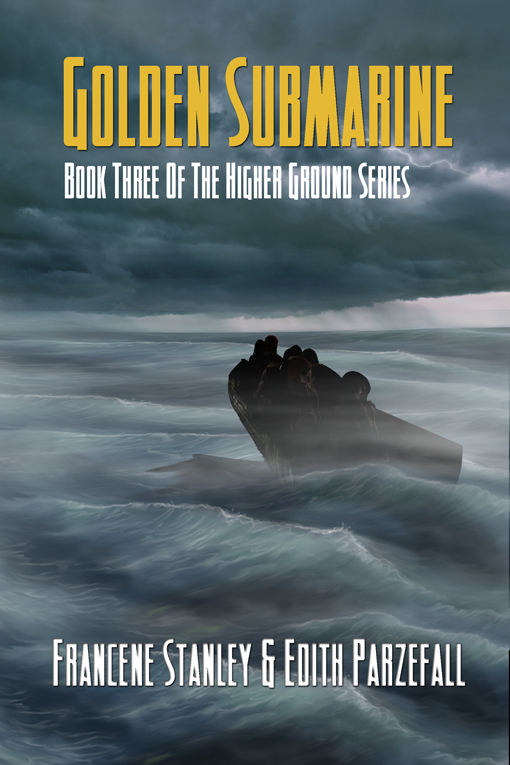
Edith Parzefall and I wrote a futuristic series of novels set in Britland, where the forest has taken over and buried the past. Normal people amongst the generations who survive the Great Flood eat natural food during their quest for salvation. You can see the Higher Ground series on the sidebar, one click away from Amazon.

How do you think we'd survive an apocalypse?


3 Comments

Sale of English church used for famous seances.

2/25/2014

5 Comments

 
Picturesimple.wikipedia.org
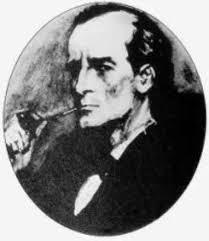
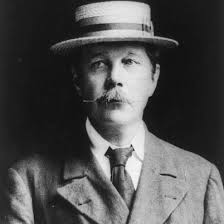
A Victorian church where Sherlock Homes author Sir Arthur Conan Doyle once tried to contact the dead is about to be offered for public sale. It's not a remarkable building--just plain grey with no special architectural features. But the Cedars Spiritualist Church in Ipswich, Suffolk, an earlier hotbed of British spiritualism, is on offer for between £500,000 and £700,000. (Approx $3000,100 and $5000,000)

In the 1920s, the building hosted packed meetings where psychics would try to contact the spirits of people who had passed on. One regular visitor was writer Doyle who found solace in the practice after losing his wife Louise in 1906 and his son Kingsley just before the end of the First World War. 

“You have a grand gift for silence, Watson. It makes you quite invaluable as a companion.” ― Arthur Conan Doyle, The Complete Sherlock Holmes


Picture
The author became a leading voice in the spiritualist movement, even writing a Professor Challenger novel The Land Of Mist on the subject, while his 1922 book The Coming Of The Fairies revealed he was apparently convinced that the Cottingley Fairies photographs were real. The indistinct figures have recently been discredited.

Doyle's staunch belief in spiritualism ended of his friendship with magician Harry Houdini, who began to speak out against the practice after the death of his mother. He insisted that mediums used trickery and illusions to fool grieving relatives. But his claims didn't convince Doyle.

“There is nothing more deceptive than an obvious fact.” ― Arthur Conan Doyle, The Boscombe Valley Mystery

Well, spiritualism isn't 'fact'. Those who try to contact their beloved departed need to fulfill something deep inside them. At one time, my neighbor attended spiritualist meetings, longing to hear a message from her dead son. On the other hand, I think fondly of those in my family who have died, sometimes resorting to speaking to them in my mind. I don't know if they're listening. They've probably got better pastimes. Are people so lacking in faith that they need other people's help to make contact with their dearly beloved? If they believe the spirit lives on, why can't they wait until they are reunited?


5 Comments

Zircon crystals point to Earth's beginnings.

2/24/2014

7 Comments

 
Picture
A microscopic grain of Earth's oldest known mineral has been dated to 4.4 billion years ago, shedding light on our planet's infancy and how it came to develop and shelter life.

Finding from geochemists at the University of Wisconsin Madison prove Earth's fiery ball emerged sooner from the magma ocean than previously thought.

It is estimated the Earth formed about 4.5 billion years ago. Little is known about the early years, or when the planet became cool enough for the crust to congeal from a sea of molten rock and for water to form. 600 million years was thought to be needed for the cooling period.


Picturegem14.com
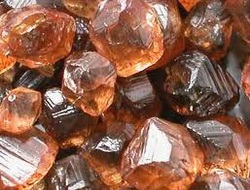
But the discovery in recent decades of zircon crystals estimated to be as old as 4.4 billion years overturned that theory. The new study confirms that zircon grains, harvested from a farm in Western Australia, crystallized with the formation of the Earth's crust some 4.374 billion years ago.

This took place about 160 million years after the creation of the Earth and other planets in our solar system—much earlier than previously believed. The study at the University of Wisconsin Madison used a new technique most of us wouldn't understand, so I won't include it.

Due to its toughness, zircon can withstand billions of years of erosion. The crystals remain chemically intact and contain a wealth of geological information. Younger rocks and even sand contain minute quantities.


Picturewww.gemstines-guide.com
Larger pieces of white zircon have been worn as a replacement jewel for hundreds of years. Although softer than the more expensive diamond, the zircon reflects light with the same brilliant luster. Zircon crystals are found in the shades of brown, yellow and orange, mainly in Australia and Africa.

A stone of great purity and quiet vibrations, many people believe Zircon enables one to be at peace with oneself. (Not to be mistaken for the laboratory-made cubic zirconia which would give out as much peace as a steel knife.) I love real gemstones. A rectangular, Victorian cut-glass bowl holds an assortment on my mantelpiece, emitting vibrations into the main room. I couldn't attest to their benefits, but I love to look at these beautiful stones which formed early in Earth's creation.


7 Comments

Trees are vital in the world.

2/23/2014

7 Comments

 
Picture
Their discharge maintains a cover over the atmosphere to prevent penetration of the sun's harmful rays.

That's why I'm pleased about a new global monitoring system which promises the latest information on deforestation around the world on a daily to monthly basis. Google and over 40 business and campaigning groups back Global Forest Watch.

The technology, funded by grants from the UK, Norwegian and US governments uses information from hundreds of millions of satellite images as well as data from people on the ground.

Despite greater awareness around of the world of the impacts of deforestation, the scale of forest loss since 2000 has been significant. Data from Google and the University of Maryland shows world loss of 230 million hectares of trees between 2000 and 2012. Forest campaigners say this is the equivalent of 50 football fields of trees being cut down, every minute of every day over the past 12 years.

Those behind the new online tool believe it could not only allow campaigners to hold large corporations to account over the use of sustainable products, but could also promote greater trust between traditionally suspicious groups. As they say in CSI, the facts can't lie.

Trees are the world’s single largest source of breathable oxygen. The threat to trees means people are under threat.


Picture
The world's largest tree, a giant sequoia has grown in California's Sequoia National Park for many thousands of years. The latest assessment makes the tree approx. 2,500 years old. The General Sherman tree measures 275 feet tall and 30 feet across at the base.

The United Nations Environment Program estimates the world has lost 80% of our original forests in the last decade. We know they give us oxygen and reduce global warming by absorbing carbon dioxide. Here are ten more great reasons to love trees:

1.       Aspirin, derived from willow bark, is commonly used to relieve pain, fever and inflammation. Taken daily it can also protect against heart disease, strokes, Alzheimer's disease and even certain types of cancer. I take daily aspirin for an irregular heart beat.

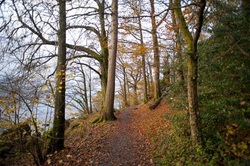
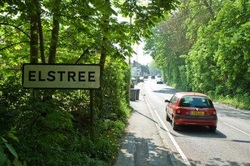
2.       The natural, calming environment created by trees can help improve mental health. I live at the top of the hill in the picture below. In the UK, trees mop up the fumes and dull the sound of traffic which blocks the road during the commuting hours.


Picture
3.       Trees' leaf litter on the woodland floor is a vital food source for wildlife. This includes bacteria, fungi, plants, birds and animals, each of which plays a vital role in the woodland's carbon and nitrogen cycle.

4.       Trees in the right place protect buildings from weather.

5.       Roots of trees capture and store excess water on water-soaked land.

6.       Leaves improve air quality, clearing tons of particulate pollution each year.

7.       They can send chemical cues to repel attackers - and to attract friendly insects that will eat the enemy species.

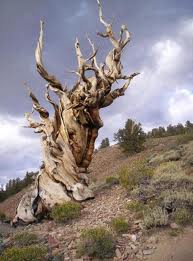
8.       The oldest trees in the world can live to 4,600 years old, outliving hundreds of human generations.

9.       A mature birch tree can produce up to 1 million seeds per year.

10.       New tree crops from indigenous fruit and nut species restore soil fertility and biodiversity in degraded land – reversing poverty and malnutrition in third world countries.


Picturewww.telegraph.co.uk
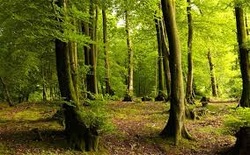
Absorb the peace pictured in the ancient English forest. Some blame deforestation for global warming. Everyone agrees that the weather's gone crazy lately. Apparently, Antarctic weather patterns have dropped lower over the globe, bringing increased snow to America and floods to England.

A sea wall in a UK Cornish village has been further damaged as a result of recent storms.

In a recent announcement, a St Ives MP said another sizeable portion of the wall in Coverack, in the Lizard area, was damaged on Friday. The Falmouth Coastguard Rescue Team said people should take care in this area. The village's main road, on top of the wall, had already been made impassable by an earlier collapse.

I don't live in Cornwall. However, all my novels are set in the area. Some of my forbears lived in Cornwall.

You'll see my books on the sidebar. Liliha lives in St Ives in the novels Still Rock Water and Tidal Surge. The futuristic co-written Higher Ground series feature characters who call St Ives: 'Saint Eyes'. That's where the holy ones live. I'm aghast about the prediction Edith and I made about the Great Flood which came to the Earth. It wasn't meant to happen now.

Protect the trees. Our combined action might prevent further damage. For the last twenty years I've included a prayer in my daily meditation. 'Let the trees take up the goodness of the soil to protect our planet'.


7 Comments

Our continued fascination with Sleeping Beauty.

2/22/2014

8 Comments

 
Picturedisney.wikia.com
The film Maleficent, with an estimated budget of $200,000,000, is due to be released on 30th May 2014, starring Angelina Jolie as the wicked stepmother. The "Sleeping Beauty" tale is told from the perspective of the villainous Maleficent and shows that evil has a beginning. I like the sound of that. My Moonstone series of novels explore the balance between good and evil.

At the end of 2012, the hottest news story was about a real-life sleeping beauty snoozed for two months at a time after a rare sleep disorder took over her life and turned it into a nightmare.

Fairy stories, ballets, opera's and films have glamorized the role, but the Pennsylvania teen wished she was a normal, sleep-deprived teenager! An episode can cause a patient to become irritable, behave in a childlike way and overeat significantly.

In a more recent case in the UK, an teenage girl reported being left in a dream-like trance or acting erratically during the few hours when her family wake her to ensure she eats, drinks and uses the bathroom. She relied on round the clock care and assistance from her mum.

Anyone under the thrall of an ailment known as Klein-Levin Syndrome can't control their sleeping urge. The very rare syndrome affects roughly 1000 people worldwide. As a result there is very little incentive for research.

However, in the middle of last year, a new study published in Science Translational Medicine, suggests both a possible cause and a potential treatment for the condition, which may ultimately lead to treatments for other sleep disorders.

I'd like to welcome fellow author Helen Alexander from Solstice Publishing, to tell us about her newly released novel Lovers in the Woods. As you'll see, Helen employs the sleeping sickness in her plot—with a twist.


Picture
Blurb:

  They called her Sleeping Beauty back at the lab.

Nina has been asleep for a long time. Two hundred and fifty years, to be exact. She doesn't change, and she doesn't die. She's always fifteen. All she wants to do is to wake up, but she can't. Something - or someone - is keeping her in a perpetual dream state.

Leon is a programmer working for a security systems company in the Metro Palisade. His life is fairly ordinary and uneventful. But one day, things change. He begins to see a strange girl in his dreams. He knows she needs his help, but he doesn't know who she is - or if she's even real. Leon is willing to risk a lot to find out, and his curiosity finally gets the best of him. The mystery that surrounds Nina is greater than Leon had imagined, however: soon he's on the run from the company he worked for, the police, the secret service and the criminal underworld.  

All Leon wants is to save Nina from her endless sleep, but the price of that rescue could be a terrible one. Somehow, Nina is connected with the fabric of reality itself, and there are many dubious people chasing after the legendary Sleeping Beauty in the hopes of wielding ultimate power. When the world begins to fall apart with the sudden, inexplicable outbreak of war, only Leon holds the key to saving everything from complete annihilation - but, unless he can rescue Nina, it may already be too late.

About the author:

Helen Alexander is a writer and digital artist living in San Francisco, California. After graduating from the Academy of Art University, Helen worked as a video game artist in San Diego and Los Angeles. Currently she is back in San Francisco, at work on several new projects, including a comic book, a children's book and a dark fantasy/horror novel. You can visit Helen at helenalexander.weebly.com for the latest news on upcoming releases, author interviews and previews of new stories and works-in-progress.

Excerpt:

She dreamed of a great city. It was a city she had never seen before, a city from the future. Nina would walk its streets, which were full of the strangest people she had ever seen. Some of them were not really people, even. There were things with extra arms, and eyes, and legs, insect-like things and bird-like things, but they all wore clothes and could talk intelligently. A Birdman called her over softly on one street corner and took her by the arm. He had bright red eyes, like those of an albino rat, and in his beak was an unlit cigarette. Nina was scared of him. "Please come with me," the Birdman said, and they began to walk away down the street, hand in hand.

As they passed under a tall arc, which read, "Metro - Entrance," the Birdman turned to Nina, and said: "Take the train to Stella Maris, Nina. He will be waiting for you. He will help you." Nina was about to ask who "he" was, but she was already walking down the concrete steps. Just ahead, the multiple horseshoe arcs lit up the subterranean entrance to the Metro. An old-fashioned train whistle sounded. The high-pitched scream of the whistle echoed through the dark halls of the subway, announcing the approaching train as it pulled into the station: a fantastic, antique looking thing. Nina only had enough time to read the destination placard on its side. It spelled, in glowing letters, "Port Stella Maris." Then she woke up. It was the same old room. Nothing had changed here. Nina looked up and saw the familiar pattern of the ceiling. One of her hands was lying freely now across the pillow. She followed the thin glistening tube with her eyes until they stopped at a small, translucent square bag suspended from a hat rack that stood in the corner. It functioned as a makeshift IV stand.

She was no longer dreaming. On the contrary, she felt more fully awake now than she had ever before in her life. The walls had gained solidity and color and suddenly came into focus, as it were. The ceiling began to pull away. It rose higher and higher, until it disappeared entirely from Nina's view into a shrinking rectangle of black, revealing a crystal blue sky with white clouds drifting across it.

Nina shook her head. She wanted to get up, to take out the useless IV, but she couldn't move. She kept looking at the sky. Several times, a Dutch Delta crossed it; a kind of passenger ship Nina had seen many times flying above the city. The aircraft cast its gigantic cold shadow into the room. When it finally passed, drifting very slowly, importantly, the room was once again full of sunlight.

"Hurry now, Nina," she heard someone say; it was the Birdman. He had descended into the room through the ceiling. He had small, iridescent wings, like those of a hummingbird; they beat at an amazing speed, fanning the air. The Birdman approached her and pulled out the IV. He smelled of nectar. He picked her up in his arms and they flew out through the open ceiling.

The Birdman carried Nina to a beautiful bright building shaped somewhat like a horseshoe. It was a very tall building, and its exterior was paneled with black sheets of glass that reflected everything around it. As they approached, Nina could see the blue sky and the white clouds drifting mirrored across its surface. This Round House, as Nina called it, also lacked a roof, and they descended right through and landed on its upper floor, which was also a ceiling.

Links

Website:
http://helenalexander.weebly.com/

Amazon author central page:
amazon.com/author/helenalexander

Facebook page:
https://www.facebook.com/bosco.page

Twitter:
https://twitter.com/fish_zombie

Goodreads:
http://www.goodreads.com/author/show/6067699.Helen_Alexander_Rusinoff?from_search=true

http://www.goodreads.com/helenrusinoff

Blog:
http://helenrusinoff.wordpress.com/

LinkedIn:
http://www.linkedin.com/in/helenrusinoff

3d portfolio:
http://www.fishzombie.com/


8 Comments

Dogs really do understand their owners.

2/21/2014

9 Comments

 
Picturewww.livescience.com
A new study suggests that devoted dog owners are right to rave on about how their pets understand them. After careful training of eleven pet dogs, researchers from Hungary placed them in an MRI scanner.

The result of the work, published in the journal Current Biology, showed that canine brains react to voices in the same way that the human brain does. Crying and laughter did the same thing, perhaps explaining why dogs are attuned to human emotions.

For comparison, the team looked at the brains of 22 human volunteers in the same MRI scanners.

The scientists played 200 different sounds to their subjects, ranging from environmental noises, such as car sounds and whistles, to human noises and different sounds coming from dogs. When both the animals and the people heard human voices, crying or laughter, a similar region of the brain became active. Dog's whimpering or angry barking also caused a similar reaction in all volunteers. However, while the dogs responded to the human voice, their reactions were far stronger when it came to canine sounds.


Picturewww.dailymail.co.uk
This helps us understand why dogs can tune into their owner's feelings, and the person can detect emotional changes in their dog. Of course, after living together for millennia, humans and dogs have developed a close tie. That animals understand death and grieve for their losses is no longer in doubt. Dogs can interpret a lot of words and they understand hand signals. Look at the clever sheep-dog.

I love dogs. I've lived with many of these intelligent animals over the years. Now, I wouldn't be capable of giving another dog a good quality of life, more's the pity. However, I remember with great fondness, the way each dog responded to me--ever ready to sympathize, forgive any fault, and offer love.


9 Comments

Cars are killing reindeer by the thousands.

2/20/2014

7 Comments

 
Picturewww.theguardian. Photo Anne Ollila
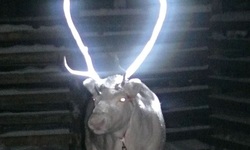
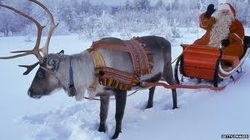
Now, instead of Rudolph's nose lighting up the dark, all the reindeer's antlers in Finland will glow. A reflective spray which makes them more visible will help avoid the thousands of reindeer-related accidents occurring each year.

While overall widespread and numerous, some of the reindeer's subspecies are rare and at least one has already vanished. This is such a shame.

More animals are joining Earth's extinct list each month. I'm so glad someone is taking action.

Finland's Reindeer Herders' Association has started testing two reflective sprays on the animals' antlers so they are more visible to motorists at night. According to Anne Ollila, the head of the department, there are between 3,000 and 5,000 accidents involving reindeer every year.

The trial period started last week, when the association sprayed the antlers of 20 reindeer close to the capital of the Lapland region. Two different types of reflective liquid were used on the animal: a more permanent one for the antlers and one that washes away for the fur. If the test shows positive results, the association plans to spray more animals next autumn.


Picturewww.bbc.co.uk
Lapland, one of Europe's most sparsely populated regions, attracts thousands of tourists especially around Christmas. The reindeer is well known in folklore due to Santa Claus's sleigh being pulled by flying reindeer.

Hunting of wild reindeer and herding of semi-domesticated reindeer (for meat, hides, antlers, milk and transportation) are important to several Arctic and Subarctic peoples.

Reindeer, or caribou, make a fitting choice for their legendary role as they can outperform all other land animals in their energy efficiency. The animals are often seen on their mammoth annual migration to the Arctic during which the North American herds might travel for more than 5,000km—an extraordinary feat that takes them further than any other land mammal. A warm, insulating coat and large hooves are vital to their survival strategy against the extreme cold and snow of the Arctic. Reindeer are the only deer where both males and females sport antlers, complex structures that can reach epic proportions in males.

So—you'd better watch out! Santa's glowing reindeer will be about next Christmas.


7 Comments

New findings could cut 1/4 of miscarriages.

2/19/2014

7 Comments

 
A Denmark study which analyzed 91,427 women for a period of 4 years, and collected data through computer-assisted telephone interviews, found that more than a quarter of first-time miscarriages could be prevented by making a combination of lifestyle changes. The paper was published in the International Journal of Obstetrics and Gynaecology.

At risk are: pregnant women lifting more than 20kg (44lbs) each day, an obese or underweight body, over 30s, who drink alcohol, and women working night shifts. Research at the University of Copenhagen suggests only by reducing all of the risk factors could they be prevented.

Women wanting to conceive should also eat a balanced diet, cut out smoking, and ask their partners to follow suit.

Right. The world is overpopulated. So why should we be concerned about miscarriages? In civilized countries like the United Kingdom, welfare payments ensure every unwed mother receives the care and support she and her child need. This is often abused. Nevertheless, the child should be given a chance to grow into an upstanding citizen. That's not the case in some third-world countries, where babies and children die of starvation every day. Sometimes, I wonder if natural selection plays a part in this shocking fact. But we're not addressing the balance here—only the reason why babies miscarry.

More than one in seven pregnancies ends in miscarriage in the UK. That's a staggering figure. I never would have suspected there were so many baby losses. I guess some are terminated by choice, but there must be many women who are desperate for a baby to hold and love.

Picturewww.babyzone.com
A UK woman, who suffered 20 miscarriages over 10 years, now has a nine-month-old baby boy after being given a drug normally used to treat malaria and rheumatoid arthritis. Even though all her family and friends begged her to stop trying after so many heart-breaking miscarriages, she refused to give up.

She contacted a miscarriage expert she saw on television, who discovered her pregnancies were being attacked by natural killer cells (which protect us from infection) present in her body. He treated her with hydroxychloroquine.

The mother said she will never forget the babies she's lost but her success makes it all worthwhile.


7 Comments
<<Previous

    Francene Stanley:
    Author
    I use news items in my fantasy novels.

    Born in Australia, I moved to Britain half way through my long life. If you like my writing, why not consider purchasing one of my books on the sidebar below?
    I blogged 260 days last year. Link.

    Picture
    Picture
    Picture
    Picture
    Picture
    Picture
    Picture

    Archives

    January 2015
    December 2014
    November 2014
    October 2014
    September 2014
    August 2014
    July 2014
    June 2014
    May 2014
    April 2014
    March 2014
    February 2014
    January 2014
    December 2013

    Categories

    All
    Animals
    Birds
    Earth
    Environment
    Experience
    News
    Novel
    People
    Society
    Writing

    RSS Feed

    RSS Feed

Powered by Create your own unique website with customizable templates.