• Blog
  • About
  • Contact
Francene--Blog. Year 2014

Writers are doing something right.

11/30/2014

4 Comments

 
Pictureiblogmagazine.com
Have you ever wondered why you write? Discounting business people who want to promote their wares, or scientists and experts who publish their findings, the rest of us—ordinary people who could be doing other things—sit down at our computer and write a blog. This activity isn't so different from the habit of diary-writing 100 years ago.

I write because I love to express my thoughts, maybe impart some optimism into anybody who chooses to read my daily views on news. But why do I go on, year after year, repeating the exercise? There are other things in my life that call me away. I should clean the house, spend more time chatting to my husband, carry on writing my novels or go outside and enjoy nature. Yet I sit here every morning without fail to search for the topic of the day.

No matter what you write or how you do it, the act of writing itself gives physical and mental health benefits. After a while you could experience improvements in mood, stress levels and depressive symptoms. Incredible?

Picturewww.examiner.com
In a 2005 4 month study on the emotional and physical health benefits of expressive writing, researchers found that just 15 to 20 minutes of writing every other day made a difference.

Participants spent less time in the hospital, enjoyed lower blood pressure and had better liver functionality than their counterparts. They did this by writing about traumatic, stressful or emotional events.

New Zealand researchers in 2013 found that writing can make physical wounds heal faster than those who didn't write. Recording distressing events helped participants make sense of the events and reduce distress.

Studies have shown that, when they write, people with asthma have fewer attacks than those who don't, patients with Aids have higher T-cell counts, patients with cancer have more optimistic perspectives and improved quality of life.

Picturewww.huffingtonpost.com
Using pen and paper is good because of the link between hand and brain. Apparently, the act of expressive writing allows people to take a step back and evaluate their lives. Instead of obsessing over an event, they can focus on moving forward.


One study found that blogging might trigger dopamine release, similar to the effect from running or listening to music.

I get a similar effect every morning while I'm composing my topic for the day. I feel good, no pain intrudes, even an occasional headache fades away. I have to force myself to pause to eat breakfast so I can maintain the medication I'm taking. I feel GOOD.

So, to tap into writing's healing power, go ahead and write so you can understand your emotions and learn about yourself.

I, for one, didn't realize all the benefits I gain from my daily blogging. Oops! It's time for porridge.


4 Comments

Rare Shakespeare book found in France.

11/29/2014

6 Comments

 
A rare and valuable William Shakespeare First Folio has been discovered in a provincial town in France.
#William Shakespeare was an English poet, playwright, and actor, widely regarded as the greatest writer in the English language and the world's pre-eminent dramatist. He is often called England's national poet and the "Bard of Avon". Wikipedia#

PictureShakespeare - www.bbc.co.uk
The rare book of Shakespeare plays had lain undisturbed in the library at Saint-Omer the north of France for 200 years. It is claimed to have been left behind when a school now based in Lancashire was expelled from the area.

In the 16th century, Saint-Omer was home to an important Jesuit order that welcomed Roman Catholic clergy fleeing Protestant persecution in England. The First Folio discovered in the town is thought to have been brought to France during that era and held in the Jesuit library until the French Revolution when the order’s collection was confiscated and used as the basis for a public library.

The Shakespeare First Folio, said to be the most important book in English literature is one of only 230 believed to still exist. It included almost all of the plays widely accepted to have been written by Shakespeare and is credited with being the reason his literary legacy survived. The tattered book lay in a library in Saint-Omer, near Calais, for 200 years.

St Omers College began there in 1593, later changing name to Clitheroe's Stonyhurst College. A spokeswoman said the "dog-eared" book must have been "overlooked" when the establishment was ordered to leave in 1762 and moved to its present home in Lancashire.

PicturePhotograph: Denis Charlet/AFP/Getty Images
The Folio collects 36 of Shakespeare's 38 known plays for the first time, and was originally printed in 1623, seven years after the playwright's death.

The rare copy was discovered by librarians planning an exhibition on the historic links between the Calais region and England.

The librarian contacted one of the world’s most eminent authorities on Shakespeare, Prof Eric Rasmussen of the University of Nevada in Reno, who was in London working at the British Library.

The book, once believed to contain 300 pages, has around 30 pages missing and no title page. However, it will be the centerpiece of the French library’s exhibition next summer.

The Saint-Omer library holds a collection of 50,000 books and manuscripts dating from the 7th to the 19th century. The library also holds one of only 48 existing copies or partial copies of the 15th century Gutenberg Bible, one of the world’s most valuable books.

Unfortunately, the original copy of First Folio will not go on general display, but will be scanned so it can be consulted on the library website, available for other libraries and museums to borrow.

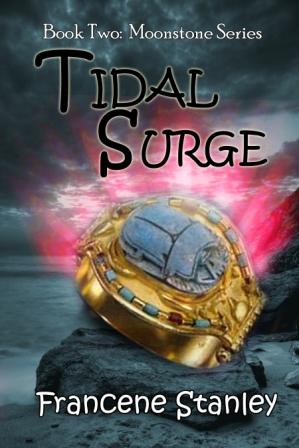
Don't you just love it when precious items from the past are discovered? Dreams of the future: My Moonstone series of novels will be published as one book and citizens of the future will find a single copy in a golden casket, hidden in the bell tower of Elstree Church just up the hill from where I live. But, that's the plot of another novel. Now, back to reality. Shakespeare's works are incredible.


6 Comments

The brain can keep skills alive.

11/28/2014

6 Comments

 
Picturenews.discovery.com
Kyung Wha-Chung found immediate success after graduating from Juilliard School of Music in the sixties. However, the Korean violin virtuoso lost the use of her left index finger in 2005. It is thought that an overdose of the steroid cortisone, used to treat swelling, caused the finger to weaken. During a rehearsal, her finger collapsed and she could no longer play. This brought an end to her successful touring career because she could no longer form notes on the violin strings.

Most of us would give up, blaming a stroke of fate, before looking around for another career. But not Kyung Wha-Chung. The 66 year-old spent the past 10 years playing an imaginary violin and matched that with years of therapy, which she credits with keeping her on form and ready to perform again.

"For instance, after coming out of five years of not playing, and then to do the six unaccompanied Bach (sonatas and partitas), after not having played...I worked it out all in my head...with every possibility of bowing and so on," she told Reuters.

The extraordinary virtuoso will play her first London recital in a decade next month at the Royal Festival Hall.

And the upside which came from her inability: She feels free and light, relieved of excess baggage which was nowhere near as important than keeping her challenge in mind. She wanted to perform again. See full story at the Telegraph. 

After hearing about Chung's success, I really believe I can do whatever I believe is right and good. I'll go on living as long as my husband needs me. I'll keep writing no matter how old I get. And most of all, I'll refuse to worry about my lack of attainment. How about you?


6 Comments

Do we really know what life is about?

11/27/2014

5 Comments

 
Picture
The news today says research has shown DNA can survive re-entry into the atmosphere, which came as a total surprise to scientists. This raises the possibility of extraterrestrial life molecules arriving on Earth from space.

Scientists attached small double strands of DNA to the outer casing of a rocket. Temperatures soared to more than 1,000 degrees Celsius during the short flight to sub-orbital space and back, but much of the DNA emerged intact. Over half was recovered from the grooves in screw heads and more than a third remained fully functional.

Many scientists believe comets may have brought amino acids and other organic building blocks of life to the Earth early in its history. Some even suggest that DNA, the essential molecule of life itself, could reach the Earth in meteoric dust, 100 tons of which hit the planet each day. See full Telegraph story. 

So, is it any more astounding that each one of us could have lived before?

Picture
Having read stories about children who remember details of houses in other countries where they once lived, and considering deja vu as well as child prodigies & idiot savants, I consider past lives a distinct possibility. Who really knows? We can only theorize. Read about more instances that seem to point to past lives.


In the 70s when my children were young teens, I studied a book on palmistry. Okay, many people may not believe that lines on the inner hand have any meaning. However, I drew some amazing conclusions. Firstly, I'm an old soul judging by the myriad of lines on my palm. (I guess that's why I'm wise.)

But the astounding part came when I read my son's lines. At the age of 18, Kym's palm revealed nothing but a life-line, which cut off half way to the base where it should descend. (In ten years he would be dead.) The only explanation I could give for the lack of lines crisscrossing his palm was that he was a new soul. Is this possible? Makes you think, doesn't it?


5 Comments

How safe is your turkey?

11/26/2014

6 Comments

 
Picturewww.telegraph.co.uk
In a UK court case, a pub Chain was found guilty of placing unsafe food, namely turkey meat, on the market by not ensuring food hygiene rules were followed.

In 2012, a woman died after eating a turkey dinner and 32 other diners became seriously ill after eating the turkey dinner at the pub in Essex. The meal had been cooked the day before and given a second blast on a hotplate before it was brought to the table.


She and her husband experienced the same symptoms, but the woman got progressively worse during the day, with vomiting, diarrhoea and stomach pain.


Picturewww.telegraph.co.uk
According to the prosecution, the food was not allowed to cool when it was first cooked and then not properly reheated, creating a perfect breeding ground for the deadly Clostridium bacteria.

The cook claimed within an hour of cooling the meat had reached around 25 degrees centigrade. However, the temperature was more likely to be at around 70 degrees.

After the outbreak, the landlady and the chef disposed of all the waste food, preventing health inspectors from taking samples. They also forged kitchen records. They said they had far too much of a work load and had filled out the paperwork later.


Picture
They were both found guilty perverting the course of justice for falsifying food safety records.

By early January 2013, the company had stopped using the cooking and cooling method in all its kitchens.

Sentencing has been adjourned until 8 January.

Read full Story at the Daily Mail. http://www.dailymail.co.uk/news/article-2849160/Husband-tells-horrific-moment-wife-s-eyes-rolled-head-suffering-food-poisoning-killed-eating-reheated-Christmas-dinner-chain-pub.html

This is a timely warning with festivities coming up. Make sure your roast meat is properly cooled, even the left-overs. Cut small enough for the meat to chill fast and then refrigerate. And always reheat to a high temperature.


6 Comments

Why are these people on an ordered list?

11/25/2014

6 Comments

 
1. Marie Curie  
                                                                                 21. Coco Chanel
2. Florence Nightingale

3. Margaret Thatcher                                              22. Benazir Bhutto

4. Emmeline Pankhurst                                           23. Enid Blyton

5. Mother Teresa                                                      24. Marie Antoinette

6. Princess Diana                                                      25. Helen Keller

7. Queen Victoria                                                      26. Oprah Winfrey

8. Anne Frank                                                            27. Germaine Greer 

9. Joan of Arc                                                             28. Eva Peron

10. Queen Elizabeth I                                                 29. Hilary Clinton

11. Rosa Parks                                                            30. Malala Yousafzai

12. Queen Elizabeth II                                                31. Linda McCartney

13. Indira Gandhi                                                        32. Audrey Hepburn                                                 
14. Amelia Earhart                                                     33. Eleanor Roosevelt 

15. Amy Johnson                                                         34. Maya Angelou

16. J.K. Rowling                                                           35. Michelle Obama

17. Marilyn Monroe                                                     36. Kate Middleton Duchess of                                             Cambridge

18. Jane Austen                                                             37. Billie Jean King

19. Mary, Queen of Scots                                             38. Katharine Hepburn

20. Queen Mother                                                         39. Ingrid Bergman

                                                                                       40. Simone de Beauvoir

PictureFlorence Nightingale - wikipedia.org
What do you think this list consists of?

If you cited the world's most influential women, you'd be right according to a poll taken amongst 2,000 British women. The listed icons came top as women who were not afraid to challenge the beliefs of their time.

Take the top role model for women. Marie Skłodowska-Curie (7 November 1867 – 4 July 1934), a Polish and naturalized-French physicist and chemist, conducted pioneering research on radioactivity. As part of the Curie family's legacy of 5 Nobel prizes, she was the first woman to win a Nobel Prize, which she won twice. Leading the way for women, she became a professor at the University of Paris, and in 1995 was the first woman to be entombed on her own merits in the Panthéon in Paris.

Close behind comes the lady of the lamp, Florence Nightingale, a celebrated English social reformer and statistician, and the founder of modern nursing. 

PictureAudrey Hepburn - www.biography.com
My favorite is Audrey Hepburn (Ruston) (4 May 1929 – 20 January 1993). Originally born in Brussels, the British actress and humanitarian became a film and fashion icon active during Hollywood's Golden Age. The American Film Institute ranked her as the third greatest female screen legend in the history of American cinema. She is also regarded by some to be the most naturally beautiful woman of all time. As well as trained in ballet, she spoke several languages including English, French, Dutch, Italian, Spanish, and German.

Who could forget Audrey Hepburn's roles in Gigi (1951), Roman Holiday, Sabrina, The Nun's Story, Breakfast at Tiffany's, Charade, My Fair Lady and Wait Until Dark (1967)?

Hepburn remains one of few people who have won Academy, Emmy, Grammy, and Tony Awards. She won a record three BAFTA Awards for Best British Actress in a Leading Role.

She devoted much of her later life to UNICEF and died of cancer at the age of 63.

In my youth, I learned from her example how to combine grace and charm with compassion and respect for others. This to me is the ideal of feminine power.

But two thirds of those polled said young women today lack inspirational figures and eight in ten felt youngsters took too much notice of modern celebrities.

The poll was conducted to coincide with the launch of the second series of Sky Arts' Psychobitches, a sketch show with an all-star cast where women including Florence Nightingale will be examined on the psychologist's couch. Read more from the Daily Mail. 

Who would you name as your most influential woman of all time?

6 Comments

The fine line between theft and emulation.

11/24/2014

8 Comments

 
Picture
A letter sent to a friend by fellow writer Neal Cassady has been found after more than half a century. It was considered one of the greatest losses in literary history. The poet friend Jack Keroac had been credited with launching the Beat genre, however, he stole the stream of consciousness style after reading the letter to write his novel On The Road. Critics say had the letter not been lost, it would have transformed Cassady into a towering literary figure.

According to California auction house Profiles in History, who are auctioning the letter, it was never lost, but rather misplaced.

Poet Allen Ginsberg had tried to get the letter published and mailed it to Golden Goose Press in San Francisco. There it remained, unopened, until the small publishing house folded. The owner planned to trash every unopened submission he still had in his files. However, the operator of a small, independent music label who shared an office with publisher took every manuscript, letter and receipt in the Golden Goose Archives home with him.

The note was an 18-page rambling stream of consciousness to his friend in 1950. Here's an excerpt of a letter that started the fuss.

I am sitting in a bar on Market St. I'm drunk, well, not quite, but I soon will be. I am here for 2 reasons; I must wait 5 hours for the bus to Denver & lastly but, most importantly, I'm here (drinking) because, of course, because of a woman & what a woman! To be chronological about it:

I was sitting on the bus when it took on more passengers at Indianapolis, Indiana – a perfectly proportioned beautiful, intellectual, passionate, personification of Venus De Milo asked me if the seat beside me was taken!!! I gulped, (I'm drunk) gargled & stammered NO! (Paradox of expression, after all, how can one stammer No!!?) She sat – I sweated – She started to speak, I knew it would be generalities, so to tempt her I remained silent.

She (her name Patricia) got on the bus at 8 PM (Dark!) I didn't speak until 10 PM – in the intervening 2 hours I not only of course, determined to make her, but, how to DO IT.

I naturally can't quote the conversation verbally, however, I shall attempt to give you the gist of it from 10 PM to 2 AM.

Without the slightest preliminaries of objective remarks (what's your name? where are you going? etc.) I plunged into a completely knowing, completely subjective, personal & so to speak "penetrating her core" way of speech; to be shorter (since I'm getting unable to write) by 2 AM I had her swearing eternal love, complete subjectivity to me & immediate satisfaction. ...

Picture
#Wikipedia# The idea for On the Road, Kerouac's second novel, was formed during the late 1940s in a series of notebooks, and then typed out on a continuous reel of paper during three weeks in April 1951. It was first published by Viking Press in 1957. After several film proposals dating from 1957, the book was finally made into a film.

He started working on the first of several versions of the novel as early as 1948, based on experiences during his first long road trip in 1947. However, he remained dissatisfied with the novel. Inspired by a thousand-word rambling letter from his friend Neal Cassady, Kerouac in 1950 outlined the "Essentials of Spontaneous Prose" and decided to tell the story of his years on the road with Cassady as if writing a letter to a friend in a form that reflected the improvisational fluidity of jazz. In a letter to a student in 1961, Kerouac wrote: "Dean and I were embarked on a journey through post-Whitman America to FIND that America and to FIND the inherent goodness in American man. It was really a story about 2 Catholic buddies roaming the country in search of God. And we found him."
 

So, Kerouac stole Cassady's writing style and made his fortune.

Nowadays, novices are advised to study the writing of great authors and try to emulate them. I guess Kerouac did nothing more than that. He did the work while using his friend's style.

Is this any different than following a great leader, or sharing inspiring quotes?

8 Comments

Ever found a body under a bush?

11/23/2014

4 Comments

 
Picturewww.dailymail.co.uk
On Saturday afternoon, a man with his wife and children, out to do Christmas shopping, drove by a bush close to the UK city centre of Manchester. He noticed what looked like a person lying behind a bush. In the busy area, many people were walking by. His first thought someone was drunk, or that it was a homeless person so they drove on. Although it might have been a prank, it played on his mind so they turned the car around and stopped to take a proper look.

That's when he made the harrowing discovery of a stiff body with bruising on the side of his face.

He panicked and called the paramedics, who said the man might have been attacked. A large police presence remained at the scene on Saturday evening, with a cordon surrounding a piece of grassed land.

Detectives and will contacted him in a few days to allow him time to recover from the ordeal. Meanwhile, officers are trying to establish the identity and are in the early stages of investigating the death.

Picture
There must be a reason so many people walked right by the body and never noticed. Perhaps they were busy, or their mind was elsewhere. Maybe they just didn't care about somebody lying under a bush. But what if they could have saved the man's life earlier?

Ir reminds me of the Good Samaritan parable.

There is a possibility of harm to the passer-by. Perhaps it was a trap. You'd need to make the decision to help a stranger despite that, and ensure your own safety too.

What would you do if you saw someone lying in disarray?


4 Comments

'A Kiss Is Just A Kiss'

11/22/2014

6 Comments

 
Picturewww.babycentre.co.uk
… says the song As Time Goes By, from the movie Casablanca. But have you ever wondered why humans kiss?

Our first experiences with love and security involve lip pressure and stimulation through behaviors that mimic kissing, like nursing or bottle feeding, as well as kisses from our parents.

Important neural pathways are laid out in a baby's brain after these early experiences that associate kissing with positive emotions which will be important for the rest of their life.

Adults engaged in a passionate kiss brings two people in very close proximity. We learn about each other by way of our sense of smell, touch and taste buds. All sorts of signals are sent to our brain informing us about the other person. 

PictureAugustine Rodin's The Kiss
In fact, the scent of man can provide subconscious clues about his DNA to his partner. Apparently, unless a woman is taking hormone treatment, she will choose a father for her children with a different DNA.

Taken from Dutch scientists' research published in the journal Microbiome, a single 10-second kiss can transfer as many as 80 million bacteria.

Mmmm. I don't like the sound of that. No wonder fashion is established to kiss strangers on the cheek or air-kiss.

Researchers monitored the kissing behavior of 21 couples and found those who kissed nine times a day were most likely to share salivary bugs.

I kiss my husband about that many times, but not with lips parted. My kiss is meant to convey love, affection and support.

Pictureteachingtheology.org
Studies suggest the mouth is home to more than 700 different types of bacteria. In the test, scientists took bacterial samples from the volunteers' tongues and saliva before and after a strictly timed 10-second kiss. One member of the couple then drank a probiotic drink, containing an easily identifiable mixture of bugs.

On the couple's next 10-second kiss, scientists detected an average of 80 million bacteria transferred to the other partner.

But while bacteria in the saliva seemed to change quickly in response to a kiss, bug populations on the tongue remained more stable.

This sounds rather unsavory, especially at the start of cold and flu season. But don't be too worried. We're more likely to get sick by shaking hands throughout the day than through kissing. Have you ever wondered if the hand you shake has been washed recently? Well, that's another topic.


6 Comments

Canine Daisy wins a medal and a promotion.

11/21/2014

5 Comments

 
Picturewww.telegraph.co.uk
The Prince of Wales presented a medal to the heroic dog who sniffed out her owner's cancer. Not only that, Daisy has found cancer in 551 further patients—an accuracy rate of an impressive 93%.

When she was a puppy, Dr Guest began training her doggy companion to sniff out the killer disease in urine and breath samples. Medical dogs are trained by sniffing samples of people already diagnosed with cancer and those of people without the disease so they can learn to tell the difference. Dogs have an incredible sense of smell thanks to 300million scent receptors in their noses, compared to a measly five million in the human nose.

The very first time she detected the disease actually growing in someone’s body, rather than by sniffing a sample, it was in her companion's body.

Dr Guest, chief executive of UK's charity Medical Detection Dogs, said: ‘Daisy seemed to be pawing at my chest. She bumped against my body repeatedly. I pushed her away, but she nuzzled against me again, clearly upset. She pushed me so hard that it bruised me.

‘Her behaviour was totally out of character – she was normally such a happy dog ... I felt the tender area where she’d pushed me, and over the next few days I detected the tiniest lump.

‘The bump was a perfectly harmless cyst. But further in the breast tissue was a deep-seated cancer.’

Picturewww.matinella.it
Because it was caught so early, the lump was removed before the cancer had time to spread.

As newly instated senior consultant, Daisy is now helping to train a team of 12 dogs at Medical Detection Dogs for the UK’s first ever trial using canines to detect breast cancer.

See Daisy's picture and story here.

Published studies have shown that dogs can detect early stage cancer with 88% specificity, and 99% sensitivity. Dogs could help provide an extremely accurate, low-cost, non-invasive, early detection screening for cancer. Right now, early detection is our greatest cure.

I wish a dog still graced our lives. Early detection could have saved my husband ongoing treatment for prostate cancer, another area where dogs excel.

Have you experienced a dog's remarkable skill?


5 Comments
<<Previous

    Francene Stanley:
    Author
    I use news items in my fantasy novels.

    Born in Australia, I moved to Britain half way through my long life. If you like my writing, why not consider purchasing one of my books on the sidebar below?
    I blogged 260 days last year. Link.

    Picture
    Picture
    Picture
    Picture
    Picture
    Picture
    Picture

    Archives

    January 2015
    December 2014
    November 2014
    October 2014
    September 2014
    August 2014
    July 2014
    June 2014
    May 2014
    April 2014
    March 2014
    February 2014
    January 2014
    December 2013

    Categories

    All
    Animals
    Birds
    Earth
    Environment
    Experience
    News
    Novel
    People
    Society
    Writing

    RSS Feed

    RSS Feed

Powered by Create your own unique website with customizable templates.