• Blog
  • About
  • Contact
Francene--Blog. Year 2014

Animals touch our souls.

12/30/2014

6 Comments

 
Picture
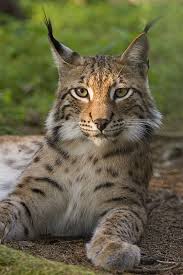
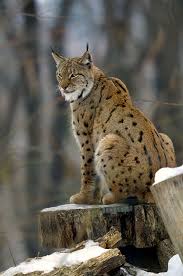
The Scottish Wildlife Trust would like to see the once native Eurasian lynx reintroduced in the Scottish countryside, even though farmers have expressed fears for their economy.


Hunting and loss of habitat due to the intensification of farming practices caused the extinction of the UK lynx at about the medieval period.


But the Scottish Wildlife Trust's chief executive said during a debate on the BBC's World at One that the charity believes there is both a moral and ecological case for reintroduction of species that have been made extinct in Scotland due to habitat loss and persecution.

Picture
He maintained that reintroducing top-level predators such as the lynx would help restore the balance in Scotland's natural ecosystems, which continue to decline in the face of widespread threats, such as overgrazing and inappropriate development.

The Eurasian lynx can be found in 46 countries in Europe, northern Asia and the Middle East and is the third largest predator in Europe after the brown bear and gray wolf. The solitary cat hunts at night and avoids humans, so is rarely seen.

A 20 cm adult lynx will normally feed on deer, mountain hares and even moose. In the summer, lynx are more likely to prey on small mammals and, unfortunately, domestic sheep. See full Telegraph story.

Picture
So why do humans care about animals when they become extinct? It's a hard question, but I think those who are aware have taken on the guilt of mankind's past behavior. I'm always gladdened to discover when zoos have released animals back into their habitat.

Why do we care about animals at all? For some reason, we feel a kinship, an awe, even love when we get to know a beloved pet.

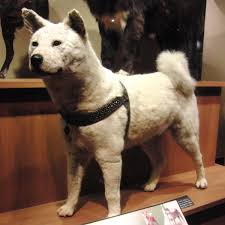
Yesterday, I watched a 2009 movie, Hachi: A Dog's Tale, that touched my heart. With the sorrowful piano music in the background, I knew the plot wouldn't end well, but I fell in love with the husky dog as it grew from a stray found at a station to settle with the man he chose. When his owner died, Hachi faithfully waited at the train station for nine years. The drama starred Richard Gere and was based on a true story about a Japanese dog, whose statue remains at the station to this day.

Toward the end, I sobbed as if my heart would break. I grieved for my lost loved-ones, and my husband who is getting weaker each day.

Loss is inevitable—we all die. Yet that knowledge doesn't relieve our sorrow. Every morning during meditation, I think of all the people with heavy hearts and hope they will find something in the coming day to help them carry on.

Humans and animals are linked by a force that can't be denied. Call it love, call it dependance, or put it down to an unknown vital principle.

6 Comments

A piece of history sells at auction.

12/20/2014

6 Comments

 
Picturesecond voyage - en.wikipedia.org
A marine clock which guided the crew on board a ship where Charles Darwin worked as a budding naturalist has sold at auction.

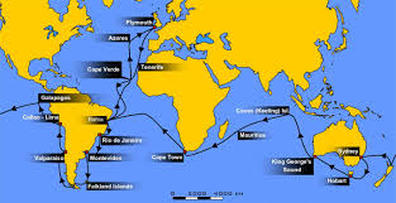
The marine chronometer helped Vice Admiral Robert FitzRoy navigate the HMS Beagle around the tip of South America and onwards to the Galapagos Islands during its 1831 to 1836 voyages.

During this trip, Darwin formed his theory of evolution after noticing variations and similarities between living animals and what he believed were fossils of their extinct ancestors.

The clock, mounted in its gimbled mahogany box case, was sold by at auction by Bonhams for £100,900 (US $157,690).

The previously unrecorded marine chronometer performed so well during HMS Beagle voyages that the Admiralty purchased it from Vice Admiral FitzRoy in 1837.

From then on, the instrument led an active life. When a mine sunk HMS Irresistible in Turkey in 1916, the chronometer was recorded as being aboard, but was later listed as lost. It then re-emerged during World War II on a ship used by the Russians on the Pacific route between the US and Vladivostok under the command of Anna Shetinina, said to be the first female commander of an ocean-going ship. Great achievement in a male-dominated career.

In the 1970's, a relative presented the chronometer to the current owner on his entry to the Vladivostok Marine School of Engineering.

Published in 1859, Darwin's book On the Origin of Species suggested that species with common ancestry evolve into diverse life forms over long periods of time.

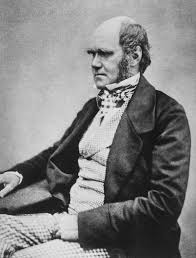
Charles Darwin (1809 – 1882) Source BBC.

Charles Robert Darwin was born on 12 February 1809 in Shrewsbury, Shropshire into a wealthy and well-connected family. His maternal grandfather was china manufacturer Josiah Wedgwood, while his paternal grandfather was Erasmus Darwin, one of the leading intellectuals of 18th century England.

Darwin himself initially planned to follow a medical career, and studied at Edinburgh University but later switched to divinity at Cambridge. In 1831, he joined a five year scientific expedition on the survey ship HMS Beagle.

At this time, most Europeans believed that the world was created by God in seven days as described in the bible. On the voyage, Darwin read Lyell's 'Principles of Geology' which suggested that the fossils found in rocks were actually evidence of animals that had lived many thousands or millions of years ago. Lyell's argument was reinforced in Darwin's own mind by the rich variety of animal life and the geological features he saw during his voyage. The breakthrough in his ideas came in the Galapagos Islands, 500 miles west of South America. Darwin noticed that each island supported its own form of finch which were closely related but differed in important ways.

Pictureen.wikipedia.org
After twenty years of research, Darwin published 'On the Origin of Species by Means of Natural Selection'. It was based on his findings during the five-year trip on the HMS Beagle, and is considered the founding work of evolutionary theory.

The book was extremely controversial, because the logical extension of Darwin's theory was that homo sapiens was simply another form of animal. It made it seem possible that even people might just have evolved, possibly from apes, and destroyed the prevailing orthodoxy on how the world was created. Darwin was vehemently attacked, particularly by the Church. However, his ideas soon gained currency and have become the new orthodoxy.

Humankind may never really understand creation, but Charles Darwin took a leap of perception despite huge controversy.

I don't have the type of mind that needs to know the intricacies. However, our recorded history always appeals to me.


6 Comments

Well-being depends on your surroundings.

12/9/2014

8 Comments

 
PictureAbberford Park - Borehamwood, UK
China has launched a global scientific research program to examine the unintended consequences of urban policies on human health and wellbeing.

The majority of people now live in towns and cities and the global urban population is growing by an estimated one million people each week. The total could exceed six billion people by the end of the century. However, to do so, they face a number of health risks, such as air pollution. This environment separates them from rural areas and any contact with animals, birds and the trees which purify the air.


A spokesman told BBC News: "When we take an overview, urban areas are very important determinates of health.

"The way we live on a day-to-day basis in cities affects our health in so many ways, whether it is the air that we breath, or the fact that many people in cities around the world are very sedentary (sitting at a desk in an office or sitting in a car to get to and from work) - and many people are also eating very unhealthy foods.

"We are facing global epidemics of non-communicable diseases - heart disease, diabetes and so on - and mental health problems. We are also seeing the health impact of climate change, such as heat-stress in cities and changes in the distribution of infectious vector-borne diseases."

Picture
Cities are really about people not education or employment. The people who are attracted to live in urban areas should have plenty of open spaces where they can walk and relax. Just looking at different flowers can sooth the mind.

How many health risks are people willing to take for the benefits that come with urban lives?

pic: The world’s largest eco-city rising from wastelands in China. http://www.bbc.com/future/story/20120503-sustainable-cities-on-the-rise


PictureAldenham Reservoir, Elstree, Hertfordshire UK
I'm lucky to live in Elstree, Hertfordshire. I'm surrounded by fields and trees with not another building in sight. Horses graze on the land beyond a tall stand of trees at the front. Over the hill, lies Aldenham Reservoir. At the back, frost covers horse paddocks leading to stands of trees on the horizon. The only thing I could wish for is a view of water. But heck, a stream of vehicles pass by my front door. Depending on how blocked my ears are, the motors leave a pleasant swish not unlike waves breaking on the shore. (Yeah, in my dreams.) There are plenty of parks close by and several stands of water.

But not everyone lives amongst nature. They might live in a tower block with no parks in sight. Or perhaps they're surrounded by slums. An occasional weed poking from between the hard-packed ground could be their only reminder of a natural life.

Are your surroundings pleasant?


8 Comments

An anaconda, pain and balance.

12/6/2014

12 Comments

 
Picturewww.skullsunlimited.com
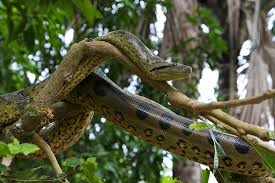
To highlight the plight of the African rainforest, Paul Rosolie allowed himself to be eaten alive by a giant snake in a documentary for the Discovery Channel.

He wore a super-strong carbon-fiber suit fitted with camera, radio mic and a crush-proof hose leading to a trailing oxygen mask all slathered in pig's blood when he faced the 20ft long, 18 ½ st green anaconda.

'She nailed me right in the face, and the last thing I remember was her mouth open wide, straight in my face, and everything went black. I went limp and let it constrict. All the while I was just thinking: “Eat, eat, eat!” ’

Picturewww.reptilepets.co.za
He describes the crushing feeling, which lasted for more than an hour, as like being caught under a powerful wave.

‘She wrapped around me and I felt my suit cracking and my arms ripping out of their sockets,’ he says. ‘It was absolutely terrifying.’

Overseen by doctors and vets, his armored suit cracked under the pressure. Enveloped in the snake’s coils, he couldn’t see anything but he was able to radio back to his team to say he was alive. They had agreed that once he was in past his waist, they would pull him out before it became too difficult to extract him without damaging either him or the snake. Read more: 


Picture
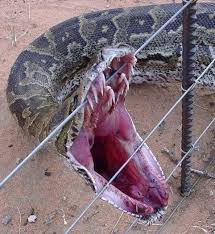
It's hard to imagine the pain of another person, but I wouldn't want to face the gaping mouth of an anaconda.

Sometimes, pain makes me snappy. The same thing probably happens to you. I have the best of intentions to be nice, to repeat what I say without annoyance, but I raise my voice. My expression must reveal how I feel because my husband says, “All right. No need to be nasty.”

I'm the very one who should be understanding right now because of his illness, but my ears are very painful after a recent syringe at the surgery.

They ached right after treatment, but the nurse inspected the eardrum and said everything was okay. However, the pain got worse. Sharp pain, like a knife twisting inside my head. I saw the doctor two days later after my ears continued to weep. He gave me a week's dosage of antibiotics with a repeat visit ordered. The seepage stopped but the pain didn't. After the next visit, I got spray which needs to be used thrice daily. Pain, pain, pain. At night, it's almost unbearable. Hopefully, the condition will improve.

But that brings me to the question of controlling pain. Painkillers don't work for strong pain. I guess you've noticed that. I'm used to pain and have built a high tolerance in certain areas. My head seems to be outside this protection barrier though, requiring more strength on my part.

I first learned to control pain in the 80s. At about the same time, I began to meditate. I guess they go hand in hand. Wherever I was, I found that when pain kicked in, I could concentrate on a tiny point in my forehead and the feeling would fade. That trick came in useful over the next years as my hip condition worsened. I was born with malformed hips, but didn't know until late in life when I was diagnosed at the age of 40.

My marriage split up then and I moved from Australia to the other side of the world. In England, I learned to cope alone, got a job as a nanny within a week of arrival, and tended a 6 month baby.

By the time I met my present husband, my condition was worsening. One promise he made to me when we fell in love was that he would care for me for the rest of our lives together. This he has done, and now, 25 years later, he takes care of the cleaning, the shopping and the cooking. What a man.

Now, he's lost so much weight that it's hard for him to continue as before. We support each other, both in pain and both growing old. Yet, I bless our closeness.

Perhaps we need to balance good with bad in this life.

How do you handle pain?


12 Comments

To ditch or not to ditch milk.

11/3/2014

5 Comments

 
Picturewww.telegraph.co.uk
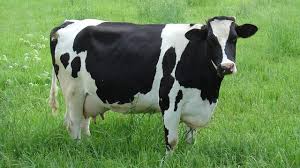
Doctors and nutritionists recommend milk for boosting calcium intake and keeping bones strong—a cultural phenomenon that can be traced back thousands of years.

But new Swedish research suggests that cow's milk does little to strengthen bones and can even double the risk of early death.

The research by the Uppsala University in Sweden was published in the British Medical Journal. 

Bare in mind that milk in Sweden is fortified with vitamin A which could have an impact on the findings.

The study tracked 61,000 women and 45,000 men for 23 years. Findings revealed no reduction in broken bones for those who consumed the most milk. But the worst thing is mortality rates among the women drinking three or more glasses of milk a day increased. Cardiovascular disease increased by 90 percent and cancer-related deaths escalated by a whopping 44 percent. Higher milk consumption increases oxidative stress, the biological stress marker known for causing aging, cardiovascular distress, and cancer.

Accordingly, the study’s male participants exhibited cardiovascular disease 16 percent more than men who consumed smaller quantities of milk.

For women it was associated with an increased chance of suffering a fracture. 50% of women will break a bone after the age of 50.

Those who drank three glasses or more a day (680ml) were twice as likely to die early than those who consumed less than one.

Almost three million people in Britain are thought to suffer from osteoporosis, me among them. I took HRT for 30 years before the age of 60, and now take daily calcium with vitamin C, and a weekly tablet of alendronic acid.

Picturewww.huffingtonpost.com
Bone is living tissue that is constantly broken down and built up. In healthy individuals, bone production exceeds bone destruction up to about the age of 30 when the skeleton gradually starts to deteriorate. (So young!)

Because calcium is needed for bone building, milk should be beneficial. But researchers believe the fat in milk cancels out the positive effects of calcium, triggering inflammation and increasing the risk of heart attacks.

However, low fat dairy products like cheese and yogurt were found to have a beneficial effect, reducing early death and promoting bone health. Why the discrepancy? Lactose. Cheese, yogurt and similar foods have lower amounts of lactose than milk.

I use half-fat milk. Half a cup goes in my morning porridge and I take a dash of milk in my three daily cups of tea. I guess this reduces the risk of excess fat.

Picturewww.bbc.co.uk
Milk is one of the most popular beverages in the United Kingdom and the United States. Advocates of milk say calcium and other vitamins and minerals in milk make it an important part of a healthful diet for people of all ages. They argue that milk’s benefits include weight loss, strengthening bones, improved cardiovascular and oral health, cancer prevention, and relief of PMS.

I often wonder why our forebears started drinking the milk produced for the animal's offspring. Once a human baby leaves a mother's breast, the adult does not need dairy products to function properly. Our ancient ancestors most likely would have gleaned calcium from other sources.

Spinach, broccoli and various legumes and grains are high in calcium, and people living on a well-balanced, plant-based diet have perfectly fine bones.

Instead of ditching milk altogether, maybe I'll cut down on the amount I drink. What about you?


5 Comments

Do you know why scratching increases the itch?

11/2/2014

13 Comments

 
Picturewww.telegraph.co.uk
Scientists have finally solved the mystery of why we can't stop scratching.

The stimulation causes the brain to release serotonin, which intensifies itch. As serotonin spreads from the brain into the spinal cord, the chemical can jump the tracks. It moves from pain-sensing neurons to nerve cells which intensifies the feeling.

Serotonin is involved in growth, ageing, bone metabolism and in regulating mood. People take anti-depressants like Prozac, Zoloft and Paxil, which increase serotonin levels to control depression.

Blocking serotonin would have far-reaching consequences throughout the body, and people wouldn't have a natural way to control pain.

The research, published in the journal Neuron, revealed the events happen in a certain order. First, you scratch, and that causes a sensation of pain. Then the body makes more serotonin to control the pain. But serotonin does more than only inhibit pain. It makes the itch worse by activating GRPR neurons through 5HT1A receptors.


Of course, animals scratch too. I love the shape their body forms while scratching.

From How Stuff Works. 

The average human body is covered by about 20 square feet (2 square meters) of skin. Skin is the only organ that is constantly exposed to potential irritation. And, with so many things coming into contact with your skin daily, you're bound to get an itch or two. Serious itching can be caused by allergies, disease, emotions and infections, but let's take a look at what causes the common itches that aggravate you everyday.

Itching, also known as pruritus, starts with some kind of external stimuli, including bugs, dust, clothing fibers and hair. Like tickling, itching is a built-in defense mechanism that alerts your body to the potential of being harmed. In this case, it might be the potential of being bit by a bug.

When the stimuli lands on your skin, it may not bother you at first, but soon it will begin to rub back and forth across your skin. Once the hair or dust scratches your skin's surface layer, receptors in the dermis of the skin will become irritated. In a split second, these receptors send a signal through fibers in the skin to your spinal cord and then up to the cerebral cortex in your brain.

As soon as we feel an itch, our first natural response is to scratch the spot of the itch with our fingernails. The reason for this response is simple -- we want to remove the irritant as soon as possible. Once you've scratched the area of irritation, you are likely to feel some relief. When your brain realizes that you've scratched away the irritant, the signal being sent to your brain that you have an itch is interrupted and therefore no longer recognized by the brain.

Even if you don't remove the irritant, scratching will at least cause pain and divert your attention away from the itching. The irritant that caused the itching is very small, maybe only a few microns in length, so it disturbs only a few nerve endings. When you use your fingernail to scratch the spot where the irritant is, you not only remove the irritant but you irritate a lot more nerve endings than the irritant.

Picturewww.telegraph.co.uk
We've all experienced an uncontrollable itch. Sometimes, the irritant only goes away when something else distracts us, intense pain stops further scratching, or we fall asleep.

With me, it's the sensation. Nothing stops me from scratching faster than added pain. I've got too much already. Saying that, I found myself scratching under my eye. Will I ever learn?

Now you know what causes the itch, will you be able to override your brain and control the urge to scratch?


13 Comments

Once again, business vies with conservation.

10/25/2014

8 Comments

 
Plans to quarry an area of ancient woodland in England mentioned in the Domesday Book have angered conservationists in Staffordshire, UK.

The Domesday Book, the oldest public surviving record, is a manuscript record of the "Great Survey" of much of England and parts of Wales completed in 1086 by order of King William the Conqueror. During that year, people from every part of the country had to line up and give a statement about their family and possessions.

However, the company in question, Lafarge Tarmac, said the quarry would cover only a fifth of the wood.

That's like a child nicking a large piece of birthday cake and whining that they didn't eat it all.

Picture
commons.wklipedia.org
Lafarge Tarmac also claims much of the area where it proposes to extract sand and gravel for the construction industry was damaged by fire in the 1970s and can no longer be considered ancient woodland. This disregards the natural occurrence of fire and the consequent regeneration.

A spokesman for the Trust's director of conservation, said it regarded the plans as the "largest threat to a single ancient woodland site in England that the charity has seen in its 42-year history". Historical woodland covered only 2% of Britain and often contained rare and threatened species.

So once again greed rises like an angry snake. People are putting profits before the long term importance of the environment for society.

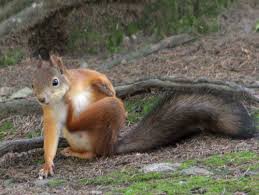
We live close to many woods, although I don't know how old they are. Amongst the trees, no traffic sound intrudes. Birdcall and the occasional glimpse of a squirrel or rabbit delights the senses. I'd hate to see every part of the natural land cleared. How about you?

8 Comments

Basic precautions to prevent Ebola infection.

10/14/2014

11 Comments

 
Direct flights from Britain to Sierra Leone have been canceled over Ebola fears, but most of us are concerned about an outbreak that might affect us, wherever we live in the world.
/Facts:

Ebola is spread by contact with the fluids of someone who is infected. These include saliva, sweat, blood, vomit and urine.

So far, no vaccine or cure is available.

Most of Ebola's 4,300 victims have come from West Africa./


My husband refuses to believe the official guide-lines, sure of a conspiracy of silence by authorities to avoid mass panic.

With the new outbreak of Ebola claiming 4,300 victims so far, the best thing is to find out how you can protect yourself from the disease.

Picturewww.telegraph.co.uk
/Tips:

Wash your hands.

Avoid contact—don't even shake hands.

Disinfect potentially infected areas. Wash bedding, clothing etc.

A sudden temperature, muscle aches, vomiting or a rash might indicate you have the disease.

Diarrhoea, stomach pain, unexplained bruising or bleeding and loss of appetite can also be warning signs./


Pictureen.wikipedia.org
/Know what to do:

If you think someone has been infected, or if you think you might have Ebola, you should isolate yourself and call medical help immediately.

Do not touch bats, chimpanzees, gorillas or monkeys. Scientists think eating raw meat from these animals may be the cause of transferring the disease to humans./


Lastly, sever all relationships with vampires.

That won't be difficult for me—I never liked the blood-sucking creatures anyway, despite the popularity of novels about them. Who'd believe their victims actually enjoy the experience?


11 Comments

Humans impose rules on delinquent animals.

10/12/2014

8 Comments

 
Picturewww.telegraph.co.uk
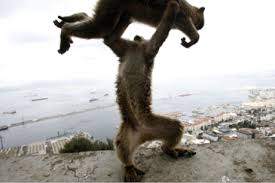
In the first large-scale export of the monkeys from Gibraltar since the 1990s, thirty offending monkeys will be deported to Scotland after continually causing trouble.

You might wonder why the UK is involved in the behavior of animals on the eastern tip of Spain. According to folklore, The Rock would cease to be British if the primates leave.

During World War II, the population dwindled to just seven monkeys. Sir Winston Churchill ordered that their numbers be replenished immediately from both Morocco and Algeria due to this traditional belief.

Another popular story tells of a link from Gibraltar to Africa by a subterranean passage over 15 miles (24 km). Legend has it that the Barbary Macaques entered The Rock from Morocco this way.

Picturewww.telegraph.co.uk
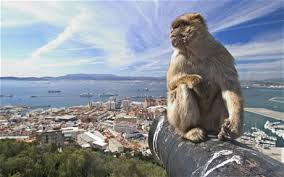
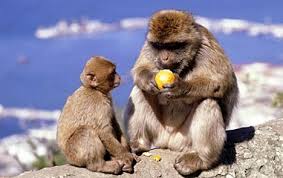
The Barbary Apes of Gibraltar, Macaca Sylvanus, are actually tail-less monkeys. No one is really sure how the only wild apes in Europe arrived in Gibraltar. Whatever the explanation they readily adapted to their new habitat and have lived, bred and been an integral part of Gibraltar for centuries.

The Gibraltar monkey population, initially a single troop, was under the care of the British Army and later the Gibraltar Regiment from 1915 to 1991. An officer was appointed to supervise their welfare, and a food allowance of fruit, vegetables and nuts was included in the budget. In true military fashion soldiers gazetted births, and named each new arrival. Following the withdrawal of the British garrison, the Government of Gibraltar took over responsibility for the monkeys.

Picturewww.dailymail,co.uk
Now, Barbary macaques roam in the British overseas territory, harassing locals and rummaging through bins. Many tourists can't resist illegally feeding the wild animals and numbers have soared to about 200, most of whom have no fear of humans.

Unfortunately, animals take no notice of warnings so officials tagged the worst offenders with GPS collars. After observing the apes activity, officials caught the marauders to quarantine them in Gibraltar’s nature reserve. The 30 apes, 11 males and 19 females, along with two handlers will fly by chartered cargo plane from the Mediterranean outpost to the UK on Tuesday.

At their new home, a large enclosure including trees and a large rocky mound for climbing has been prepared for them. Imagine their shock at being confined after roaming as they please.

I guess, after being encouraged to expand their numbers on foreign soil, the macaques took advantage of every situation. Now, the nation who made this possible must control their wayward dependents.

Are there any imported animals causing trouble near you? 


8 Comments

Can you believe 1/2 the animals have gone in 40 years?

9/30/2014

10 Comments

 
Picturewww.theguardian.com
Since 1970, uncontrollable human expansion has caused the loss of half of the animals in the world. A report by the World Wildlife Fund (WWF) has found that populations of mammals, birds, reptiles, amphibians and fish have declined on average by 52 per cent over the period of 40 years.

Freshwater creatures are worse off, with population collapse of more than 3/4 over the same period.

Most of the decline is down to human activity—habitat loss, deforestation, climate change, over-fishing and hunting.


Picturewww.telegraph.co.uk
The WWF said the report sounded a dire alert and urged people to cut down on consumption.

WWF Director of Science and Policy said, “But we are not despairing, because we are able to say why we are losing these animals; we are seeing a loss of their habitats. We know what the problem and we are perfectly capable of putting it right.

“We need political agreement so a global climate deal can be reached and policies which take account of natural capital. And we need to start thinking about our own consumption.”

The WWF’s Living Planet Report looked at 10,380 populations of 3,038 species across the globe. The situation is worst in low-income countries.


Picturewww.theguardian.com
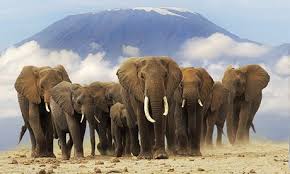
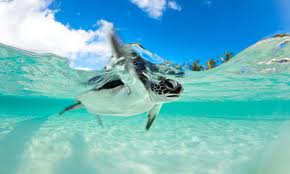
Examples of dwindling wildlife populations include forest elephants in Africa, which are facing habitat loss and poaching for ivory and could become extinct within our lifetime, and marine turtles with an 80 per cent drop in numbers.

The Living Planet Report also warned that human activity is outstripping the resources the Earth can provide.

The WWF offers some advice. Use public transport instead of your car, increase recycling and eat less meat and dairy products which will cut down on the amount of new land cleared for farming. Recycle, put pressure on political and industry leaders, support sustainable businesses and send children outside to reconnect with nature.


Picture
Anyone born in in 1970 or before would have lived in a world teeming with animals compared to life today. Not only that, but children were allowed to play outside.

Born in Australia in the early forties, I could have seen 1/3 more animals than I would today. Introduced predators such as cats and foxes are mainly to blame. Because of the country's water shortage, the population lives largely around the perimeter, leaving the desert center free.

Here in England, the red-necked phalarope is top of the endangered list, followed some we have grown to know like the cuckoo, the red squirrel, the turtle dove (symbol of loving), the brown hare and lastly the hedgehog.

What animal is disappearing near you?


10 Comments
<<Previous

    Francene Stanley:
    Author
    I use news items in my fantasy novels.

    Born in Australia, I moved to Britain half way through my long life. If you like my writing, why not consider purchasing one of my books on the sidebar below?
    I blogged 260 days last year. Link.

    Picture
    Picture
    Picture
    Picture
    Picture
    Picture
    Picture

    Archives

    January 2015
    December 2014
    November 2014
    October 2014
    September 2014
    August 2014
    July 2014
    June 2014
    May 2014
    April 2014
    March 2014
    February 2014
    January 2014
    December 2013

    Categories

    All
    Animals
    Birds
    Earth
    Environment
    Experience
    News
    Novel
    People
    Society
    Writing

    RSS Feed

    RSS Feed

Powered by Create your own unique website with customizable templates.