• Blog
  • About
  • Contact
Francene--Blog. Year 2014

Snails kill more people than huge creatures.

4/30/2014

8 Comments

 
When reading the news this morning, I came upon this information that animals with large teeth and fearsome reputations such as the lion, tiger, or shark are not the world’s worst killers.

If you judge a creature’s killing prowess by the number of human fatalities they cause every year, the tiny mosquito comes out on top.
Picturewww.dailymail.co.uk
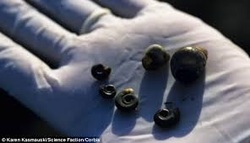
Next down, little brown freshwater snails cause the deaths of more than 10,000 people every year. They live in rivers and lakes in subtropical and tropical regions across the globe. When people drink the water, they ingest snail eggs. These burrow into the human stomach to lay their eggs, which cause deadly disease schistosomiasis associated with poor living conditions, overcrowding, and lack of sanitation or clean water. Symptoms can include paralysis of the legs and vomiting blood as well as flu-like symptoms caused by the immune system reacting to the eggs.

While humans wipe out 475,000 fellow people in murders and wars, the three traditional predators kill only 120 across the globe annually.

So … beware the little freshwater slug.


Here's a news report from TMU News, April 20, 2009

Killer Snail Kills German Reseacher

Suluwasi Indonesia

Today the body of Hans Feinkelstien of the Invert Research Foundation was found in a remote location of Suluwasi Indonesia by a local fish collector. Hans has been missing for 10 days when he failed to return from a scientific study of Anentome Helena or commonly called the Assassin Snail in the aquarium hobby.

His body was discovered in a quiet pool near the Faketun River where Hans had been conducting his field studies. According to reports there was little left of Hans but that the entire body was covered by Anentome Helena. The Medical examiner that examined the body has determined that Hans was attacked and killed by the Anentome Helena. “All indications are that the snails he had collected were the cause of his death. We have found evidence to indicate that Hans was first attacked by the snails he had collected and then fell into the river as he struggled for his life.” stated the state medical examiner who examined the body.

“This is why we need tighter restrictions of importation of species into the United States” screamed the senator from Guam when she heard the news. “I will get this bill through even if the science behind it is based on the same science the global warming scientist use. I mean how long before a Anentome Helena attacks and kills a child why they are cleaning their Spongebob Fish Tank.”

There have been reports of Anentome Helena attacking and killing dwarf shrimp and according to researchers it would not be that big of a jump to assume that larger animals are on the menu. Anentome Helena has not been really studied in depth and the death of Hans has set back all information on this species by years since all his notes were lost when his notebook fell into the water with him.

I don't think I'll bother installing an aquarium. If I tripped, knocking the lid ajar as I fell, some of these slimy creatures could sense my helplessness and slither up and over the glass to suck the life out of me where I lay. 
8 Comments

Shocking study reveals lack of care in diet.

4/29/2014

7 Comments

 
Picturewww.dailymail.co.uk
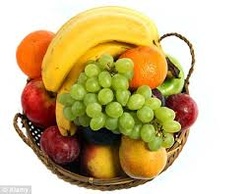
Aviva’s Health Check UK report, released today, revealed some disgraceful facts. Half of British adults cannot be bothered to exercise, while one in four never eat fruit or vegetables.

And here's the killer: undertakers have requested larger grave sizes set closer to the road as people's body-weight increases.

The study found that one in three 25 to 34-year-olds were officially overweight, with that figure rising to 50 per cent of all 35 to 44-year-olds.

Instead of ensuring they are physically fit, many British adults choose to live on a junk food and sugary drink diet while making no effort to burn off the calories. Yet, despite this, half of the British society say they are unhappy with their appearance, with most of those blaming a busy lifestyle and lack of money for their unhealthy diet.


Picturewww.lovefood.com
I find this revelation difficult to grasp. How can such a large percentage of decent people show a disregard for their health?

From my youth as a teenager, I've exercised and eaten well. I'm almost finicky in my avoidance of any food which wouldn't benefit my body. I won't say I'm perfect at 72 years old, but I know I've taken care of my temple. I've just eaten three portions of fruit, said to detox the system when eaten on an empty stomach, and will appreciate my cereal half an hour later. Porridge, served with a trickle of honey, warms and fills me on a foggy spring morning such as this.

If, like me, you've wondered about the quantities needed for one portion, here's a list from National Health Service, UK. 

5 A DAY FRUIT & VEGETABLE PORTIONS

Small-sized fresh fruit

One portion is two or more small fruit, for example two plums, two satsumas, two kiwi fruit, three apricots, six lychees, seven strawberries or 14 cherries.

Medium-sized fresh fruit

One portion is one piece of fruit, such as one apple, banana, pear, orange or nectarine.

Large fresh fruit

One portion is half a grapefruit, one slice of papaya, one slice of melon (5cm slice), one large slice of pineapple or two slices of mango (5cm slices).

Dried fruit

A portion of dried fruit is around 30g. This is about one heaped tablespoon of raisins, currants or sultanas, one tablespoon of mixed fruit, two figs, three prunes or one handful of dried banana chips.

Tinned fruit in natural juice

One portion is roughly the same quantity of fruit that you would eat for a fresh portion, such as two pear or peach halves, six apricot halves or eight segments of tinned grapefruit.

Green vegetables

Two broccoli spears or four heaped tablespoons of cooked kale, spinach, spring greens or green beans count as one portion.

Cooked vegetables

Three heaped tablespoons of cooked vegetables, such as carrots, peas or sweetcorn, or eight cauliflower florets count as one portion.

Salad vegetables

Three sticks of celery, a 5cm piece of cucumber, one medium tomato or seven cherry tomatoes count as one portion.

Tinned and frozen vegetables

Roughly the same quantity as you would eat for a fresh portion. For example, three heaped tablespoons of tinned or frozen carrots, peas or sweetcorn count as one portion each. Choose those canned in water, with no added salt or sugar.

Pulses and beans

Three heaped tablespoons of baked beans, haricot beans, kidney beans, cannellini beans, butter beans or chickpeas count as one portion each. Remember, however much you eat, beans and pulses count as a maximum of one portion a day.

Potatoes

Potatoes don't count towards your 5 A DAY. This is the same for yams, cassava and plantain too. They are classified nutritionally as a starchy food, because when eaten as part of a meal they are usually used in place of other sources of starch, such as bread, rice or pasta. Although they don't count towards your 5 A DAY, potatoes do play an important role in your diet as a starchy food.

5 A DAY and ready-made foods

Fruit and vegetables contained in shop-bought ready-made foods can also count toward your 5 A DAY.

Always read the label. Some ready-made foods contain high levels of fat, salt and sugar, so only have them occasionally or in small amounts as part of a healthy balanced diet.


Do you take responsibility for your own body's health?

7 Comments

Are you interested in memorabilia?

4/28/2014

8 Comments

 
Picture
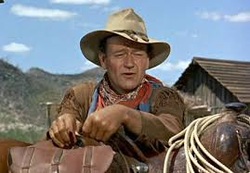
THE iconic hat worn by John Wayne in five major Westerns is up for sale. The price will start at UK £17,000 (US $28,632) The sale will be held next Tuesday in Los Angeles.

I won't be attending. Although John Wayne represents a great symbol of a real man from bygone days, I don't collect memorabilia. Two of my husband's sons live nearby. I don't think the sale will interest them either.

The Duke, who died in 1979, sported the felt cowboy hat in the 1960s movies The Comancheros, McLintock!, The Sons Of Katie Elder, El Dorado and The Undefeated.

The sweatband of the hat is marked with his name in black pen, probably by the wardrobe department, and the underside of the rim says John Wayne, with the name of the film Comencheros (misspelled).

Wayne featured in around 170 movies during his 50-year career. Over 30 years of them, he worked with stunt double Chuck Roberson, and he passed his hat over to the man. When Roberson died in 1988 his collection was sold and the owner is now auctioning it.


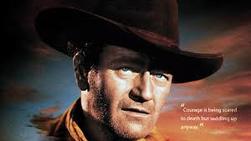
PictureCourage is being scared to death but saddling up anyway.
John Wayne was one of the big celebrities in the 60's and 70s. I never heard scandal about him and wouldn't have been interested if the newspapers revealed any. I can't understand why so many people nowadays want to suck up the drama in celebrities' lives.

Here are ten facts about John Wayne via www.telegraph.co.uk.

1. He played the hero in countless war films but never served in the military himself - he got an exemption during World War II.

2. His breakthrough role was in Stagecoach in 1939 but he did not win an Academy Award until 1970 for his performance in True Grit. He was previously nominated twice - for best actor in 1949's Sands of Iwo Jima and best picture for 1960's The Alamo, which he directed and produced

3. Wayne played American football while at the University of Southern California until he injured himself bodysurfing in Newport Beach and had to abandon his athletic career

4. For years he lived in Newport Beach where he kept his yacht Wild Goose, a former minesweeper, which is stilled moored there

5. Republican-voting Dennis Hopper, who starred in two films with John Wayne, said he was not Right-wing enough for the Duke, who called him "the Commie". "He would say, "Where's the in-house Commie?" said Hopper.

6. Wayne reportedly converted to Roman Catholicism on his deathbed

7. He wore 4in lifts in his shoes, a toupee and had an eye lift in the 1960s

8. According to Garry Wills, who wrote John Wayne's America: The Politics of Celebrity, Wayne did not actually like horses and only would ride while filming

9. His first job in the industry was working as a prop man at the Fox Film Corporation for $75 a week

10. A heavy smoker - up to five or six packets a day - Wayne was diagnosed with lung cancer in 1964 and underwent extensive surgery.

I lived in Australia until the age of 45 yrs and then moved to England. John Wayne films were common all over Australia. During that era, the public couldn't get enough of cowboy stories. I'm not sure why the subject was so popular. Maybe we didn't have so much rubbish to fill our minds with back then. A cowboy story represented real life life in the outdoors amongst true grit - the earth, birds and animals.

What are your thoughts on John Wayne and his legacy?

8 Comments

Do science fiction authors shape our future?

4/27/2014

10 Comments

 
Picturewww.telegraph.co.uk
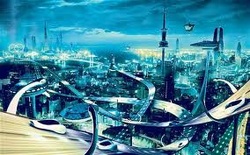
This is one of Asimov's many predictions for 2014, which he released in a paper at the 1964 World Fair. “Men will continue to withdraw from nature in order to create an environment that will suit them better.”

Withdraw from nature? Noooo! Well, maybe some people do—office workers, computer geeks. But the rest of us can't get enough of the outdoors—the beauty of green trees and fields, the wind on our cheeks, the perfume of flowers and new-mown grass.

Asimov's prediction depends on how you want to interpret humanity’s withdrawal. He referred to a world in which most people lived underground, in environment-controlled dwellings where windows have been replaced by glowing ceilings and walls with electrical luminous panels.

Maybe the scientist in Asimov got it right. This sort of technology exists—carpets with LEDs woven into the fabric and multi-coloured lightbulbs that link to your smartphone. Screens tempt us with news, entertainment and announcements from our friends. 


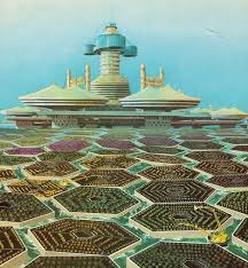
PictureDisney's future agriculture - www.treehugger.com
Science fiction spans the spectrum from the plausible to the fanciful. But the task of science fiction is not to predict Earth's future. Rather, it contemplates possibilities.

In the 20th century, science fiction tended to present a positive image that showed the world as a better place. After several horrific wars and the invention of the atomic bomb, the mood of science fiction changed. The stories grew dark, and science was no longer the champion.

In recent decades, there is a more pronounced tilt toward dystopian futures, which stems from a belief that most of society has not yet reaped the benefits of technological progress.

The distinction between dystopian and utopian hinges on whether the author personally has hope for a better future.

Although I'm not a science fiction writer, I dabble in novels about the future—a world after the Great Flood when forests take over the Earth. While my co-written Higher Ground series is dystopian, the main characters are very human in their humor, beliefs, and their ability to grow and make a better future for those around them. The human spirit never changes although the circumstances in the approaching age can't be known.

As to whether science fiction authors shape our future, I can speak for myself and my co-writer Edith Parzefall. World floods are predicted by science. Multi-asteroid collisions are a possibility. In a future world without technology, I show how lone survivors band together. Under the influence of one truly good person, they strengthen society.


10 Comments

Two love stories from different eras.

4/26/2014

5 Comments

 
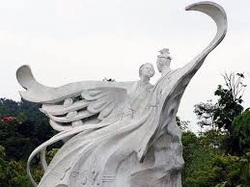
Picturebutterfly lovers - traditions.cultural-china.com
Earlier this week, a trucker was trapped in the steel wreck in the aftermath of a crash. Although seriously injured with his leg trapped, he refused to be cut free. The reason: he feared his wife wouldn't love him if he was disabled.

In Suining county in southwest China’s Sichuan province, the suffering man told emergency services to wait until he had spoken to his other half. While his life ticked away and with his left leg risking amputation Kong rang his wife.

"Precious one, I have just one question which you must answer truthfully. I am hurt and may have to lose a limb," he told her.

"My question is: will you still love me with one leg?"

When his wife vowed she would love him no matter what, he said goodbye and gave the rescue personal the all-clear.

Rescuers cut Kong free from the wreckage with both legs intact.

During his recovery in hospital, Kong said: "I was doubly blessed this day. I got the love of my wife unconditionally and I have the good fortune to return to her a whole man. I am very lucky."

Love stories like this remind us how lucky we are. The next sensational newspaper report from the Leeds Mercury shows life in the Victorian era in England.


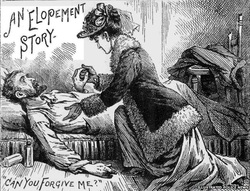
Picturenewspaper picture - www.bbc.co.uk
Life hadn't been kind to the Londoner Jack McKenna. His wife and his his best friend left together for America. This happened while his daughter was dying of influenza. And then he succumbed to the flu. When he could no longer work, only a few shillings stood between him and starvation.

Off to the workhouse for Jack.

In January 1892, a well-dressed woman breezed up to the workhouse in Deptford, London and asked for Jack by name. When shown to his room, she fell to her knees and begged his forgiveness. He finally recognized his estranged wife, back from California. She told him what had happened. The best friend who betrayed him had made a fortune in the gold-fields. However, he had died and his wife wanted to join him again and make up for her transgressions.

But in a plot twist, she caught influenza while nursing her husband back to health. She died of pneumonia, leaving him £62,000 in her will.

I've loved two men during my lifetime. None of us are perfect—me included. I follow my father's example: 'I did the best I could at the time'. The most precious gift in life is love.


5 Comments

When motherly love goes wrong.

4/25/2014

8 Comments

 
Picturewww.hse.gov.uk
This is one of the saddest stories I've heard for a long time.

The mother arrested a few days ago over the deaths of her three disabled children in south London has been charged with their murders. The 42-year-old, who was initially taken to hospital with minor injuries, will appear before magistrates in Wimbledon, south London, on Friday.

That's shocking to find that a mother could kill her children, a four-year-old daughter and three-year-old twin sons. Apparently, her circumstances became overbearing. Neighbors said the parents would do anything for their disabled children and the couple lived in a large house. He husband was away in South Africa at the time with their 8 year old daughter, so she didn't have his support during the time when she took this drastic action.

Post-mortem examinations are being carried out on the three children, who are understood to have had spinal muscular atrophy. The life-limiting genetic condition is also known as floppy baby syndrome and leaves children with little or no control of their movement.

I must admit, the story reduced me to tears.

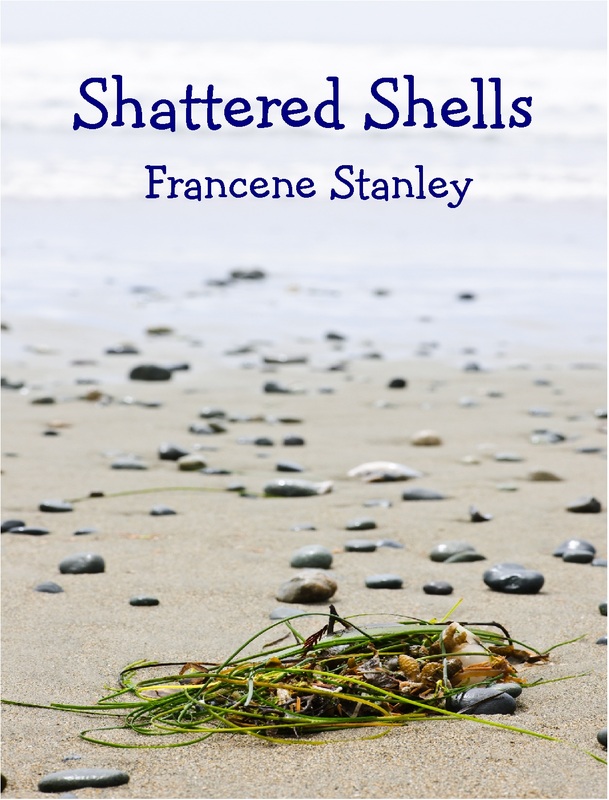
Here's a similar circumstance I've written about in my forthcoming novel, Shattered Shells. My heroine Liliha wears a star moonstone ring which allows her to have visions. She offers advice. In this case, she prevents a tragedy. I gleaned the story from a news item similar to the one above, but changed the ending to protect the innocent.

An internal aperture opened with a rumble and crack. Hot wind stung her cheeks and hinted at danger. A sucking sensation dragged at her mind, and then her consciousness hurtled along the churning, twisting tunnel.

Red and gray pulsed on the outer perimeter. Liliha's stomach tightened. No turning away. Be strong.

* * *

Without a body, ethereal as a spirit, I surrender to the freedom of the void between locations. My intuition rages amongst flashes and whirring sounds.

While the cloud which obscures my sight lifts in patches, I brace to confront whatever task faces me. I float in the air with no sensation of movement, like a passenger in a hot-air balloon.

In a sudden rush, I'm sucked below--akin to plunging down the steep incline of a roller-coaster without the stomach contraction.

My psyche penetrates a roof, in a similar way to someone disregarding the atoms of glass so they can see. Inside a room, toys catch my sight, and then two youngsters. A baby sleeps in a cot.

My movement and sight are constricted by the confines of a stranger's body. Now, I've merged with a person and see through her eyes. The hands gripping a letter are delicate with almond-shaped fingernails. She nods to herself at the doctor's appointment time. I note her name, Nasheen, and her address in Northern England.

Worry about her husband's behavior drags at her inner core. I strengthen myself to help her handle whatever problem brought me here.

But something's wrong.

I discern a third presence flooding Nasheen's mind with dark thoughts sent in waves, dragging her attitude into a spiral track. Malevolence personified in doom.

I try to work out what this means. The bracelet with the scarab decoration! Must be. The bracelet disappeared before I had the chance to take it to the Museum for safekeeping.

This malicious force appeared before when the scarab trapped my daughter, Kaelyn. Now, the power in the bracelet must be influencing someone else--in the opposite way to the ring.

What can I do? The scarab sucks any person who touches the bracelet into a moral lure which causes dark thoughts. Just as the ring gives me visions where I can correct a problem, the bracelet must be directing an unknown person to harm Nasheen. I've got to help.

I exert full force to stabilize Nasheen's mind and issue the suggestion: 'Calm and still'.

Her tempestuous beliefs override mine. 'How many women has he been with? How many extra babies has he fathered'?

The other intelligence cuts in, 'Your husband is away too often. He's having an affair'.

There it is--the manifestation of doom. Must be from the person who stole the bracelet.

Nasheen nods at Doom's suggestion.

She accepts voices as normal? I grope with sensitivity and discern positive memories. I whisper, 'Remember times when he was good to you'.

A bunch of flowers last Mother's Day flashes into her memory.

Doom whispers, 'That wasn't for you. It was for any mother'.

I prepare to contact the intelligence that battles my effort to save Nasheen.

I attempt to meld and get close to the perpetrator of the evil thoughts. When my endeavor doesn't work, I make a desperate plea. 'When you leave, you must lock the bracelet away so nobody can touch it--especially you. Then, you'll be free'.

A childish scream rips the air, dragging at my attention. The young boy snatches a doll from his sister.

I murmur to the mother, 'Love the children. They need you'.

Nasheen pacifies the girl with a kiss while she focuses on an idea. 'When my husband leaves, I'll have no money to feed them'.

Doom suggests, 'Put them out of their misery, now, before they suffer'.

'The little ones are innocent', I counter. 'Don't think that way'.

The dreadful concept takes hold inside Nasheen. They'll be unprotected without her husband. When she sighs, I experience it as my own released breath.

I'm aghast. "Wait until you've spoken to him. This may never happen'.

'He'll lie to you', Doom quips. 'Don't waste your time'.

I urge rethinking, but Nasheen, with me confined within her, wanders to the kitchen. We approach the work surface cluttered with pans and implements. A knife glints in the light.

She thinks, 'I've got to save us all from a life of poverty'.

'If he leaves', I counter, 'you will be looked after. Nobody would let you starve. Don't do this dreadful thing'.

We rub our forehead.

Dooms voice erupts. 'The fiend is deceiving you. He'll make sure you never get help'.

I push with a thrust of energy to block off the contradictory message.

'I'll kill them quickly', Nasheen reasons. 'They don't have to suffer'. Despite my wishes, our hand reaches for the weapon.

'Don't do this wicked thing. The little ones are innocent'. Nasheen must be locked in the grip of depressive illness. I use every ounce of intensity to bombard her with a powerful flow of calm to prevent her from taking action.

'Whoever you are', I urge the unlucky person trapped by the influence of Doom, 'try to block off these shocking urges. Do you really want this woman to kill her children? Could you live with yourself if she carries out your suggestion?'

I whisper to her with force, 'Put the knife down'.

Despite my effort, we carry the weapon into the children's room. Our dull stare lingers on each child.

The strength of purpose in Doom fluctuates in the manner of a flickering light.

I shout, 'Stop'! I must reach her.

I grope toward the inner voice that suggests murder. 'An evil force holds you captive. Join with me. We can fight together'.

The children, eyes open wide, lean away.

I am stunned. 'No. No'.

With a great effort of will toward Doom, I concentrate on one last push. 'She's going to kill her children. You must withdraw before it's too late. Join with me. My strength will aid you'.

Doom wavers, and then relaxes the malevolent hold.

I surge in and control Nasheen's thoughts. 'Take the knife back to the kitchen. Smile at the little ones. They're scared'.

In a daze, she complies.

I grasp Doom's essence. 'Hold on. Try to relax. Think of a good time--a place where you were happy. If you switch your thoughts, you should repel the invasion'.

A high moan escapes our swollen lips. "I'll kill myself'.

'Wait'. Compassion and sorrow ooze from me. 'No killing. You're sick. Let someone help you. Call the emergency services'.

'I deserve to suffer'. Her hands shake as she opens the cupboard beneath the sink.

I send a stronger message, using strength I didn't know I possessed. 'Pick up the phone and ... call ... for ... help'.

We struggle to our feet with a closed fist. One hand reaches for a glass before she grips and turns the tap.

When she grasps an open packet of rat pellets, I shriek into her mind, 'No'!

She fills our mouth with the poison and gulps the water.

The presence withdraws. Doom has left.

Numb yet retaining the prompt of an emergency call, we reach for the phone, wait for the operator to answer, and then speak in a dull tone. "I want to die." Our slurred voice slows. "I've taken poison."

The phone crashes to the floor.

With an intense thirst, we fill the glass again. Our hands quiver while we lift it, gulp the contents, and then slump.

I sooth with words of comfort and love, in an effort to combat the searing pain.

Nasheen's sick and twisted, warped by illness, but not evil.

The ambulance arrives with a clamor of sirens.

Released from the meld with my contact, I lift off, sending compassionate concepts to the attendants.

* * *

Perfume. Flashing colors. Seated in the train after her tumbling return, stuffy air and muffled talk grounded Liliha. She leant forward over the table to ease her spine. Nobody paid her any attention.

I hope the mother in the news story will be treated with compassion.

8 Comments

Will roaming asteroids cause extermination?

4/24/2014

4 Comments

 
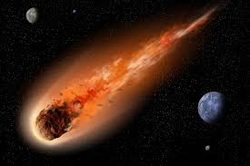
Pictureguardianlv.com
The B612 Foundation have released a visualization showing where sizable asteroids have hit the Earth in recent years. Click here. Astounding!

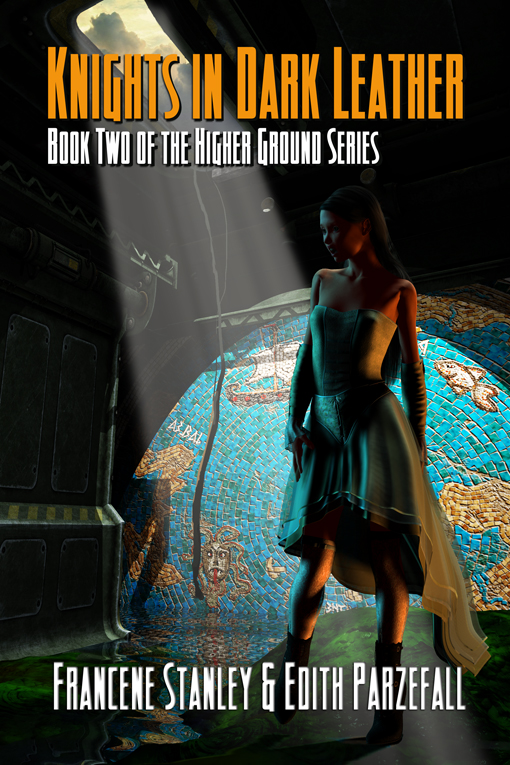
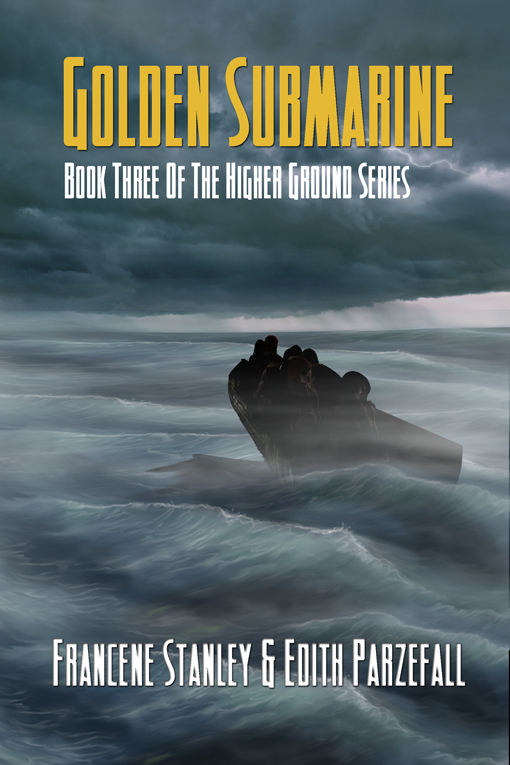
But this is the very scenario my co-writer and I have used to base our futuristic novels on in the Higher ground series, which you can see on the sidebar. I don't want it to happen, believe me. But, if many large asteroids bombarded Earth, who would survive? Those people lucky enough to be able to reach higher ground when the floods came and the fault lines cracked and opened up? How would any survivors cope? Would it lead to the end of society as we know it? In the worst light, the largest of these objects could lead to extinction if they struck the Earth.

The US-based group, which includes a number of former Nasa astronauts, hopes the visualization will show impacts are more common than we think.

The presentation leans on data collected by the Comprehensive Nuclear-Test-Ban Treaty Organization. The CTBTO operates a network of sensors to detect clandestine atom bomb detonations. Between 2000 and 2013, this infrasound system listed 26 major explosions on Earth. None were caused by A-bombs. All were the result of asteroid strikes. And just one of these events was detected in advance, and then by only a matter of hours.


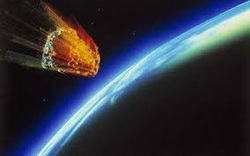
Picturewww.telegraph.co.uk
Currently known as astronomers, they ranged in energy from one to 600 kilotons. (The bomb that destroyed Hiroshima was a 15-kiloton device.) Most of these space rocks disintegrated high up in the atmosphere and many will have gone unseen because they landed far out over the oceans.

But some asteroids slip through to land close to habitation. Last year, a 20m-wide object ripped across the sky above the Russian city of Chelyabinsk. I blogged about it at the time. Scary! However, the event itself was quite small compared with some of the incomers recorded in the past.

Data suggests that Earth is hit by a multi-megaton asteroid about every 100 years. Researchers from the B612 Foundation may have found a little over 90% of the true goliaths hurtling through space. The good news is that none should hit us anytime soon.

My rough draft already exists about a group of people living in England during the last days before a bombardment of comets strike Earth.

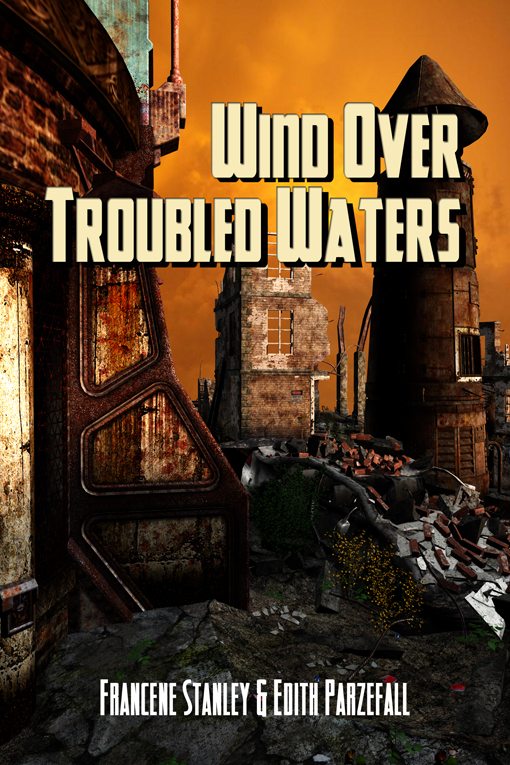
I leave you with a small excerpt from the beginning of the published Wind Over Troubled Waters.

Journal of Tallulah McBride

March 23, 2027

As the world ends, I’ve assembled my vellum and proper ink and pen. Vellum lasts longer than paper. I don’t think anyone will survive the flood and devastation. The water is rising higher all the time and I haven’t seen the sun for forty-eight hours. No light penetrates my room. I’m writing by candlelight. I’m not sure why I’m writing, except that it might help me get a grip on what happened. And just maybe, someone will survive and read this journal.

~~~~~~~~~~~~~~~~~~~~~~~~~~~~~

Corn World. Britland. Far in the future after the great flood.

Chapter One

On the bed next to her mother, Cerridwen snuggled further into her sleeping furs. Wind roared over the town. Rain lashed against the thick wooden walls of the house nestled halfway down a steep slope above the quiet village. Built in the before-times, when men knew how to construct things properly, the house resisted continual rain. A lightning flash lit up the small room. Thunder roared. In the cot beside her, Mother whimpered and turned in her sleep.

4 Comments

What do you really think of Shakespeare?

4/23/2014

6 Comments

 
Pictureen.wikipedia.org
If he'd lived, like his plays, beyond his allotted time, William Shakespeare would be 450 years old today.

In a recent survey, five thousand young adults in India, Brazil, Germany, China and the USA were asked to name a person they associated with contemporary UK arts and culture.

I'm too old to participate—thank goodness, because I might have lowered the overall rating.

Results of the international study found the playwright to be the UK's greatest cultural icon, with an overall score of 14%. The Queen came second and David Beckham came third. Other popular responses included JK Rowling, Adele, The Beatles, Paul McCartney and Elton John.

Shakespeare proved most popular in China where he was mentioned by 25% of respondents. The lowest score of 6% came from the young people in the US.

Shakespeare died on 23 April 1616 at the age of 52. His actual birth date in 1564 is unknown but it is traditionally celebrated on 23 April.

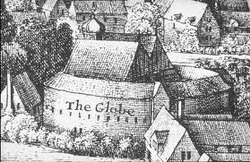
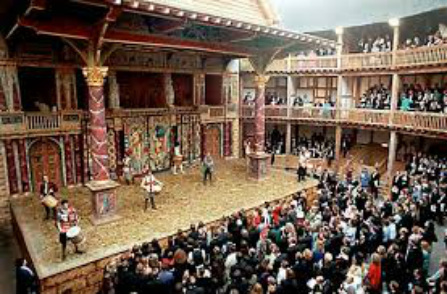
Other events to target Shakespeare's birthday today include a launch play of Hamlet in Shakespeare's Globe Theatre (spelled the English way) in London. The original Globe was built in 1599 by Shakespeare's playing company, the Lord Chamberlain's Men, and was destroyed by fire on 29 June 1613. A second Globe Theatre was built on the same site by June 1614 and closed in 1642.


Pictureinterior - www.examiner.com
A contemporary reconstruction of the Globe, named "Shakespeare's Globe", opened in 1997 approximately 750 feet (230 m) from the site of the original theatre.

The target of the two-year world tour of Hamlet is to visit every country in the world. Venues will include:
 
 Wittenberg in Germany,
 
the Roman theatres of Philippopolis in Bulgaria
 
and Heraclea in Macedonia,

the Folger Shakespeare Library in Washington,
 
and the Mayan ruins of Copan in Honduras.

I'm sure it will be a spectacle and unique enough to appeal to many people, with its costumes and drama. I have to wonder how many people in far-off lands will understand the words. Even I have great difficulty interpreting the meaning behind them. Now, here's my shocking revelation: I must admit to shunning every performance of one of Shakespeare's plays on television. I would never criticize such a renown author. The drama and content in his work beats anything in novel form I could write.

However, maybe the plays are past their time in modern society.

What do you think?


6 Comments

Isaac Asimov's predictions 50 years on.

4/22/2014

16 Comments

 
PictureWorld Fair 1964
The 1964 World's Fair was held in a park in Queens, New York, just a few minutes away from Manhattan. At that time, I lived in Australia, was 22 years old and pregnant with my third child. I loved reading science fiction novels because the plots stimulated my imagination. I'd inherited my grandmother's collection which included some of the very earliest examples. I heard of the great World Fair and would have loved to see the great Ford Mustang and the first human character, Abraham Lincoln.

Isaac Asimov, one of the 20th century's best-known science fiction authors, published an essay predicting what our society in a future world would look like today in 1964. He wrote 468 books including I, Robot.

Although the official theme of the fair, which ran for two six-month sessions, was Peace Through Understanding, today its vision of an approaching era sticks in our minds.

Many of those predicted technologies on display never quite materialized like underwater housing and levitating cars.

Let's look at the projections for 2014, from the perspective of 1964.

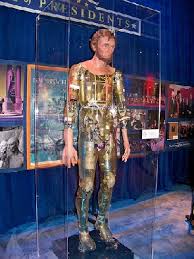
PictureAbraham Lincoln - first human character
"Communications will become sight-sound and you will see as well as hear the person you telephone."

"Robots will neither be common nor very good in 2014, but they will be in existence." Mr Asimov takes credit for introducing the word robotics into the English language. Right now, projects are underway for robots to pass Japan's university exam, perform remote surgery, and even cook a gourmet meal.

"As for television, wall screens will have replaced the ordinary set; but transparent cubes will be making their appearance in which three-dimensional viewing will be possible."

"Kitchen units will be devised that will prepare 'automeals', heating water and converting it to coffee." Automated coffee machines do indeed exist.

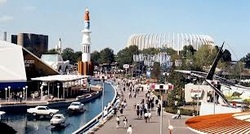
Picturedisneyparks,disney,go.com
"Not all the world's population will enjoy the gadgetry world of the future to the full. A larger portion than today will be deprived and although they may be better off, materially, than today, they will be further behind."

Mr Asimov predicted much more and many of his thoughts on the future come close to reality. See more at BBC News. (new window)

Which of these apply to me? I don't have sight-sound telephone or Skype, I've only seen pictures of robots, my television is a 23” set—not a wall, and we don't own a coffee machine. I'm just trying to think of other gadgets we own. My neighbor gave me a little vacuum cleaner to use in tight spots and we have a microwave, as well as electricity and gas cooking devices. That's all. I sweep the hard floors with a broom, just like my ancestors, and my husband washes them with a mop and water. Wheeled devices help me to walk. When I give the subject full consideration, Asimov's predictions don't really affect my life. People are still the same deep down.

How many of these predictions are reality for you?


16 Comments

Body rhythms combine with a new technology.

4/21/2014

7 Comments

 
Picturewww.express.co.uk
Ever wished you could purchase items without going through the hassle of finding your credit card and remembering pin numbers?

A revolutionary new technology scans shoppers' veins when they make purchases at the till.

An engineering student at a local university, came up with the idea two years ago while he waited in a queue to pay at a supermarket. The complex process took a lot of time and he puzzled over a quicker and easier way to pay. He claims the ground breaking system is safer than plastic as each person's individual vein pattern is completely unique.

Over a thousand shoppers in Sweden have signed up to trials of the technology. The vein-scanning terminals have been installed at 15 shops and restaurants in the city of Lund in southern Sweden.


PictureLondon shopping - www.visitlondon.com
Joining the 1,600 people who have signed up for the system, people must first visit a shop or restaurant with a terminal to have had their palm scanned three times. They enter their phone and social security number. A text message is then sent to their mobile phone with an activation link to a website. Once established, payments are taken directly from customer's bank accounts twice a month. It is hoped the system will be expanded across the globe.

Well! That's easy—akin to the iris scanning used in top security. The human body is astounding with its individuality. Ever seen a commercial with different faces flashing one after the other? That shows how unique each head is.

I've written the first draft of a novel set fifteen years in the future. The rapid way technology is changing makes any idea I've come up with obsolete. I wonder how the major science fiction writers of the past like H.G. Wells, Arthur C. Clark and Issac Asimov came up with their ground breaking ideas. Most of their predictions have come into use. Not the time machine though. Maybe soon.

I'd like to revisit the past and eradicate all the mistakes I've made. I know I can't do anything major—that would change the future. We have to meet the same partner and produce the children that exist now. All I'd change is my attitude. I'd like to be kinder, to understand the consequences of my words and actions. Of course, I'd need to be prudent, and wisdom only comes from experience.

Would you want to go forward or back?


7 Comments
<<Previous

    Francene Stanley:
    Author
    I use news items in my fantasy novels.

    Born in Australia, I moved to Britain half way through my long life. If you like my writing, why not consider purchasing one of my books on the sidebar below?
    I blogged 260 days last year. Link.

    Picture
    Picture
    Picture
    Picture
    Picture
    Picture
    Picture

    Archives

    January 2015
    December 2014
    November 2014
    October 2014
    September 2014
    August 2014
    July 2014
    June 2014
    May 2014
    April 2014
    March 2014
    February 2014
    January 2014
    December 2013

    Categories

    All
    Animals
    Birds
    Earth
    Environment
    Experience
    News
    Novel
    People
    Society
    Writing

    RSS Feed

    RSS Feed

Powered by Create your own unique website with customizable templates.