 motherboard.vice.com
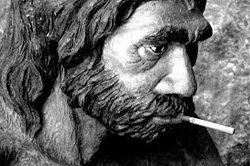
 A major study in Nature journal shows gene types that influence disease in people today were picked up through interbreeding with Neanderthals. Genome studies reveal that our species (Homo sapiens) came into contact with Neanderthals after leaving Africa. They interbred, but in some couples, mating didn't produce offspring.
Neanderthal passed on smoking addiction along with variants involved in type 2 diabetes, and Crohn's disease. Read the full story from BBC News. http://www.bbc.co.uk/news/science-environment-25944817
Neanderthal passed on smoking addiction along with variants involved in type 2 diabetes, and Crohn's disease. Read the full story from BBC News. http://www.bbc.co.uk/news/science-environment-25944817
 www.reuters.com
 The research team screened the genomes of 1,004 modern humans and identified regions bearing the Neanderthal versions of different genes. The surprise was they found a gene variant with a Neanderthal origin associated with a difficulty to quit smoking from. I couldn't find anything further on the news story about how this could have occurred. However, there is no suggestion our evolutionary cousins were puffing nicotine substances in their caves.
Instead, the researchers suggest, this mutation may have more than one function. Not sure what this means. Perhaps the variant kept families close to their caves and drew the men back from hunting to support them. The modern effect of this marker on smoking behavior may be one impact among several. You might be able to think of other scenarios.
Instead, the researchers suggest, this mutation may have more than one function. Not sure what this means. Perhaps the variant kept families close to their caves and drew the men back from hunting to support them. The modern effect of this marker on smoking behavior may be one impact among several. You might be able to think of other scenarios.
 news.discovery.com
 Some gene variants provided a rapid way for modern humans to adapt to the new cooler environments they encountered as they moved into Eurasia. When the populations met, Neanderthals had already adapted to these cooler conditions over several hundred thousand years.
The stocky hunters once covered a range stretching from Britain to Siberia, but went extinct around 30,000 years ago at the time when Homo sapiens expanded from their African homeland.
But, we need more information on why some people, my husband included, become addicted to smoking. It's now just a nicotine craving with him—he gets that through his plastic replacement tool supplied through UK's National Health. He still craves the other poisons and smoke associated with an actual cigarette.
The stocky hunters once covered a range stretching from Britain to Siberia, but went extinct around 30,000 years ago at the time when Homo sapiens expanded from their African homeland.
But, we need more information on why some people, my husband included, become addicted to smoking. It's now just a nicotine craving with him—he gets that through his plastic replacement tool supplied through UK's National Health. He still craves the other poisons and smoke associated with an actual cigarette.
Quote from the American Cancer Society. http://www.cancer.org/cancer/cancercauses/tobaccocancer/questionsaboutsmokingtobaccoandhealth/questions-about-smoking-tobacco-and-health-is-tobacco-addictive
Regular use of tobacco products leads to addiction in many users. Nicotine is an addictive drug just like heroin and cocaine:
1. When taken in small amounts, nicotine creates pleasant feelings that make the smoker want to smoke more. It acts on the chemistry of the brain and central nervous system, affecting the smoker’s mood. Nicotine works very much like other addicting drugs, by flooding the brain’s reward circuits with dopamine (a chemical messenger). Nicotine also gives you a little bit of an adrenaline rush—not enough to notice, but enough to speed up your heart and raise your blood pressure.
2. Nicotine reaches the brain within seconds after taking a puff, and its effects start to wear off within a few minutes. This is what most often leads the smoker to light up again. If the smoker doesn’t smoke again soon, withdrawal symptoms start and get worse over time.
3. The typical smoker takes about 10 puffs from each cigarette. A person smoking a pack per day gets about 200 “hits” of nicotine each day.
4. Smokers usually become dependent on nicotine and suffer physical and emotional (mental or psychological) withdrawal symptoms when they stop smoking. These symptoms include irritability, nervousness, headaches, and trouble sleeping. The true marker for addiction, though, is that people still smoke even though they know smoking is bad for them—affecting their lives, their health, and their families in unhealthy ways. Most people who smoke want to quit.
I'm not going to pass on the information about Neanderthal man's variant gene. He doesn't need an extra excuse for his addiction. Trouble is—he'll probably read it in his newspaper.







 RSS Feed

