 en.wikipedia.org
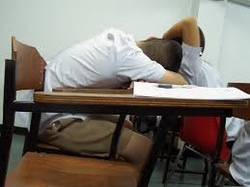
 In the latest news, teenagers at an English private school in Surrey will begin their lessons in the afternoons to allow them to sleep later in the mornings.
What? Surely this will cause bad habits in later life?
Hampton Court House, in East Molesey, said the change to 13:30 from the usual time of 09:00 will be more productive and less stressful for students who have a biological disposition to going to bed late and struggling to get up early. The pioneering decision will mean that A-level classes will finish at 19:00.
The headmaster stressed that scientific evidence showed many did not sleep sufficiently during the week, causing a significant impact on teenage cognition and mental and physical health generally.
Professor Cappuccio, a professor of cardiovascular medicine and epidemiology at the University of Warwick Medical School, said Hampton Court House's move was a courageous decision which should maximise their learning experience in a 24/7 society.
"This is a worthy natural experiment and it would be of interest to compare the results of this cohort of pupils with those of previous years," he added.
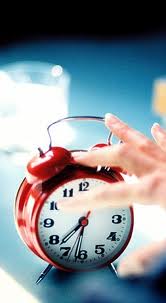
Sleep expert Professor Francesco Cappuccio said everyone had a "ticking biological clock" that regulated a natural instinct to wake up and to go to sleep, but this was delayed in teenagers. The "delayed-phase clock" meant teenagers tended to wake up later in the morning and go to bed later, although this usually disappeared as they grew older.
He said: "If we are sleepy, important functions like attention, ability to learn, and other executive functions are impaired...
"This is one of the reasons why often some individuals, when forced to perform against their biological clock, may find it difficult, [leading to] bad performance or even bad behaviour with even some long-term consequences."
What? Surely this will cause bad habits in later life?
Hampton Court House, in East Molesey, said the change to 13:30 from the usual time of 09:00 will be more productive and less stressful for students who have a biological disposition to going to bed late and struggling to get up early. The pioneering decision will mean that A-level classes will finish at 19:00.
The headmaster stressed that scientific evidence showed many did not sleep sufficiently during the week, causing a significant impact on teenage cognition and mental and physical health generally.
Professor Cappuccio, a professor of cardiovascular medicine and epidemiology at the University of Warwick Medical School, said Hampton Court House's move was a courageous decision which should maximise their learning experience in a 24/7 society.
"This is a worthy natural experiment and it would be of interest to compare the results of this cohort of pupils with those of previous years," he added.
Sleep expert Professor Francesco Cappuccio said everyone had a "ticking biological clock" that regulated a natural instinct to wake up and to go to sleep, but this was delayed in teenagers. The "delayed-phase clock" meant teenagers tended to wake up later in the morning and go to bed later, although this usually disappeared as they grew older.
He said: "If we are sleepy, important functions like attention, ability to learn, and other executive functions are impaired...
"This is one of the reasons why often some individuals, when forced to perform against their biological clock, may find it difficult, [leading to] bad performance or even bad behaviour with even some long-term consequences."
 www.dailymail.co.uk
 Delayed sleep phase syndrome (DSPS) is a disorder in which a person’s sleep is delayed by 2 or more hours beyond the socially acceptable or conventional bedtime.
I remember my teenage children being really tired in the morning back in the 70s. But they managed to conform and get to school on time. But this doesn't only apply to teenagers. My 'night owl' husband suffers the same disorder, remaining awake long after my bedtime and not rising until midday. I must stress that I enjoy my 'morning person' quiet, and the routine doesn't have any knock-on effect for either of us.
The DSP Syndrome which causes a delay in falling asleep, leads to a difficulty in waking up at the desired time. As an example, rather than falling asleep at 10:00 pm and waking at 6:30 am, the person will fall asleep well after midnight and have great difficulty getting up.
The exact cause of this disorder is not understood. However, approximately 15% of adolescents have DSPS. Thus, it is a common disorder. Scientists think DSPS may be an exaggerated reaction to the normal shift in the internal clocks that is seen in adolescents after puberty. It is important to understand that this is not deliberate behavior, but that certain habits can make this condition worse.
I remember my teenage children being really tired in the morning back in the 70s. But they managed to conform and get to school on time. But this doesn't only apply to teenagers. My 'night owl' husband suffers the same disorder, remaining awake long after my bedtime and not rising until midday. I must stress that I enjoy my 'morning person' quiet, and the routine doesn't have any knock-on effect for either of us.
The DSP Syndrome which causes a delay in falling asleep, leads to a difficulty in waking up at the desired time. As an example, rather than falling asleep at 10:00 pm and waking at 6:30 am, the person will fall asleep well after midnight and have great difficulty getting up.
The exact cause of this disorder is not understood. However, approximately 15% of adolescents have DSPS. Thus, it is a common disorder. Scientists think DSPS may be an exaggerated reaction to the normal shift in the internal clocks that is seen in adolescents after puberty. It is important to understand that this is not deliberate behavior, but that certain habits can make this condition worse.
Most people notice that they naturally experience different levels of sleepiness and alertness throughout the day, but what causes these patterns? Sleep is regulated by two body systems: sleep/wake homeostasis and the circadian biological clock .
When we have been awake for a long period of time, sleep/wake homeostasis tells us that a need for sleep is accumulating and that it is time to sleep. It also helps us maintain enough sleep throughout the night to make up for the hours of being awake. If this restorative process existed alone, it would mean that we would be most alert as our day was starting out, and that the longer we were awake, the more we would feel like sleeping. In this way, sleep/wake homeostasis creates a drive that balances sleep and wakefulness.
Our internal circadian biological clocks, on the other hand, regulate the timing of periods of sleepiness and wakefulness throughout the day. The circadian rhythm dips and rises at different times of the day, so adults' strongest sleep drive generally occurs between 2:00-4:00 am and in the afternoon between 1:00-3:00 pm, although there is some variation depending on whether you are a “morning person” or “evening person.” The sleepiness we experience during these circadian dips will be less intense if we have had sufficient sleep, and more intense when we are sleep deprived. The circadian rhythm also causes us to feel more alert at certain points of the day, even if we have been awake for hours and our sleep/wake restorative process would otherwise make us feel more sleepy. Article from the National Sleep Foundation. http://sleepfoundation.org/sleep-topics/sleep-drive-and-your-body-clock/
 kidshealth.org
 I don't suppose it really matters what time the students learn. However, if 15% of them suffer from DSPH, the other 85% will be forced to follow the altered learning times. Why change the system for the few who don't conform? And what will the long-term effects on society be?
It seems to me that after leaving school, the young adult will find it difficult to adapt to the normal business hours of nine-to-five.
What are your views on teenage body-clocks?
It seems to me that after leaving school, the young adult will find it difficult to adapt to the normal business hours of nine-to-five.
What are your views on teenage body-clocks?






 RSS Feed

